Category: General News

  • The Easy Nighttime Kitchen Habit That Can Boost Home Safety and Peace of Mind!

    The Easy Nighttime Kitchen Habit That Can Boost Home Safety and Peace of Mind!

    The air fryer has transitioned from a trendy countertop novelty to an indispensable pillar of the modern kitchen. Celebrated for its ability to produce crispy, restaurant-quality textures with a fraction of the oil, it has become the go-to appliance for everything from morning bagels to late-night snacks. In the rhythm of a busy household, the air fryer often earns a permanent, prominent spot on the counter, perpetually plugged in and ready to perform at a moment’s notice.

    However, this seamless convenience masks a quiet, cumulative risk. Because air fryers are so user-friendly, we often forget they are high-performance thermal engines that draw significant electrical current. Establishing one simple nighttime habit—fully unplugging the air fryer after its final use of the day—can dramatically elevate your home’s safety profile and provide an invaluable sense of psychological peace.

    Understanding the Mechanics of Heat and Power

    To appreciate why unplugging is so effective, one must understand how an air fryer operates. Unlike a standard toaster, an air fryer utilizes a high-wattage heating element coupled with a high-speed fan to circulate air at temperatures often exceeding 400°F. This intense thermal energy is contained within a compact plastic or metal housing. Even after the timer dings and the fan stops, the internal heating coils retain significant residual heat.

    While modern appliances are engineered with thermal cut-offs and safety fuses, no machine is immune to the passage of time. Electrical components degrade. Solder joints can weaken through repeated heating and cooling cycles, and internal wiring can become brittle. When an appliance remains plugged in, it stays “live.” This means a small amount of electricity, often referred to as a “phantom load” or “standby power,” continues to flow into the unit’s circuitry. In the event of an external power surge or a rare internal short circuit, a live appliance—even one that is switched off—can become a source of ignition.

    The Invisible Threat of Grease and Airflow

    The kitchen is a unique environment where electricity meets combustible materials. Air fryers, by their very nature, deal with oils. Over months of use, microscopic grease particles are aerosolized and can settle inside the unit’s vents or coat the heating elements. While we are diligent about washing the basket, we rarely dismantle the unit to clean the interior coils. This hidden buildup acts as a potential fuel source.

    Furthermore, kitchen real estate is often crowded. Air fryers are frequently tucked under wooden cabinets, placed near synthetic curtains, or surrounded by paper towel rolls and plastic containers. If a rare electrical fault occurs while the family is asleep, these surrounding materials can turn a minor internal spark into a significant house fire in minutes. By physically disconnecting the plug, you eliminate the possibility of an electrical fault initiating that process in the first place.

    The Power of Defensive Kitchen Habits

    Home safety is rarely about a single heroic action; it is about the accumulation of small, consistent “defensive” habits. Unplugging the air fryer is the electrical equivalent of double-checking that the front door is locked. It creates a physical break in the chain of potential hazards.

    Beyond the act of unplugging, safety experts recommend a holistic approach to countertop appliance management:

    • Routine Inspections: Periodically examine the power cord for fraying or melted spots. Check the plug prongs for discoloration, which can indicate overheating at the outlet.
    • Strategic Placement: Always ensure there are at least five inches of open space around all vents of the air fryer during operation. Never operate the unit directly under a low-hanging cabinet.
    • Direct Connections: High-draw appliances like air fryers should always be plugged directly into a wall outlet. The use of extension cords or power strips can lead to overheating, as these intermediate wires are often not rated for the sustained high amperage an air fryer requires.
    • Grease Management: Every few weeks, use a damp cloth to wipe the exterior vents and, once the unit is completely cool, gently wipe the area around the heating element if accessible.

    Psychological Benefits: From Anxiety to Automation

    One of the most profound benefits of the “unplugging habit” is the mental clarity it provides. Many people experience “phantom anxiety”—the nagging feeling that they forgot to turn something off after they have already crawled into bed or left the driveway. By making the act of unplugging a conscious part of the cleanup routine, you create a tangible “completion signal” for your brain.

    When you pull that plug, you are mentally “closing” the kitchen for the night. Over time, this becomes an automatic reflex. Much like checking the stove or blowing out a candle, it shifts from a chore to a ritual of care. It reduces the cognitive load of home management, allowing you to rest easier knowing that the most powerful heat source in your kitchen is completely inert.

    A Cost-Free Safety Upgrade

    In an era of expensive smart home sensors and complex fire suppression systems, unplugging an appliance is a rare safety upgrade that costs absolutely nothing. It is a democratization of home security—available to anyone, regardless of their budget.

    It is important to emphasize that air fryers are fundamentally safe machines. Manufacturers subject them to rigorous testing before they hit the market. However, “safe” does not mean “incapable of failure.” Mechanical and electrical failures are a statistical reality of modern life. By unplugging the unit, you are simply opting out of being part of that statistic.

    The goal of home safety isn’t to live in fear of our conveniences; it is to master them. The air fryer has revolutionized the way we eat, offering health and speed in a single package. Taking five seconds to disconnect it from the wall at the end of the day is a small tribute to that convenience—a way of ensuring that the heart of the home remains a place of nourishment rather than a source of danger. By adopting this easy nighttime habit, you aren’t just protecting your property; you are guarding your peace of mind.


  • Comedy World Mourns! Popular!

    Comedy World Mourns! Popular!

    The global comedy community is currently anchored in a state of profound shock and mourning following the sudden, surreal passing of a beloved entertainer whose career was defined by an ability to turn the mundane into the hilarious. On January 24, 2026, news broke that the comedian—a man whose sharp wit and magnetic stage presence had made him a staple of both the club circuit and late-night television—died in a freak outdoor accident. The tragic irony of a man who spent his life bringing joy to others being taken in such a sudden and somber manner has left fans and peers struggling to reconcile the loss.

    The incident occurred during an outdoor gathering, a setting that should have been a sanctuary of celebration and leisure. Witnesses describe a sunny afternoon that turned tragic in a matter of seconds. While guests were enjoying the festivities, a massive branch from a nearby tree suffered a catastrophic structural failure, snapping without warning. The comedian, who was standing directly beneath the canopy, was struck with such force that medical personnel could do little to intervene. What was intended to be a day of community and connection was instantly transformed into a site of unimaginable grief.

    In the hours following the announcement, the digital landscape became a virtual memorial. Comedians from around the world, ranging from established icons to rising newcomers, took to social media to share anecdotes that painted a portrait of a man far more complex and kind than his stage persona might suggest. While his professional brand was built on a foundation of razor-sharp sarcasm and high-energy observations, his personal life was characterized by a quiet, steadfast generosity. Fellow performers spoke of the “green room mentor” who would spend hours helping young comics refine their timing, never asking for credit or compensation. He possessed that rare quality in show business: a genuine desire to see others succeed.

    The timing of the tragedy adds a particularly sharp edge to the pain felt by those who knew him best. Close associates noted that the comedian was currently enjoying what he described as a “creative renaissance.” After years of relentless touring and the inevitable burnout that follows, he had recently found a balance between his professional ambitions and his personal happiness. He was reportedly in the process of developing a new special and had recently expressed to friends how fulfilled he felt by his recent work. To have his life extinguished at the very moment he was most content is a cruelty that has resonated deeply within the tight-knit comedy fraternity.

    Beyond the immediate emotional fallout, the accident has raised serious questions regarding public safety and venue maintenance. Local authorities and event organizers have confirmed that an investigation is underway to determine the cause of the tree’s failure. Arborists note that “sudden branch drop,” particularly in seemingly healthy trees, can be caused by a variety of environmental factors, including internal decay or extreme temperature fluctuations. Organizers expressed their deepest condolences to the family, stating that they are conducting a comprehensive review of all safety protocols to ensure that such a freak occurrence never happens again.

    The void left by his passing is not just professional; it is existential. Comedy serves a unique function in society, acting as a pressure valve for the stresses of modern life. When a truly gifted comedian dies, the world loses a specific lens through which it views its own absurdities. He had a gift for taking the dark, difficult aspects of human existence and making them palatable, even laughable. He made the world feel a little less lonely for those who felt out of place, and he did so with a warmth that ensured his barbs never left a permanent scar.

    His legacy, however, is not one that can be easily erased by a single tragic event. The thousands of hours of footage, the viral clips, and the memories of those who saw him live serve as a permanent archive of his genius. In the comedy clubs of New York, London, and Sydney, empty chairs have been placed in the front rows, and moments of silence have been observed—often followed by a raucous round of applause, the only tribute a comedian truly values.

    For his family, the loss is an intimate catastrophe. They have requested privacy during this agonizing period, though they acknowledged the “tsunami of love” that has flowed toward them from every corner of the globe. They described him as a man who loved life with a ferocity that was contagious, a man who viewed every conversation as an opportunity for a connection and every stranger as a potential friend.

    As the comedy world prepares to say its final goodbyes, the focus has shifted from the manner of his death to the brilliance of his life. The laughter he generated was not a fleeting thing; it was a gift that continues to resonate. He taught us that even in a world that can be unpredictable and occasionally cruel, there is always room for a punchline. He reminded us to look up, to stay present, and to find the humor in the chaos.

    The funeral, expected to be a private affair, will likely be followed by a public memorial where the industry he helped shape can celebrate his contributions properly. While the stage is now dark and the spotlight has dimmed, the echoes of his performances remain. He lived his life with the volume turned up, making sure every person in the back of the room felt seen and heard. While he may have been taken by a freak act of nature, his impact was a force of nature in its own right—one that will continue to influence and inspire the next generation of storytellers. He left us as he lived: in the company of friends, under an open sky, and at the height of his powers. He will be remembered not for the branch that fell, but for the countless times he stood tall and made a room full of strangers feel like family through the shared, healing power of a laugh.

  • A man smells a strong smell in his house, when he finds out that he opens the wall he finds?

    A man smells a strong smell in his house, when he finds out that he opens the wall he finds?

    For Tom Fisher, home was meant to be a sanctuary of predictability. A 42-year-old actuary living in a quiet, leafy suburb, Tom was a man who appreciated order, logic, and the silent comfort of a well-maintained house. But in the late autumn of 2025, that peace was punctured by something invisible, intrusive, and increasingly aggressive. It began as a mere suggestion—a faint, sour note drifting through the upstairs hallway like a ghostly whisper.

    At first, Tom dismissed it with the casual nonchalance of a busy homeowner. He checked the usual suspects: a forgotten bag of groceries in the pantry, a stray onion that might have rolled behind the bin, or perhaps a damp towel left to languish in a gym bag. He spent a Saturday morning scrubbing the kitchen until the linoleum gleamed and pouring vinegar down the drains. He opened every window, allowing the crisp October air to flush out the stagnant energy of the house. Satisfied that he had conquered the nuisance, he went to bed in a house that smelled of lemon zest and cold wind.

    By morning, the smell had not only returned; it had matured.

    What was once a faint tang had transformed into a thick, cloying stench that seemed to have weight. It was the smell of organic decay, but with a strange, sweet undertone that made the back of Tom’s throat itch. It didn’t just drift; it sat in the air, stubborn and immovable. When Tom walked into the hallway, he felt like he was pushing through a physical curtain of rot. The lemon cleaner was gone, swallowed whole by the mysterious odor.

    Driven by a mounting sense of unease, Tom began a more invasive investigation. He moved the refrigerator, checked the attic for deceased rodents, and crawled into the crawlspace with a high-powered flashlight. He found nothing but dust and cobwebs. Yet, as he stood in the center of the hallway, he realized the smell was localized. It was strongest near the wall shared by the master bedroom and the guest bathroom—a seemingly solid expanse of drywall and eggshell-blue paint.

    He pressed his ear to the wall. Silence. He tapped the surface, listening for a change in resonance. About halfway down the hall, the sound changed from a solid thud to a hollow, echoing drum. He pressed his palm against the plaster and recoiled. The wall was warm.

    It was a subtle heat, barely a few degrees above the ambient room temperature, but in an uninsulated interior wall with no electrical outlets or plumbing pipes nearby, it was an impossibility. The logic Tom had relied on his entire life began to fail him. His mind raced through terrifying scenarios: a hidden electrical fire, a massive mold colony, or something even more grisly.

    Taking a deep breath, Tom went to the garage and retrieved a drywall saw and a hammer. He felt a strange sense of violation as he pierced the pristine blue surface. The moment the saw blade broke through, the smell erupted. It was a physical blow—an overwhelming, staggering stench of fermented honey and ancient musk. Tom gagged, covering his face with his shirt as he pried a square section of the wall away.

    He expected to see the gray insulation or the wooden studs of the house’s skeletal frame. Instead, he found himself staring into a shimmering, golden abyss.

    Behind the drywall, the entire wall cavity had been hollowed out and replaced with an architectural marvel of biological engineering. Hundreds of thousands of honeybees had moved in, undetected, over the course of several seasons. The space between the studs was packed with massive, dripping curtains of honeycomb, some of it dark and aged to the color of mahogany, other sections translucent and dripping with fresh, golden nectar.

    The “sour” smell had been the scent of fermented honey and the pheromones of a colony under stress. The heat he had felt was the collective body temperature of nearly eighty thousand bees, vibrating their wings in unison to regulate the temperature of the hive. It was a living, breathing machine of wax and wings, hidden just inches from where he slept every night.

    The sight was both terrifying and breathtaking. The honeycomb was intricately folded into the narrow space, a labyrinth of hexagonal cells that seemed to defy the laws of physics. However, the discovery quickly took a turn toward the disastrous. By opening the wall, Tom had disturbed the delicate pressure holding the structures in place. Without the support of the drywall, a massive, ten-pound section of honey-heavy comb tore loose, crashing to the base of the wall.

    The sound of the impact was followed by a low, vibrating roar that Tom felt in his teeth. The colony was awake.

    In a panic, Tom realized he was standing in a narrow hallway with a breached fortress of stinging insects. He retreated to the master bedroom, slamming the door just as the first wave of guard bees began to pour through the hole in the wall. Through the gap beneath the door, he could hear the frantic buzzing—a sound like a high-voltage power line.

    He called a local apiarist, a specialist who dealt with “live removals.” When the beekeeper arrived, she stood in the hallway with a look of professional awe. She explained that this wasn’t just a hive; it was a “super-colony.” The bees had likely entered through a tiny, overlooked gap in the exterior soffit years ago, slowly expanding their empire behind the plaster. Because the wall was interior and kept at a constant temperature by the home’s HVAC system, the colony had never gone dormant for the winter. They had been working 24 hours a day, three hundred and sixty-five days a year, building a golden city inside Tom’s home.

    The removal took three days. Using thermal imaging, the specialist discovered that the hive extended nearly twelve feet across the wall and into the ceiling joists. Over two hundred pounds of honey were eventually extracted—honey that had begun to ferment and seep into the wooden floorboards, which explained the initial sour smell.

    When the last of the bees had been vacuumed into specialized transport boxes and the wall was finally empty, Tom stood in the wreckage of his hallway. The drywall was gone, the studs were stained a deep amber, and the scent of honey was so pervasive he felt he would taste it for a decade. The order he had cherished was gone, replaced by a deep, humbling respect for the hidden world that exists just beneath the surface of our “civilized” lives.

    He eventually repaired the wall, but he never repainted it the same shade of blue. He chose a warm, golden yellow—a quiet tribute to the eighty thousand neighbors who had lived, worked, and built a kingdom in the silence of his home. Every now and then, in the heat of the summer, Tom swears he can still hear a faint, distant hum behind the plaster, a reminder that we are never truly as alone as we think we are.

  • The Distance Between Us Was Closer Than I Ever Realized!

    The Distance Between Us Was Closer Than I Ever Realized!

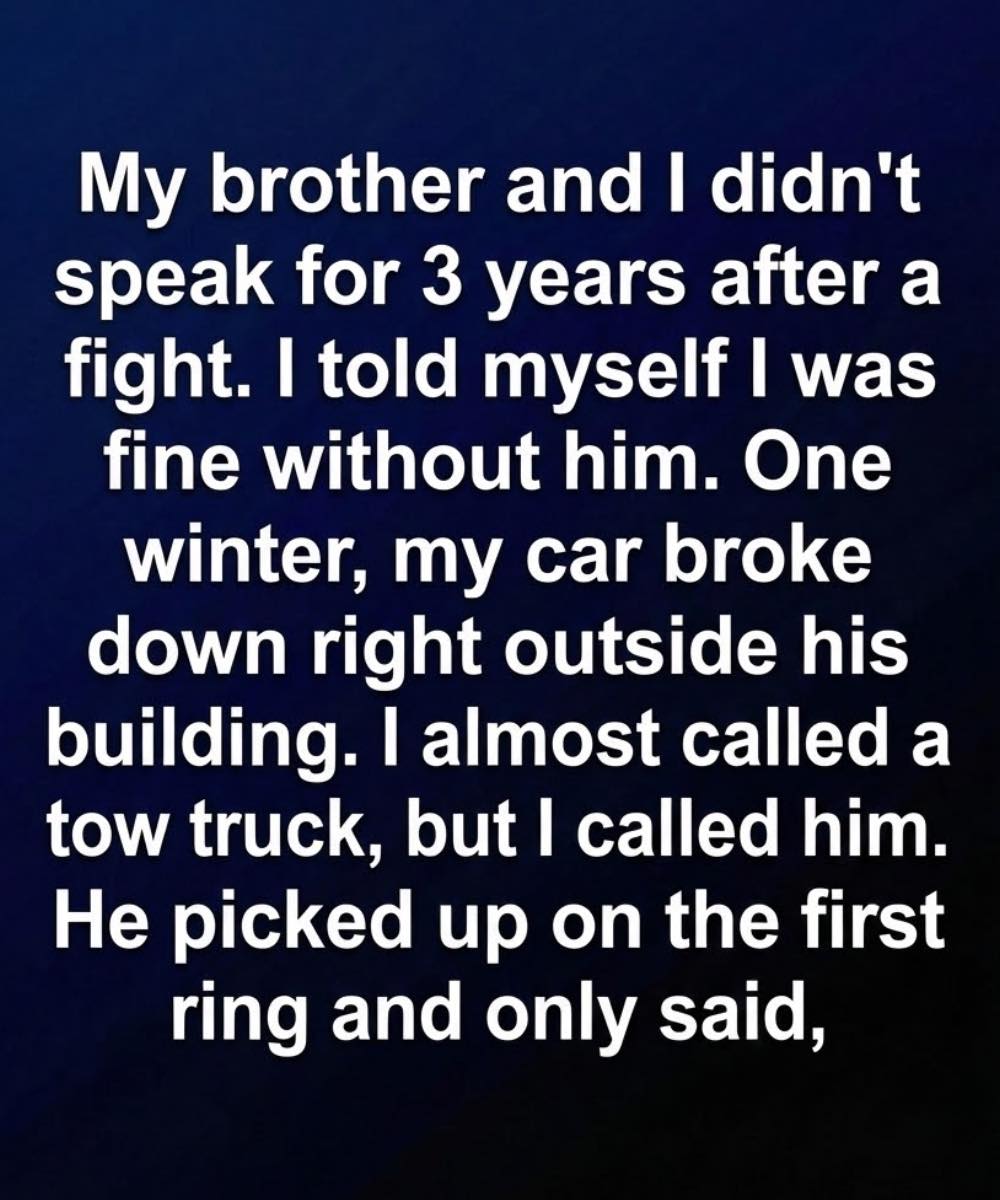
    The physics of emotional distance is a strange thing. We often imagine that moving away from someone requires miles of geography or a cataclysmic explosion of anger, but in reality, the greatest chasms are forged in silence. My brother and I were close enough to remember the specific cadence of each other’s laughter, yet distant enough to spend years pretending that our shared history was a closed book. Our fallout wasn’t cinematic; there were no shattered plates or dramatic ultimatums delivered in the rain. It was a slow erosion—a single conversation where words were sharpened into weapons, a series of misunderstandings that went uncorrected, and a pride that eventually fossilized into a permanent state of estrangement.

    I convinced myself that the silence was a form of self-respect. I adopted the modern philosophy that toxic ties, even those bound by blood, should be severed for the sake of one’s mental peace. Over time, the absence of his voice stopped feeling like a missing limb and started feeling like a scar—noticeable if I looked for it, but otherwise just part of the landscape. I built a life that had no room for him, a carefully curated existence where birthdays were celebrated without his snide humor and holidays were trimmed down to a manageable, quiet circle. I called this peace, but in the low light of a winter evening, I suspect I knew it was merely a well-maintained void.

    The story I told myself was neat, contained, and entirely unchallenged for three years. I was the person who moved on, the one who didn’t need the baggage of a complicated fraternal bond. But life has a way of mocking our most resolute narratives.

    It happened on a Tuesday night in January, the kind of night where the air feels brittle enough to snap. I was driving home through a part of the city I rarely frequented, lost in the mundane rhythm of a podcast and the hum of the heater. Without warning, my car gave a singular, pathetic cough and lost all power. I coasted into a dark curb, the dashboard lights flickering out like dying embers. The silence that followed was immediate and terrifying.

    I sat there for a moment, gripping the steering wheel, waiting for the irony to settle in. As I looked out the frost-covered windshield, I realized exactly where the universe had decided to strand me. I was parked directly in front of his apartment building—an old, red-brick mid-rise I hadn’t stepped foot in since the night of our final argument. The streetlights above blinked rhythmically, their yellow glow illuminating the snow that had begun to drift lazily onto the sidewalk. It felt as though the city itself had conspired to nudge me into a corner I had spent years navigating around.

    The sensible choice was to call a tow truck. I pulled out my phone, my fingers hovering over the app for roadside assistance. But the cold was beginning to seep through the glass, and the estimated wait time was nearly two hours. I scrolled through my contacts, intending to call a friend, when my thumb paused over a name I had never quite found the heart to delete. I stared at it for a long time.

    Every logical excuse I had polished over the years rose up to stop me. Don’t bother him. He probably won’t even answer. You’ll just make things awkward. You don’t need his help. I listened to those voices, weighed them against the biting chill in my toes, and then I ignored them. I pressed the call button before I could talk myself out of it.

    He picked up on the second ring.

    “Hello?”

    There was no hesitation in his voice, no guarded suspicion. He spoke my name with a familiar, effortless inflection, as if we had spoken only yesterday. For a heartbeat, the air left my lungs. I hadn’t realized how much I had missed the specific pitch of his voice until it was vibrating against my ear. When I finally found my own voice, it sounded thin and brittle, like the ice on the pavement. I explained the situation—the stalled engine, the cold, the fact that I was sitting right outside his door.

    There was a brief pause, long enough for the old fears of rejection to rush back in, cold and sharp. Then, he spoke four words that dismantled three years of pride: “Don’t move. I’m coming.”

    Five minutes later, he emerged from the lobby, bundled in a heavy coat and a scarf I recognized from a Christmas long ago. He looked exactly the same, yet entirely different. The lines around his eyes were deeper, but his movements were still characterized by that same practical, unhurried calm. He didn’t ask why it had taken a mechanical failure for me to call. He didn’t demand an apology or reference the biting things we had said to one another. He simply produced a set of jumper cables and a thermos of coffee.

    We spent the next hour working in the cold. He helped me navigate the logistics of the breakdown, stayed with me while we determined the car needed a professional mechanic, and eventually insisted I come inside to warm up while we waited for the tow truck.

    Inside his apartment, the air smelled of cedar and old books. We sat in his small kitchen, our hands wrapped around warm mugs, talking about nothing of consequence. We discussed the weather, the city’s failing infrastructure, and the health of our aging parents. The heavy, soul-clearing conversations didn’t happen that night. We didn’t dissect the anatomy of our fallout or assign blame for the lost years. We didn’t have to.

    What settled between us in that quiet kitchen was a realization far more profound than any apology. The distance we had maintained hadn’t erased the bond; it had only stretched it to its absolute limit. I saw in the way he offered me a seat, and the way he remembered exactly how I took my coffee, that the foundation was still there. We had been pretending that the space between us was an ocean, when in reality, it was just a hallway we were both too afraid to walk down.

    Reconciliation is rarely the grand, cinematic event we imagine it to be. It doesn’t always require a long-form explanation or a tearful confession. Sometimes, it begins with the humility of being stranded. It begins with a stalled car on a cold evening and the courage to reach out to the one person you never truly meant to forget. As I eventually watched my car being towed away and accepted a ride from him to my own front door, I realized that the distance wasn’t a wall—it was a choice. And that night, under the cover of a winter storm, we chose to finally close the gap.

  • Men go crazy when older women do these 4 things!

    Men go crazy when older women do these 4 things!

    The allure of a woman who has moved past the frantic insecurities of youth is a phenomenon that transcends mere physical attraction. It is a magnetic force rooted in the profound psychological shift that occurs when a woman stops seeking external validation and begins to anchor herself in her own reality. While society often obsessed over the fleeting bloom of youth, there is a distinct, high-voltage appeal in a woman who has traveled through the fires of life, learned the geometry of her own heart, and emerged with the power to choose rather than the desperation to be chosen.

    This captivation has very little to do with the superficial markers of age, fashion, or skincare. Instead, it is found in the silent security of a person who has already done the heavy lifting of healing and self-discovery. When an older woman leans into her authenticity, she becomes a rare commodity in a world dominated by performance and artifice. Men—particularly those who have matured beyond the hollow chase of novelty—find themselves drawn to specific behaviors that signal respect, desire, and a deep-seated admiration. These behaviors are not tricks or calculated strategies; they are the natural byproducts of a life well-lived.

    The Paradox of Visibility

    There is a strange paradox that occurs as a woman moves into her 40s, 50s, and beyond. On one hand, she is at the peak of her emotional intelligence, her criteria are sharper than ever, and her maturity makes her a formidable partner. On the other hand, many women in this demographic feel themselves becoming inadvertently invisible. They are often told by cultural narratives that their value is tied to their utility or their proximity to youth.

    However, the “invisibility” many women fear is often actually a transition into a different kind of light—one that doesn’t blind, but illuminates. The women who avoid fading are those who realize that their power doesn’t come from competing with the twenty-somethings, but from occupying a space that younger women cannot yet inhabit. They don’t seek to please; they seek to connect. And it is within this shift from people-pleasing to self-possession that the following four behaviors emerge, creating a magnetism that drives men into a state of genuine intrigue.

    1. The Power of Calm Confidence

    In a world where digital noise and emotional volatility are the norm, there is nothing more striking than a woman who speaks with a measured, calm confidence. Younger or less secure individuals often feel the need to over-explain themselves, to justify their choices, or to shout to be heard. An older woman who knows her worth does none of these things.

    When she speaks, she doesn’t beg for understanding, and she certainly doesn’t scream for attention. She communicates her boundaries and her desires with a terrifyingly beautiful clarity. If she says, “This is who I am, and this is what I do not accept,” she isn’t making a demand; she is stating a fact. This lack of a “need for approval” sends a powerful signal to a man’s brain. It suggests stability and a high level of self-regulation. To a man who has navigated high-stress environments or dramatic relationships, this calm confidence is not just attractive—it is addictive. It signals that he has found a peer, someone who won’t be easily shaken by the winds of life.

    2. Emotional Independence and the Art of Choice

    One of the most profound shifts in an older woman is the transition from “needing” to “choosing.” Men are often accustomed to being the “solution” to a woman’s problems or the “missing piece” in her life. While this can feel validating in the short term, it eventually becomes a burden. An older woman, however, has usually built a life that is already full. She has her own history, her own hobbies, her own friends, and her own peace.

    When she invites a man into her life, it is a compliment, not a cry for help. This emotional independence is incredibly attractive because it removes the pressure of “fixing” her. A man knows that if he is there, it’s because she genuinely enjoys his company, not because she can’t pay her bills or handle her own emotions. This creates a dynamic of mutual respect. He isn’t a life raft; he’s a co-pilot. That sense of being chosen by someone who doesn’t actually need you is a massive ego boost and a catalyst for deep desire.

    3. The Grace of Authentic Vulnerability

    There is a massive difference between the forced vulnerability of someone seeking sympathy and the authentic vulnerability of a woman who is comfortable in her own skin. An older woman has scars—emotional, physical, and psychological—and she doesn’t waste energy trying to hide them under a veneer of perfection. She knows that her flaws are the maps of her victories.

    Men are often captivated by a woman who can admit to her mistakes or share her fears without becoming a victim to them. This authenticity invites him to drop his own mask. In a culture where men are often taught to be stoic and guarded, encountering a woman who is “real” acts as a permission slip for him to be real, too. This creates a shortcut to intimacy that bypasses the months of superficial “dating games.” When she shows she is comfortable with her imperfections, it makes him feel safe to be imperfect with her.

    4. An Unapologetic Zest for Life

    Finally, what truly drives men crazy is an older woman who hasn’t allowed the world to make her bitter. It is easy to become cynical after five decades of life, but the woman who chooses curiosity and joy over resentment is irresistible. She isn’t trying to be “young and fun”; she is being vibrant and engaged.

    Whether it’s a passion for her career, a love for travel, or a simple, infectious laugh over a glass of wine, her energy is grounded. It’s not the frantic energy of someone trying to keep up; it’s the rich, warm energy of someone who is savoring the moment. This zest for life suggests that she is still growing, still learning, and still capable of surprise. It challenges the “fading” narrative and replaces it with a story of expansion.

    The Conclusion of Authenticity

    Ultimately, the reason these behaviors are so powerful is that they cannot be faked. You cannot manufacture the calm of twenty years of self-reflection, and you cannot pretend to have the independence of a woman who has survived her own storms. When a woman reaches this stage of life, her greatest asset is her refusal to be anyone other than herself.

    She becomes a beacon for men who are tired of the chase and hungry for the truth. By speaking clearly, choosing intentionally, sharing authentically, and living vibrantly, she doesn’t just attract attention—she commands it. She proves that while youth is a gift of nature, the magnetism of an older woman is a work of art.

  • I Was Fired In A Crane 200 Feet Up «Pack Your Trash, I Dropped A 20-Ton Container Trapped Him Inside

    I Was Fired In A Crane 200 Feet Up «Pack Your Trash, I Dropped A 20-Ton Container Trapped Him Inside

    The radio crackled, and Derek’s voice cut through the wind like a jagged knife. He had fired me for refusing to bypass a safety protocol that would have endangered every man on the pier. He thought he held the absolute power of the purse because he signed the checks, but he was fundamentally mistaken. I was currently perched 200 feet in the air, piloting a massive Liebherr crane and holding a 20-ton shipping container in my mechanical grasp. I decided right then to show him exactly what gravity—and a union operator pushed to his breaking point—could achieve.

    There is a specific, heavy kind of silence you only find at 200 feet. It’s not a true absence of sound, but rather a hum of isolation. The wind howls constantly, battering the tempered glass of the cab like an angry spirit. The steel structure of the gantry crane groans and creaks, a metallic symphony of stress that only a veteran operator learns to interpret. Compared to the industrial chaos of the Port of New Jersey below—the screaming semi-truck engines, the shouting stevedores, and the clatter of metal on pavement—up here felt like a sanctuary. I adjusted the joysticks, feeling the machine respond to the slightest twitch of my fingers. My name is Frank Mercer, but on the docks, they just call me Iron.

    I’ve been sitting in this chair for 32 years. I know the rhythm of the port better than the layout of my own home. I know exactly how much sway a 20-ton container creates in a 15-knot crosswind, and I know when a foreman is trying to get someone killed.

    “Iron, you copy?” The voice on the radio broke my concentration. It was the nasal, impatient whine of Derek Walker. Derek was twenty-eight years old, wore a hard hat that looked like it had just come out of the plastic wrapper, and drove a BMW that cost more than my first mortgage. He was a “nepotism hire,” installed as the site foreman three weeks ago to “optimize efficiency,” which usually meant cutting corners until someone got crushed.

    “I copy, Walker,” I said, keeping my voice flat. “I’m in the middle of a lift. Container 404-Bravo. Heavy load.”

    “You’re moving too slow, Frank,” Derek snapped. “The trucks are backed up to the gate. Bypass the load sway dampener. Just swing it and drop it. We need speed today, not precision.”

    I tightened my grip on the control. The dampener prevented the massive steel box from turning into a wrecking ball if the wind picked up. Bypassing it was a violation of OSHA regulations, company policy, and common sense. “Negative,” I replied. “Wind is gusting at 18 knots. If I disable the dampener and we catch a gust, I could take out the truck cab. I’m not killing a driver to save you three minutes.”

    “I didn’t ask for your opinion, Mercer! Override the safety and speed it up. That’s a direct order.”

    I looked down. From this height, Derek was a tiny figure in a bright orange vest, a tourist in a land of giants trying to command forces he didn’t understand. I lowered the container with agonizing, deliberate precision until it locked onto the truck chassis with a soft thud. I knew I had pushed him, and men like Derek hate being told “no” by men with grease under their fingernails.

    The radio crackled again, but this time, the whine was replaced by cold, malicious intent. “Mercer, bring the boom to a rest position. You’re done. You’re fired. Insubordination and refusal to follow a direct order. I’m marking it down as a safety violation on your record—negligence.”

    The audacity was breathtaking. For refusing to be negligent, I was being branded with the one word that would end my career. “I already called the union hall,” Derek lied. I could hear the smirk. “Told them you were operating under the influence. Erratic behavior. Pack your trash and climb down. Security is waiting to escort you off the property.”

    My blood ran cold. An accusation of drinking on the job would strip my license and my pension. He was destroying my life to cover his ego. I looked at the control panel, then at the exit gate—the single lane in and out of this section of the port. It was a narrow choke point flanked by concrete barriers and deep water.

    “You want me to stop working, Derek?” I asked, my voice dangerously calm.

    “I want you out of my sight,” he spat.

    “Alright,” I said. “But first, I have one last move to make.”

    I grabbed the joystick and swung the boom hard to the left, away from the ship and toward the stack of high-priority imports. I lowered the spreader onto a 40-foot container painted a dull, rusted red—404-Bravo. Derek had been obsessively checking on this specific box all week. The twist locks engaged with a metallic clank. I lifted it 200 feet into the air.

    “Mercer, put that down! That’s not on the manifest!” Derek was screaming now.

    “I don’t work for you anymore, Derek. I’m just cleaning up.”

    I slid the crane toward the main gate and positioned the 20-ton container directly over the narrowest point of the exit road. “You’ve got nothing left to threaten me with,” I whispered, and flipped the release toggle.

    The massive red box plummeted. It hit the asphalt with a sound like a bomb going off, embedding itself into the tarmac and turning the exit gate into an impenetrable steel wall. The force was so violent that the seams of the container split open. I leaned forward, squinting through the glass. It wasn’t scrap metal inside. I saw the glint of polished copper spools and the black casings of high-end server racks—hundreds of thousands of dollars in high-value electronics and raw materials, being shipped out as “garbage.”

    “Oops,” I said into the radio. “Slipped.”

    I pulled the ignition key from the slot, ending the engine’s deep hum. I looked at the silver fob, then tossed it out the side window. It caught the light for a second before disappearing into the dark, churning water of the harbor 200 feet below. Without that digital key, the crane was now a $2 million paperweight.

    “Come and get me,” I said to the dead air.

    I climbed down the tower ladder, my bad knees aching with every step. By the time I hit the ground, Derek was sprinting toward me, his face a mask of purple rage. “I’ll have you buried under the jail!” he screeched.

    “Can’t move the crane, Walker. Keys are in the ocean,” I said, walking toward my truck.

    Derek went pale as the Port Authority Police and Commercial Enforcement teams arrived. Because the road was damaged, they were required to inspect the scene—and the contents of the split container. I sat in my Ford F-150 and called an old friend, August Clark, a private investigator with a knack for digital forensics.

    “Iron,” August answered. “I see the news. Blockage at Gate 4?”

    “Derek Walker is smuggling high-value copper and tech as scrap,” I told him. “I need you to flip the script before he frames me.”

    Minutes later, Derek approached my truck, offering a $10,000 bribe and my job back if I “found” a spare key and moved the crane before the inspectors opened the box. “No deal,” I said, rolling up the window when he threatened my wife’s health insurance.

    August texted me a file. “I hacked the crane’s internal telemetry, Frank. It records audio and video for insurance. I’ve got the whole thing.”

    I opened the video on my phone. There was the footage: Derek’s voice clearly ordering me to bypass safety protocols and then firing me for my refusal. I sat back as the federal agents approached the red container. I had lost my job that morning, but as the inspectors began pulling apart Derek’s “scrap” to reveal the stolen fortune inside, I knew I was the only one who would be walking away clean.

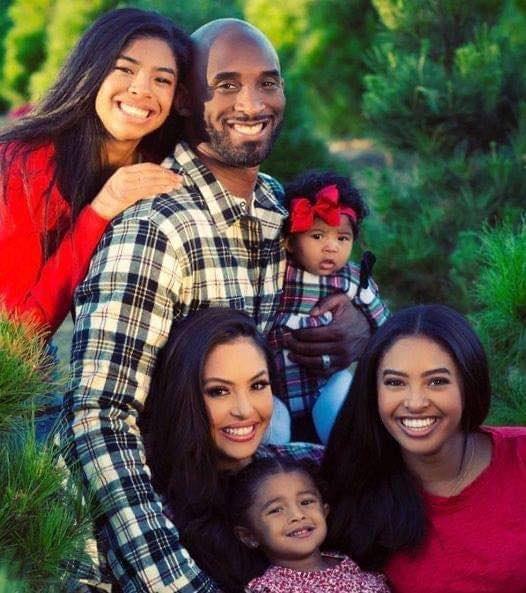
  • Another Terrible Loss For The Bryant Family, Sending Prayers!

    Another Terrible Loss For The Bryant Family, Sending Prayers!

    The basketball world and the city of Philadelphia find themselves cloaked in a familiar, heavy mourning once again. In a year that has already seen its share of transitions, the passing of Joe “Jellybean” Bryant at the age of 69 marks a somber chapter in the ongoing narrative of one of the most famous families in sports history. His death, confirmed by La Salle University, comes after a valiant but brief struggle with the aftermath of a severe stroke—a detail shared by La Salle’s head coach, Fran Dunphy, who remembered Bryant not just as a statistical powerhouse, but as a “beloved member of the Explorer family.”

    To understand the weight of this loss, one must look beyond the proximity to his legendary son, Kobe Bryant. Joe Bryant was an architectural force in his own right, a local icon whose influence was woven into the very fabric of Philadelphia’s storied hoops culture. Long before he was known to the world as Kobe’s father, he was the flamboyant, charismatic “Jellybean,” a 6-foot-9 forward with the ball-handling skills of a guard and a smile that could light up the Spectrum. His journey began in the high-stakes playgrounds of Philly and led him to La Salle University, where he dominated the court with an average of 20.8 points and 11.1 rebounds per game over two seasons. He didn’t just play the game; he choreographed it, bringing a sense of “fun” to the floor that inspired generations of young athletes in the Northeast.

    When Joe was drafted by the Golden State Warriors in 1975 and subsequently traded to his hometown Philadelphia 76ers, it felt like a homecoming for a folk hero. The 76ers organization, reflecting on his legacy, noted that Joe was a “local basketball icon” whose impact transcended the box score. He was a player who possessed a rare combination of physical size and creative flair, a precursor to the versatile, multi-positional players that dominate the NBA today. Over eight seasons in the league, including tenures with the San Diego Clippers and Houston Rockets, Joe proved that basketball was as much an art form as it was a sport.

    However, for many, Joe Bryant’s greatest contribution to the game was the blueprint he provided for his son. The relationship between Joe and Kobe was complex, layered with the high expectations of a professional lineage and the deep, intrinsic bond of a mentor and protégé. Kobe once reflected on his father’s profound influence, noting that Joe taught him “from an early age how to view the game, how to prepare for the game, and how to execute.” It was Joe who introduced Kobe to the nuances of European basketball during his years playing professionally in Italy, exposing the young Mamba to a more tactical, fundamental style of play that would eventually become the cornerstone of Kobe’s legendary “Mamba Mentality.”

    Since the world-shaking tragedy of January 2020—the helicopter crash that claimed the lives of Kobe, his daughter Gianna, and seven others—Joe Bryant had largely retreated from the public eye. The grief of losing a son and a granddaughter under such unthinkable circumstances is a burden few can fathom. Joe navigated that darkness with a quiet dignity, rarely granting interviews or seeking the spotlight that had once followed him. His absence from the public stage made the news of his passing feel all the more poignant, as if the final tether to a specific era of the Bryant family legacy had been severed.

    The tributes pouring in from colleagues and former teammates paint a picture of a man whose warmth was as significant as his jump shot. Arn Tellem, the high-profile sports executive and Kobe’s former agent, described Joe as a “true Philly hoops legend” whose personality touched everyone he encountered. It wasn’t just the professional circles that felt his warmth; it was the local communities where he coached, including his stint as the head coach of the WNBA’s Los Angeles Sparks. In the women’s professional league, Joe was known for his encouraging demeanor and his ability to connect with players on a human level, proving that his love for the game was inclusive and enduring.

    Doug Young, a former teammate of Kobe’s, offered a perspective that perhaps best summarizes Joe’s enduring role: that of an exemplary role model. Young recalled how Joe “made basketball fun and made us all want to be better.” This sentiment captures the essence of “Jellybean.” In an industry often characterized by ruthless competition and cold statistics, Joe Bryant reminded people that the game was meant to be enjoyed. He brought a playground sensibility to the professional arena, a reminder that the ball was meant to bounce with rhythm and the players were meant to play with joy.

    The Bryant family has endured a decade of unimaginable highs and devastating lows. From the five championships that solidified their name in the rafters of the Staples Center to the quiet, heartbreaking farewells in Philadelphia, their story is one of greatness and gravity. As Joe Bryant is laid to rest, he leaves behind a legacy that is inextricably linked to the history of the sport. He was the root of the tree that grew to touch the sky, the man who taught the greatest of all time how to tie his shoes and read a defense.

    La Salle University remains a place of pilgrimage for those who remember Joe’s collegiate brilliance. To the Explorers, he will always be the young man with the infinite ceiling and the “Jellybean” nickname—a nod to his love for sweets and his sweet style of play. As the university and the 76ers fly their flags at half-mast, the basketball community at large is sending prayers to the remaining members of the Bryant family, acknowledging a loss that feels like the end of a grand, albeit tragic, dynasty.

    In the final analysis, Joe Bryant’s life was defined by a circularity. He started in Philadelphia, traveled the world to showcase his talents, and eventually returned to his roots to give back to the game that gave him everything. He was a father, a coach, a legend, and a Philly icon. While the world may remember him through the lens of his son’s global stardom, those who stood on the court with him will remember the man who taught them that basketball was, above all else, a beautiful way to live.

  • The original hourglass! The model who changed the standards of beauty and power

    The original hourglass! The model who changed the standards of beauty and power

    In the pantheon of mid-century icons, few names carry the electric charge of Tempest Storm. With a moniker that seemed to predict a meteorological event, she was a woman for whom fireworks were not just a possibility, but a certainty. Boasting a mane of fiery red hair, eyes that held a commanding, almost hypnotic depth, and an ambition that refused to be dampened by the social constraints of her era, she transformed herself from a desperate small-town runaway into the undisputed queen of burlesque. Long before the term “hourglass figure” became a common marketing cliché, Tempest Storm was its living, breathing architect—a model of beauty and power who redefined what it meant to be a woman in the spotlight.

    The woman the world would come to know as Tempest Storm began her journey in a much humbler setting. Born Annie Blanche Banks on Leap Day, 1928, in the rural town of Eastman, Georgia, her early life was a grueling landscape of poverty and systemic abuse. In the deep South of the late 1920s and 30s, her prospects seemed narrow, defined by the red clay and the stifling expectations of a girl from her background. However, Annie possessed a restless spirit that could not be contained by the borders of Georgia. At the tender age of fourteen, she took the ultimate gamble: she ran away, trading the only life she knew for the uncertainty of the road.

    Her early years as a runaway were marked by the frantic search for stability. By her mid-teens, she had already navigated two brief, failed marriages—unions born more out of a need for survival than romantic fulfillment. Recognizing that her hometown and its traditional structures held nothing for her, she set her sights on the shimmering, distant promise of Hollywood. She wasn’t just chasing a career; she was chasing a version of herself that didn’t yet exist.

    When she arrived in Los Angeles, the transformation began in earnest. Annie Blanche Banks was discarded, and in her place emerged Tempest Storm. She entered the world of burlesque during its golden age, a time when the art form was transitioning from vaudevillian comedy to a high-glamour spectacle. Tempest stood out immediately, not just because of her physical proportions—which were legendary even among her peers—but because of the way she carried herself. She didn’t just perform; she commanded the stage with a regal poise that bordered on the aristocratic.

    Her rise was meteoric. By the 1950s, Tempest Storm was a household name, frequently gracing the pages of magazines and headlining the most prestigious clubs in Las Vegas and New York. She became the “Original Hourglass,” a woman whose silhouette challenged the waifish, buttoned-up standards of the early post-war period. She represented a raw, unapologetic femininity that was both a celebration of the female form and a deliberate subversion of the “girl next door” archetype favored by the film studios of the time.

    Tempest’s influence, however, extended far beyond the stage of a burlesque theater. She was a master of self-branding before the concept had even been named. She understood that in the world of entertainment, mystery was as valuable as visibility. She famously insured her breasts for a then-staggering sum of $1 million—a publicity masterstroke that solidified her status as a high-value icon. This wasn’t merely a gimmick; it was a declaration of power. She was asserting that her body was her own property, a valuable asset over which she held total control.

    Her social life was equally legendary, placing her in the inner circles of the most powerful men in America. She was linked to luminaries like Elvis Presley and Mickey Rooney, and her friendship with John F. Kennedy remains a subject of fascination for historians of the era. These connections weren’t just tabloid fodder; they were a testament to her charisma. In an era where women were often expected to be decorative accessories, Tempest Storm was a protagonist. She navigated the male-dominated worlds of show business and politics with a shrewdness that belied her “runaway” origins.

    As the 1960s ushered in a sexual revolution, Tempest remained a relevant and respected figure. Unlike many stars of the 1940s who struggled to adapt to changing tastes, she embraced the evolution of performance. She saw burlesque not as a relic of the past, but as a precursor to the empowerment movements of the future. To Tempest, the act of taking up space, of being seen and admired on one’s own terms, was a political act.

    Her legacy is visible today in the revival of “neo-burlesque,” where performers cite her as a foundational influence. She proved that beauty didn’t have to be passive and that power didn’t have to be masculine. She took the trauma of her Georgia upbringing and used it as fuel, building a life that was as expansive and brilliant as the neon lights of the Vegas Strip. Tempest Storm lived her life as if every day were Leap Day—a rare, extra moment of existence that she refused to waste.

    When she passed away in 2021 at the age of 93, she left behind more than just a collection of iconic photographs and film clips. She left a blueprint for self-invention. She taught generations of women that you could come from nothing, escape the worst of circumstances, and become a storm that the world couldn’t help but watch. She was the original hourglass, reminding us all that while time eventually runs out, the impact of a truly unstoppable woman is timeless.

  • After We Lost Our Long-Awaited Baby, I Prayed for a Sign – Then I Heard a Newborn Crying Behind a Dumpster

    After We Lost Our Long-Awaited Baby, I Prayed for a Sign – Then I Heard a Newborn Crying Behind a Dumpster

    Grief has a way of turning the world into a landscape of shadows, where every familiar corner reminds you of what is no longer there. For years, my wife Hannah and I had navigated the clinical, sterile world of fertility treatments—a grueling cycle of hope, hormonal shifts, and the deafening silence of negative tests. When we finally saw those two pink lines, the atmosphere in our home shifted from leaden despair to a frantic, joyous light. We whispered names in the dark and tucked tiny onesies into hidden drawers like sacred relics. We had heard the heartbeat; we had seen the grainy, beautiful ultrasound photo that promised us a future.

    Then, late in the pregnancy, the heartbeat stopped. The silence that followed in the doctor’s office was a physical weight, a blow that left us breathless. We didn’t just lose a baby; we lost the version of ourselves that was happy. In the months that followed, Hannah became a ghost in her own life. She stopped humming while she made coffee; she stopped looking me in the eye. She moved through our house with a hollow, mechanical grace, her hand occasionally drifting to her stomach in a reflexive gesture of phantom protection. I tried everything—therapy, quiet walks, patient holding—but my wife was slipping away into a deep, dark reservoir of mourning where I couldn’t reach her.

    Driven by a desperation I couldn’t name, I found myself sitting in the back pew of a small, empty church one freezing January night. I am not a man of traditional faith, but the silence of the sanctuary felt like the only place that could hold my brokenness. I didn’t ask for a miracle or the return of what we had lost. I whispered a single, jagged plea into the rafters: “Please. Give my wife her joy back.”

    I left the church feeling no different, the cold air biting at my lungs. To get to my car, I cut through a narrow, dimly lit alley behind a 24-hour laundromat. The streetlights flickered, casting long, skeletal shadows against the brick. That was when I heard it—a thin, desperate wail that froze the marrow in my bones. At first, I thought my mind was playing a cruel trick on me; after a loss like ours, you hear phantom cries in every gust of wind. But this was real. It was coming from behind a rusted dumpster at the end of the alley.

    There, huddled in the freezing dark, was a girl who looked no older than sixteen, her hoodie pulled tight against the wind. In her arms, wrapped in a thin, tattered blanket, was a newborn. The infant was red-faced and screaming, his tiny lungs fighting against the biting cold.

    “Hey,” I said, keeping my distance so as not to spook her. “Are you okay? Do you need help?”

    “Go away,” she snapped, though her voice trembled with exhaustion. “Leave me alone or I’ll call the cops.”

    “It’s below freezing,” I countered softly. “The baby needs to be inside. You look like you’re about to collapse.”

    The toughness she was trying to project shattered instantly. She grabbed my sleeve, her hand shaking violently. “No. Please don’t call them. They’ll take Milo. They’ll take him away.”

    Her name was Kara. In broken, shivering sentences, she told me her father had kicked her out the moment he realized she was pregnant. The boy who had promised her the world had vanished into the ether. She had been surviving on scraps and sheer adrenaline, trying to keep her son alive with nothing but stubbornness and terror. I looked at this child holding a child and saw a mirror of the desperation I had felt in the church. “Come with me,” I said. “Just for tonight. Food, a warm bed. We’ll figure the rest out tomorrow.”

    The drive home was a blur of anxiety. I wasn’t just bringing strangers into my home; I was bringing a newborn baby into the epicenter of my wife’s grief. I feared the sight of him would be the final blow that broke her completely. When we stepped onto the porch, Milo began to cry again—a sharp, demanding sound that pierced the quiet of our neighborhood.

    I opened the door, and there was Hannah, standing in the hallway like a sentry. She looked at Kara, then her eyes dropped to the bundle in the girl’s arms. A look of raw, exposed pain flickered across her face, followed by a profound, haunting recognition. For a moment, I thought she would turn and run.

    “I found them in the alley,” I blurted out, my heart hammering. “She has nowhere to go, Hannah. It’s freezing.”

    Hannah didn’t say a word. She didn’t yell or weep. She simply stared at the baby as if he were a miracle she didn’t believe she deserved to witness. Kara whispered that she could leave, but Hannah stepped aside, her voice barely a breath. “Come in.”

    That night was a study in tentative humanity. Hannah didn’t go to bed. Instead, she moved into the kitchen with a sudden, purposeful energy I hadn’t seen in months. She warmed water, found clean towels, and created a makeshift nest for the baby near the couch. Then, she grabbed her keys and left. An hour later, she returned with bags of formula, diapers, and thick, warm blankets. She moved with the precision of someone who had been preparing for this moment her entire life.

    In the middle of the night, I found them in the living room. Kara was fast asleep on the sofa, her body finally surrendering to exhaustion. Hannah was sitting in the armchair, Milo tucked against her chest. She was watching his chest rise and fall, her own breathing syncing with his. I stood in the shadows and wept, the salt of my tears a strange relief.

    The following morning, I woke up to a sound I thought I’d never hear again: Hannah’s laughter. It was soft and rusty, but it was there. She was making faces at Milo, who was cooing in response. She insisted they stay—not just for the night, but until things were stable. Healing didn’t happen overnight; there were still days of heavy silence and nights where the grief returned like an uninvited guest. But the house felt alive. It smelled of baby powder and hope instead of stagnant sorrow.

    Three weeks later, the peace was shattered by a violent pounding on the door. A man with hard, cold eyes stood on our porch—Kara’s father. He had tracked her down and was demanding she return home, but with a horrifying caveat: “The girl comes back. The baby stays out. She threw her life away for this, and I won’t have it in my house.”

    He sneered at us, claiming Kara was a “bad seed” and that we were interfering with a minor. But Hannah stood tall, a fire in her eyes that had been extinguished for far too long. “You kicked your child out into the street,” she snapped, her voice ringing with authority. “You didn’t come here to protect her; you came to punish her. If you don’t leave this property, the police will be the least of your worries.”

    We didn’t just let him walk away. We fought back with the ferocity of parents who knew exactly what was at stake. We documented the eviction, the threats, and the neglect. We worked with family lawyers and social services. Because Kara’s father had effectively abandoned her and refused to provide for the infant, we were able to secure legal guardianship.

    Today, our home is loud and messy. Kara is finishing her high school credits and working part-time, reclaiming the youth that was nearly stolen from her. Milo is a thriving, happy toddler who thinks Hannah hung the moon. My wife still has her bad days—we still miss the child we never got to hold—but she isn’t a shadow anymore. She is a mother, not in the way we originally planned, but in the way that matters most.

    I asked for a sign that joy wasn’t gone forever. I didn’t expect it to arrive in a shivering bundle behind a dumpster. We didn’t replace the child we lost; you can never replace a soul. But we found that even when a heart is broken, it can still expand to hold someone else’s brokenness. Some families are born of blood, but the strongest ones are built from the wreckage of the storm.

  • A Quiet Hospital Stay That Turned Into an Unexpected Source of Hope!

    A Quiet Hospital Stay That Turned Into an Unexpected Source of Hope!

    During my two-week residency in the sterile, white-walled confines of the municipal hospital, silence became more than just a lack of noise; it became my closest, most persistent companion. When you are confined to a bed, the world outside doesn’t just feel distant—it feels like a different dimension entirely.

    My children, now grown with lives of their own, lived in different cities, separated from me by hours of highway and the relentless demands of their careers. My friends meant well, and their occasional texts were flickers of light, but they were busy with the heavy lifting of middle age—responsibilities I no longer had the physical or mental energy to juggle. Visiting hours would arrive and depart like a tide, often without leaving a single familiar face at the foot of my bed. Each day stretched into a grueling marathon of monotony, marked only by the rhythmic, antiseptic beeping of cardiac monitors, the metallic rustle of privacy curtains, and the muffled, rhythmic footsteps of nurses as they performed the changing of the guard at shift intervals.

    I fought to maintain a veneer of optimism. I whispered to myself that this was a temporary detour, a necessary pause for repair. I reminded my restless mind that healing is a slow, quiet labor that demands absolute patience. Yet, loneliness has a predatory way of creeping into a room when the sun dips below the horizon. When the hospital lights dim to a soft, nocturnal blue and the ambient chatter of the hallway fades, you are left entirely alone with the weight of your own thoughts. It was a heavy, persistent presence that settled beside me in the dark, whispering doubts about whether I would ever truly feel like myself again.

    However, amidst that crushing isolation, there was one constant that tethered me to hope.

    Every night, just before the ward descended into its deepest hush, a nurse would enter my room. He was a man of quiet stature, his movements deliberate and never rushed. In an environment where every second is measured and every action is hurried, his calm was an anomaly. He would speak softly, his voice a low baritone that seemed to soothe the very air in the room. He didn’t just check my vitals; he adjusted the heavy hospital blankets with a gentleness that felt like a benediction. He would check the monitors with a practiced eye and then, before leaving, he would lean in slightly and offer words that felt like they were pulled directly from my own subconscious needs.

    “Rest now,” he would say.

    “Don’t give up.”

    “You’re doing better than you think.”

    They were simple, unadorned phrases, but in that sterile vacuum of a room, they were oxygen. In those fleeting moments, I felt noticed—not as a diagnostic code, a bed number, or a chart of fluctuating heart rates, but as a human being worthy of dignity. His nightly presence became the anchor of my routine, a quiet, steady reassurance that I wasn’t drifting away into the void.

    When the day of my discharge finally arrived, I felt a renewed strength, though I knew I was still as fragile as spun glass. As I gathered my meager belongings and prepared to step back into the world of sunlight and traffic, I felt a deep compulsion to express my gratitude. I stopped at the head nurse’s station, my legs still slightly shaky.

    “I’d like to leave a note of thanks for the male nurse who checked on me every night,” I said to the woman behind the desk. “The one assigned to the late-night rotation in room 412.”

    The staff members exchanged puzzled glances. They pulled up the digital schedules, scrolled through the logs of the past fortnight, and cross-referenced the payroll assignments. After several minutes of searching, the head nurse looked at me with a gentle, somewhat pitying expression.

    “I’m sorry,” she said softly. “But there wasn’t a male nurse assigned to your floor at all during your stay. We’ve had a strictly female staff on the night shift for the last month due to some regional transfers.”

    The staff suggested that perhaps the combination of high-grade antibiotics, the stress of the illness, or sheer exhaustion had blurred the edges of my memory. They explained, quite logically, that patients often perceive hallucinations or “vivid dreams” while recovering from trauma. I nodded, accepting their explanation with a quiet “thank you,” even though a strange, cold unease settled in my chest. I walked out of those sliding glass doors and into the crisp January air, telling myself that the mind is a powerful thing, capable of creating whatever company it needs to survive.

    Weeks passed. I returned to my home, slowly reclaiming the small rituals of my daily life. The hospital stay felt increasingly like a fever dream, a hazy memory of blue light and beeping machines. While finally unpacking the small overnight bag I had used during my stay—a bag I hadn’t had the heart to touch since coming home—my fingers brushed against a small, stiff object tucked deep into the interior side pocket.

    I reached in and pulled out a small piece of paper, creased at the edges and worn as if it had been handled many times. I unfolded it with trembling hands. Written in a neat, precise script that I didn’t recognize were the exact words I had heard in the dark:

    “Don’t lose hope. You’re stronger than you think.”

    There was no signature. No date. No hospital letterhead.

    I sat on the edge of my bed for a long time, the paper heavy in my palm, replaying those quiet, midnight visits in my mind. I searched for a logical explanation. Perhaps it was a note left by a cleaning staff member whose name I never learned? Perhaps a fellow patient had slipped it in while I was sleeping? Or perhaps, as the doctors suggested, I had written it myself in a moment of delirium and then forgotten?

    But as I looked at the handwriting—strong, steady, and unfamiliar—I realized that the origin of the note mattered far less than its existence.

    The note remained on my nightstand, a permanent fixture of my new life. It served as a daily reminder that comfort often arrives in guises we cannot fully explain and that kindness doesn’t always feel the need to leave a signature or a trail of evidence. It taught me that strength isn’t always something we generate from within; sometimes, it is awakened by a few simple words spoken at the exact moment the light seems to be failing.

    Ultimately, the mystery of the “night nurse” didn’t need to be solved. Whether he was a man of flesh and blood or a manifestation of a deeper, universal grace, the result was the same. It isn’t always about who offers the encouragement or how the message arrives. It’s about the person that encouragement allows you to become once the darkness has passed.