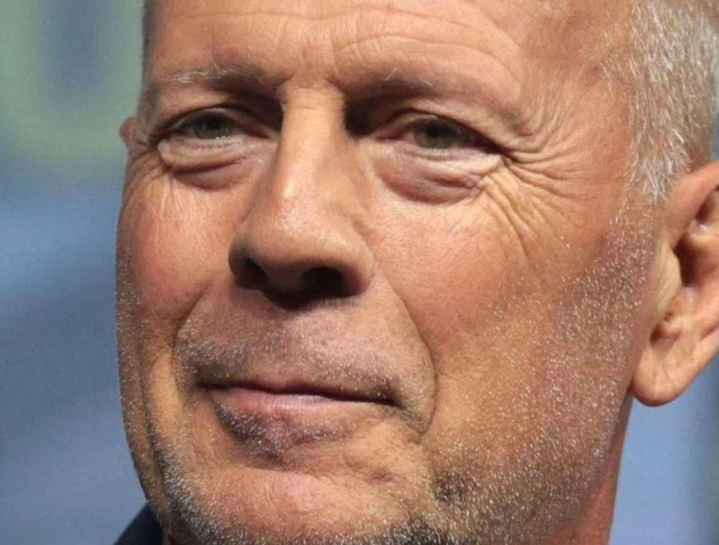
Bruce Willis has spent decades as one of Hollywood’s most recognizable faces, the kind of actor whose presence alone could anchor a film. From action blockbusters to quieter dramatic roles, his career shaped entire eras of popular cinema. Now, the spotlight has shifted for reasons no one would ever want. His family has confirmed that he is living with dementia, a condition that changes not just one life, but the rhythm of an entire family.
The news hit hard for fans around the world. People who grew up watching Willis play unbreakable characters suddenly had to confront a painful truth: this is a battle no amount of fame, success, or toughness can overpower. Dementia is relentless. It doesn’t move in straight lines. Some days feel manageable, others feel brutal, and there is no predictable script.
Inside the Willis household, that reality is lived day by day. Those closest to Bruce have chosen honesty over silence and unity over fear. Instead of hiding behind vague statements, the family has spoken openly about what this chapter looks like, not to invite pity, but to acknowledge the truth and normalize conversations around cognitive illness.
One of the most candid voices has been his daughter, Tallulah Willis. In a recent interview connected to her work with luxury silk brand Kumi Kookoon, she spoke not as a celebrity daughter, but as someone navigating the emotional terrain of loving a parent whose mind no longer behaves the way it once did. Her reflections weren’t dramatic or sentimental. They were grounded, measured, and painfully real.
Tallulah explained that no two visits with her father are ever the same. That unpredictability is one of the hardest parts. You don’t know what version of the day you’re walking into. You don’t know what he’ll remember, what he’ll feel, or how long certain moments of clarity might last. Because of that, she prepares herself mentally before every visit. Not with expectations, but with acceptance.
She described the simple act of going to see her dad and spending time with him, stripped of any illusion that love alone can fix what’s happening. Instead, she focuses on presence. Being there. Showing up emotionally, even when it hurts. Even when it’s confusing. Even when it’s exhausting.
Tallulah shared that she has learned to approach these moments with an open heart rather than a checklist of hopes. Dementia doesn’t reward rigid expectations. It demands flexibility and patience. She has taken conscious steps to meet her father where he is, not where she wishes he could be. That mindset doesn’t erase the pain, but it allows connection to exist without constant disappointment.
She also noted that, considering everything, her father is doing as well as he can be. That doesn’t mean things are easy. It doesn’t mean there aren’t difficult days. It simply means the family measures progress differently now. Stability, comfort, and moments of calm matter more than milestones or long-term plans.
Behind these words is a family operating as a unit. Bruce Willis is surrounded by people who refuse to let this disease isolate him. His wife, his daughters, and his extended family remain visibly present, reinforcing a sense of safety and familiarity. Dementia can shrink a person’s world. The Willis family is pushing back against that by staying close, consistent, and emotionally engaged.
Tallulah’s openness carries additional weight because she herself has been diagnosed with autism. She has spoken about how sensory experiences shape her emotional regulation and how she has learned to create comfort for herself through weighted blankets and tactile design. These aren’t casual details. They show how deeply she understands the importance of safety, grounding, and presence, not just for herself, but for her father as well.
Her work with weighted textures and calming materials mirrors the emotional approach she takes with Bruce. Gentle. Intentional. Focused on what brings peace rather than what has been lost. As she has learned more about her own sensory needs, she has found those same principles apply when caring for someone with cognitive decline. Predictability, warmth, and emotional readiness matter.
What stands out most in this story isn’t celebrity or tragedy. It’s discipline. Emotional discipline. The kind that doesn’t romanticize suffering or pretend strength means never breaking. The Willis family isn’t presenting themselves as heroic or inspirational figures. They are simply doing the work, day after day, without guarantees.
Dementia strips away illusions fast. It forces families to confront grief in slow motion. You mourn someone who is still alive. You adjust to losses that don’t happen all at once. You learn that love doesn’t always look like conversations or shared memories. Sometimes it looks like sitting quietly. Sometimes it looks like repetition. Sometimes it looks like letting go of who someone used to be while still honoring who they are.
Bruce Willis’ journey has made many people reflect on their own families, their own parents, and the fragility of time. It has also highlighted something society often avoids: cognitive illness doesn’t erase dignity. A person is still a person, even when memories fade or language falters.
The Willis family’s choice to remain visible through this process matters. It challenges the idea that illness should be hidden. It reminds people that vulnerability is not weakness, and caregiving is not a side note to life. For many families dealing with dementia, this story feels painfully familiar. For others, it’s a wake-up call.
There is no neat ending here. Dementia doesn’t offer closure or redemption arcs. What it offers is a test of patience, compassion, and resilience. The Willis family isn’t trying to control the outcome. They are focused on showing up fully, even when the path forward is unclear.
In a world obsessed with youth, power, and invincibility, this chapter of Bruce Willis’ life tells a different kind of story. One about presence over performance. Love over legacy. And the quiet strength of a family that refuses to let illness define the value of the person they love.
Their unity doesn’t make the disease disappear. It doesn’t soften every blow. But it does something just as important. It ensures that Bruce Willis is not facing this battle alone.
Leave a Reply