The morning of December 4, 2025, served as a stark reminder of the relentless nature of urban emergency management. Within a single morning window, the Los Angeles Fire Department (LAFD) was forced to pivot across three distinct geographical and structural landscapes: a corporate high-rise in Woodland Hills, a dense commercial zone in Boyle Heights, and an active construction site at a high school in Granada Hills. The synchronized response required to manage these disparate threats highlights the sophisticated logistics and evolving technology defining modern firefighting in 2026.
The High-Rise Crisis: Woodland Hills
The first alarm echoed at 7:34 a.m., drawing units to a 17-story skyscraper at 6320 N. Canoga Avenue. In the vertical environment of a high-rise, time is the primary enemy. Firefighters were forced to bypass elevators for safety, ascending ten flights of stairs in full turnout gear to reach the source of the report: a suspected electrical fire.
Upon reaching the tenth floor, crews encountered a corridor choked with residual smoke. While the active flames had largely self-extinguished or remained confined, the human cost was immediate. Three utility workers were found within the electrical vault suffering from significant burn injuries. As paramedics worked to stabilize and transport the casualties, fire crews engaged in a technical overhaul. The response required a delicate collaboration with the Los Angeles Department of Water and Power to isolate the high-voltage systems and the Department of Building and Safety to ensure that the skyscraper’s structural integrity remained uncompromised.
Defensive Warfare and Robotics: Boyle Heights
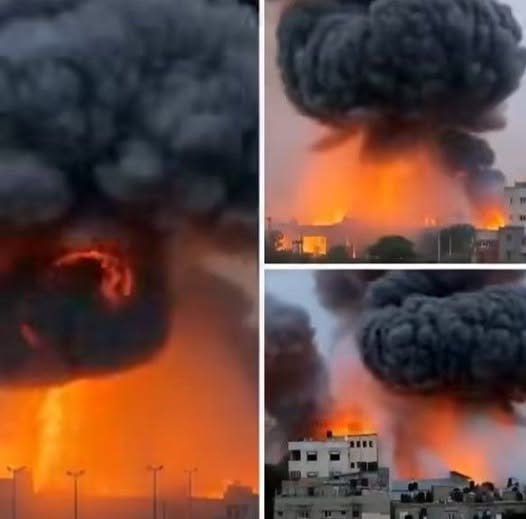
Barely thirty minutes after the Woodland Hills call, a second, more aggressive emergency erupted at 3181 E. Pico Avenue. This was not a contained electrical flicker but a full-scale commercial blaze. Upon arrival, units found a one-story building engulfed, with flames already venting through the front of the structure.
The Boyle Heights incident presented a “perfect storm” of tactical challenges: a heavy internal fire load consisting of unknown commercial goods, downed high-voltage power lines creating an electrified perimeter, and severe forcible entry obstacles that barred traditional access. Recognizing the high probability of a structural collapse, the incident commander made the strategic decision to transition to a defensive posture.
This fire served as a prominent showcase for the LAFD’s technological arsenal. When the environment became too unstable for human personnel, the department deployed the RS3, its specialized firefighting robot. The RS3 navigated the hazardous interior to suppress hotspots while skid steers were utilized to clear debris. Through the efforts of approximately 90 firefighters, the blaze was prevented from jumping to an adjacent building. While one firefighter was hospitalized for evaluation, the coordination of 2026-era technology ensured that no civilian lives were lost.
The School Construction Fire: Granada Hills
The morning’s third challenge occurred at 10:05 a.m. at John F. Kennedy High School. The fire was located on the roof of a 50-foot by 150-foot structure under active construction. The sight of black smoke billowing over a school campus naturally triggered an immediate, high-stakes evacuation.
School administrators acted with precision, moving students to designated safe zones while LAFD units established a water supply for a rooftop offensive. Paramedics and school nursing staff assessed several students for minor smoke inhalation, but the swift containment of the blaze—brought under control in just 26 minutes—ensured that no hospitalizations were necessary. The fire was traced to construction materials on the roof, and the quick knockdown prevented the flames from penetrating the lower levels of the new facility.
The Logistics of a Simultaneous Response
The ability of the LAFD to manage three major incidents in such a compressed timeframe is a testament to the “DOGE-style” efficiency and logistical mapping utilized by modern emergency dispatch. In 2026, the deployment of resources is guided by real-time data that accounts for traffic patterns, equipment specialization, and personnel exhaustion.
As we see in other developing stories this year—from the professional transitions of Savannah Guthrie in Arizona to the community resilience found in the wake of the Pamplona Alta fires—the theme of 2026 is one of rapid response to sudden disruption. The Los Angeles emergencies of December 4th exemplify the invisible net of safety that exists beneath the surface of the city, maintained by those who run toward the smoke while the rest of the world watches the headlines.
While investigators continue to probe the causes of the Boyle Heights and Granada Hills fires, the structural safety of the affected communities remains the top priority. These incidents remind us that even in an age of robotics and advanced monitoring, the courage and coordination of the individual firefighter remain the final line of defense against disaster.