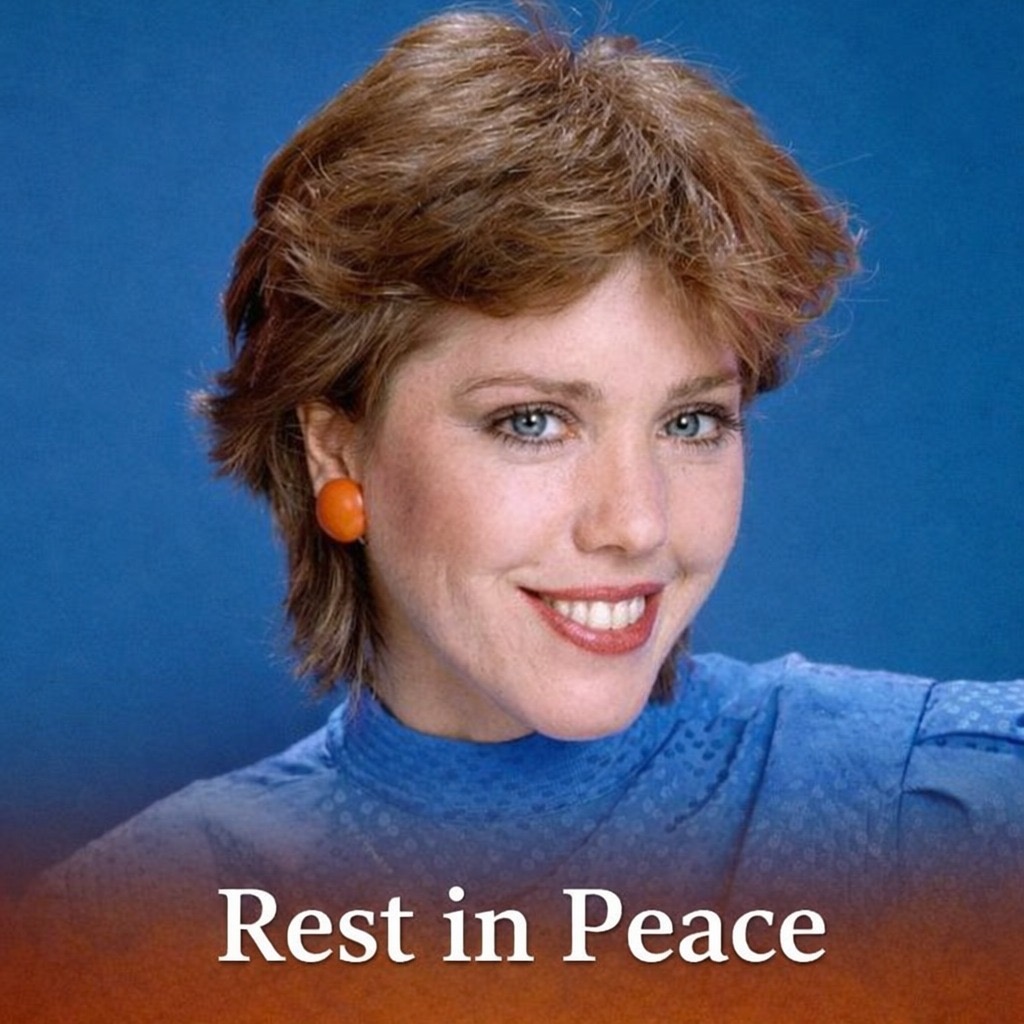
Penelope Milford, an Oscar-nominated actress whose quiet intensity left a lasting mark on film, theater, and audiences who valued subtlety over spectacle, has died at the age of 77. Her death was confirmed by family members, who said she passed away on October 14 while living in a rehabilitation facility in Kingston, New York, where she had been recovering from injuries sustained in a car accident earlier this year.
Milford’s sister, Candace Saint, and brother, Douglas Milford, said the accident occurred in July and required extended care. Though she had been making progress, her health ultimately declined. Her passing closes the chapter on a career defined not by constant visibility, but by depth, discipline, and a devotion to craft that never wavered.
Born in St. Louis, Missouri, Milford came of age far from Hollywood’s center but carried with her an early sense of curiosity and seriousness about performance. She attended New Trier High School in Illinois, an institution known for producing artists across disciplines. After graduating, she moved to New York City, where she immersed herself in the study of acting at the American Place Theatre, a creative incubator that emphasized character work, emotional truth, and experimental storytelling.
Her earliest film appearance came in 1970, when she worked as an extra in Maidstone. It was a modest beginning, but one that placed her in the orbit of independent cinema at a time when the boundaries between stage and screen were fluid. Rather than chasing immediate stardom, Milford focused on building a foundation in theater, where her work quickly gained respect.
Throughout the 1970s, she became a familiar presence on New York stages, performing in off-Broadway and Broadway productions that demanded emotional range and stamina. Her work in plays such as Lenny and Shenandoah demonstrated her ability to inhabit complex roles without exaggeration. Colleagues from that period often described her as meticulous, reserved, and deeply committed to rehearsal, someone who listened as much as she spoke.
Her transition to more prominent film roles came naturally. Milford appeared in Valentino, followed by performances in Endless Love and other notable projects. But it was her role in Coming Home that would define her legacy in cinema.
In that film, Milford delivered a performance marked by restraint and emotional clarity, standing out in a cast that included some of the era’s most celebrated actors. Her portrayal earned her an Academy Award nomination for Best Supporting Actress, a recognition that acknowledged her ability to convey vulnerability and strength without drawing attention to the mechanics of performance. She did not dominate the screen; she anchored it.
Despite the nomination, Milford never pursued the kind of visibility that often follows such acclaim. She continued to choose roles selectively, appearing in films that interested her artistically rather than those guaranteed to raise her profile. One of those films was the cult classic Heathers, where she played a supporting role that resonated with audiences decades later. Though the film became a pop-culture touchstone, Milford remained largely outside the spotlight, content to let the work speak for itself.
By the mid-1980s, she began to step away from acting as her primary focus. In Los Angeles, she opened and ran an art gallery, immersing herself in the visual arts and supporting emerging artists. Friends recall that this period brought her a different kind of fulfillment—one rooted in curation, mentorship, and quiet observation rather than performance.
She also taught acting, passing on her philosophy to younger performers. Her teaching style was described as direct and unsentimental. She emphasized preparation, honesty, and respect for the material, discouraging shortcuts and superficiality. For students, her guidance carried weight precisely because it came from someone who had navigated both success and obscurity without becoming bitter about either.
Later in life, Milford returned to New York State, settling in Saugerties. There, she undertook the restoration of a historic home, a project that mirrored her approach to acting: patient, detail-oriented, and grounded in respect for what already existed. Those close to her said she found peace in that work, enjoying the balance of solitude and purpose.
Milford’s personal life was private by design. She was briefly married to poet Michael Lally, a relationship rooted in shared artistic values, though the marriage did not last. She did not remarry and had no children, but maintained close relationships with her siblings and extended family.
She is survived by her brother, Douglas Milford, her sister, Candace Saint, and three nieces and nephews. In their statements, family members emphasized her independence, her intelligence, and her refusal to define herself solely by professional achievements.
In an industry that often rewards volume over substance, Penelope Milford built a career on the opposite principle. She did not chase constant relevance. She did not reinvent herself for trends. She worked when the work mattered to her and stepped back when it didn’t. As a result, her performances have aged well, retaining their emotional precision long after flashier roles have faded.
Her death prompted quiet reflection among those who knew her work best. Not the loud mourning reserved for megastars, but the deeper recognition that comes when a steady presence is suddenly gone. Milford belonged to a generation of performers who believed that acting was not about being seen, but about seeing—understanding people well enough to represent them honestly.
Penelope Milford leaves behind a body of work that rewards revisiting. Her performances do not demand attention; they earn it. And in that way, her legacy endures not through constant remembrance, but through moments of recognition when audiences realize how much she contributed, often without asking for credit.