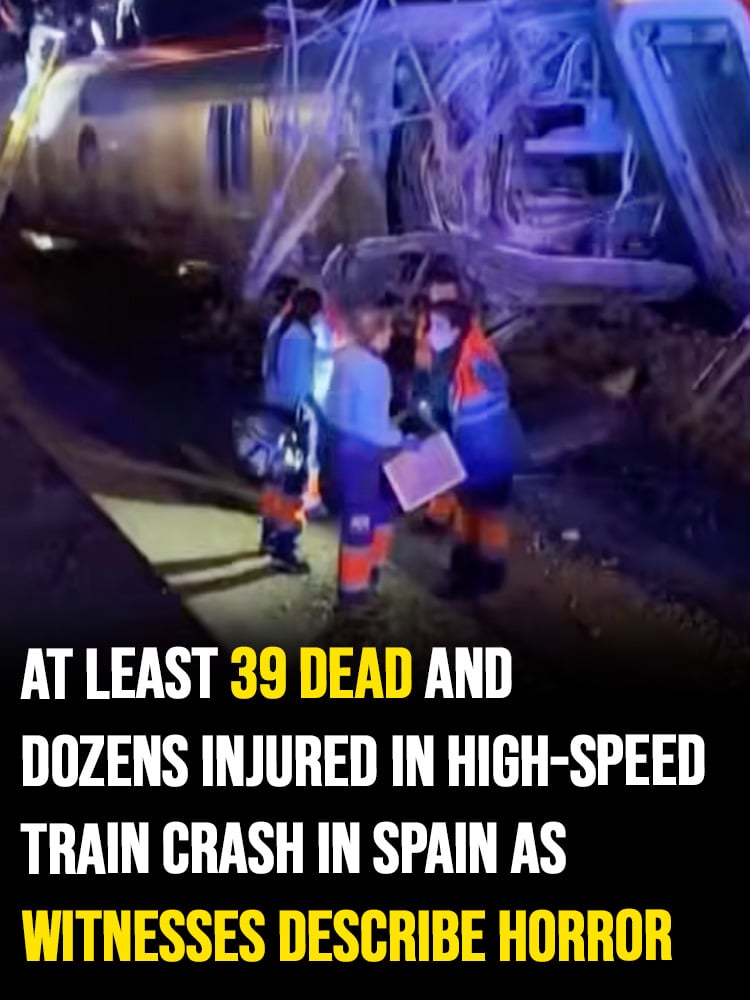
The screams started in the dark, without warning. One moment there was the steady rhythm of a high-speed train cutting through southern Spain, the low hum that lulls passengers into half-sleep. The next, metal shrieked against metal, glass detonated, and an ordinary journey collapsed into terror. In a matter of seconds, a quiet Sunday evening turned into one of the deadliest rail disasters Spain has seen in more than a decade.
Passengers had boarded the train expecting nothing more than a routine trip between Málaga and Madrid. Families settled into seats, children dozed, travelers scrolled on phones or stared out into the darkness. There was no sense of danger, no hint that anything was about to go wrong. Then, near the small town of Adamuz in the province of Córdoba, the unthinkable happened.
According to early reports, one train derailed at high speed, crossed onto the opposite track, and slammed head-on into another. The force of the collision tore carriages from the rails and hurled them into a nearby ditch. Entire sections of the train twisted and folded in on themselves, steel bending as if it were paper. Lights went out instantly, plunging passengers into darkness filled with dust, smoke, and screams.
Survivors described a sound “like thunder exploding inside the train.” Others said it felt as if the ground vanished beneath them. Floors tilted at impossible angles. Luggage flew. People were thrown from their seats, crashing into walls, into each other, into anything within reach. In some carriages, passengers found themselves suddenly upside down, disoriented and bleeding, struggling to understand whether they were alive or dead.
Children cried for their parents. Parents screamed their children’s names. In the pitch black, people reached out blindly, grabbing hands, arms, clothing—anything human. Some were pinned by collapsed metal and seats, unable to move. Others crawled through shattered glass, cutting their hands and knees as they searched for exits or familiar voices.
Emergency services were dispatched almost immediately, but reaching the wreckage was difficult. The crash site was remote, and access roads were narrow. When firefighters and paramedics arrived, they were met with a scene of devastation that even veteran responders struggled to process. Carriages lay broken and scattered, some crushed so tightly that entry seemed impossible.
Rescue teams worked through the night under floodlights, cutting through steel with hydraulic tools, prying open compartments inch by inch. Firefighters described crawling into spaces barely wide enough to breathe, listening for the faintest sounds that might indicate someone was still alive. In some cases, they were forced to remove the dead to reach survivors trapped beneath them, a grim but necessary reality in mass-casualty disasters.
“At times, you had to choose,” one rescuer said. “You knew there were people alive somewhere, but the only way to reach them was through what was left of others.” The physical exhaustion was extreme, but the emotional toll was heavier. Every scream answered, every voice found, came with the knowledge that others would not be.
By morning, the scale of the tragedy was clear. At least 39 people had been confirmed dead, with dozens more seriously injured and more than a hundred requiring medical treatment. Hospitals across the region went into emergency mode, clearing wards, calling in extra staff, and preparing for a wave of patients suffering from fractures, internal injuries, burns, and severe trauma.
Outside those hospitals, families gathered in silence and anguish. Phones were clutched in shaking hands. Every ring triggered a rush of hope and fear. Unknown numbers became lifelines. Parents waited for news of children. Spouses waited for partners who had sent a final text saying they were on the train. Some learned their loved ones were alive but injured. Others received news that shattered their world in a single sentence.
Spain’s prime minister addressed the nation, calling it a “night of deep pain” and expressing condolences to the victims’ families. Flags were lowered. Moments of silence were observed. Across the country, the tragedy dominated conversation, not as distant news, but as a shared wound. High-speed rail is deeply woven into modern Spanish life, trusted as safe, efficient, almost routine. That trust was violently broken.
Investigators moved quickly to secure the crash site and begin determining what went wrong. Questions mounted immediately. How could a high-speed train derail and cross onto an opposing track? Were there signaling failures? Mechanical faults? Human error? Officials cautioned that answers would take time, emphasizing that early speculation could be misleading. For families of the victims, however, patience felt impossible. Understanding why mattered, but it could not undo what had already been lost.
Survivors spoke of the aftermath in stunned, fragmented memories. One man recalled climbing out of a shattered window and realizing the ground was far below where it should have been. A woman described holding a stranger’s hand for nearly an hour in the dark, both of them injured, whispering reassurances they weren’t sure were true. Another survivor said the silence after the initial chaos was almost worse than the noise—a heavy, broken quiet punctuated by distant cries.
Mental health professionals warned that the psychological impact of the crash would linger long after physical injuries healed. Survivors may face nightmares, flashbacks, anxiety, and survivor’s guilt. Families who lost loved ones must navigate grief made sharper by its suddenness and violence. Emergency responders, too, will carry the weight of what they saw and did that night.
As daylight revealed the full extent of the wreckage, the crash site looked less like a railway accident and more like a battlefield. Twisted steel, scattered personal belongings, and torn seats told the story without words. Shoes, bags, children’s toys—ordinary objects transformed into symbols of lives interrupted.
The disaster has reignited debates about rail safety, infrastructure investment, and oversight, particularly as countries push for faster and more efficient transport. High-speed rail promises progress, but this tragedy is a brutal reminder that when something goes wrong at such speeds, the consequences are catastrophic.
For now, Spain mourns. Names are being released slowly. Funerals are being planned. Communities are rallying around the bereaved with vigils, flowers, and quiet solidarity. The questions will come, the investigations will conclude, and reforms may follow. But none of that will bring back the lives lost on that dark stretch of track.
What remains are the voices of those who survived, the grief of those who didn’t, and a nation forced to confront how quickly normal life can collapse into horror. One journey. One moment. And dozens of families forever changed.
Leave a Reply