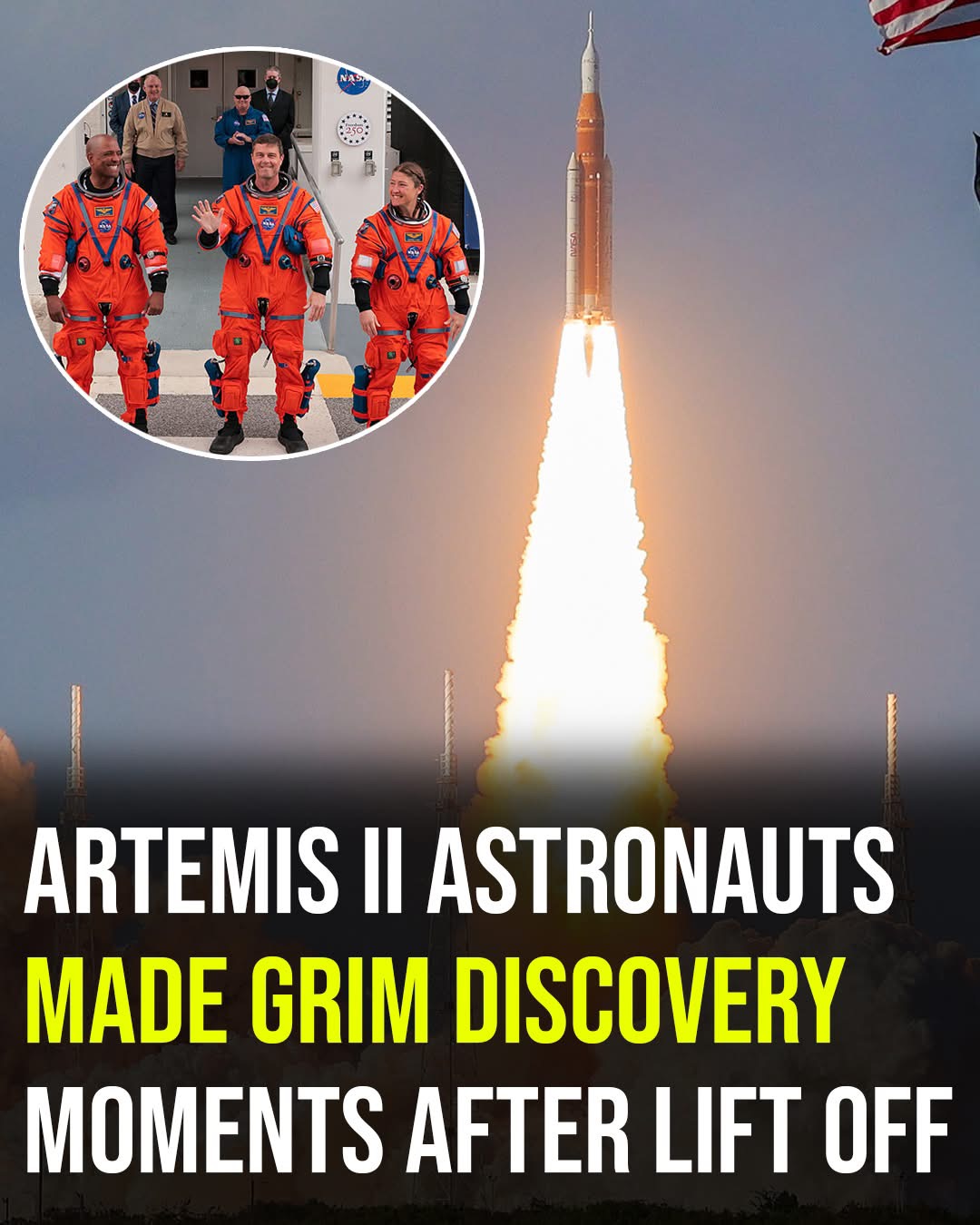
Artemis II Mission Encounters Unexpected Issue Shortly After Historic Launch
On April 1, 2026, Artemis II launched from Kennedy Space Center, marking a major milestone—the return of crewed lunar missions after more than fifty years. Led by NASA, the mission carried four astronauts—Reid Wiseman, Victor Glover, Christina Koch, and Jeremy Hansen—on a 10-day journey around the Moon.
The liftoff itself went exactly as planned, signaling the beginning of a new era in space exploration. But just a few hours into the mission, the crew faced an unexpected—and very human—problem that quickly caught the attention of mission control.
A Minor Problem with Major Importance
Inside the Orion spacecraft, astronauts discovered a malfunction in one of the most essential onboard systems: the toilet.
While it might sound trivial compared to the complexity of space travel, the issue had real implications. On a mission lasting over a week, waste management systems are critical not only for comfort but also for maintaining normal operations.
Engineers on Earth reacted immediately, working closely with the crew to identify the cause in real time. Initial reports confirmed that while the issue was inconvenient, it posed no threat to the mission or the astronauts’ safety.
A NASA spokesperson addressed the situation with a bit of humor:
“It’s not their No. 1 problem, but it may be a problem for going number one.”
When Technology Meets Reality
The Orion capsule was designed with more advanced systems than those used during the Apollo missions, offering improved comfort and functionality. Still, the incident highlighted a familiar truth about spaceflight—no matter how advanced the technology, unexpected problems can arise once systems are tested beyond Earth.
In this case, the solution came through a mix of engineering support from the ground and hands-on work inside the spacecraft.
Quick Response and Teamwork
Astronaut Christina Koch played a key role in resolving the issue. Following detailed instructions from mission control in Houston, she carefully disassembled parts of the system and made the necessary adjustments.
Through coordinated efforts between the crew and engineers, the system was successfully restored.
Mission control later confirmed the fix with a lighthearted update:
“Happy to report that the toilet is good for use. We do recommend letting the system get up to operating speed before donating fluid and then letting it run a little bit after donation.”
Koch responded simply:
“We are cheers all around.”
Mission Continues on Course
Despite the early complication, the Artemis II mission remains fully on track. The crew continues its planned trajectory around the Moon, representing a key step in NASA’s long-term goal of returning humans to deep space exploration.
Moments like this serve as a reminder that even during historic achievements, space missions remain deeply human—defined not only by advanced technology, but by adaptability, teamwork, and the ability to solve problems under pressure.
As the journey continues, attention now shifts back to the mission’s broader objectives, with expectations high for a safe and successful return to Earth.