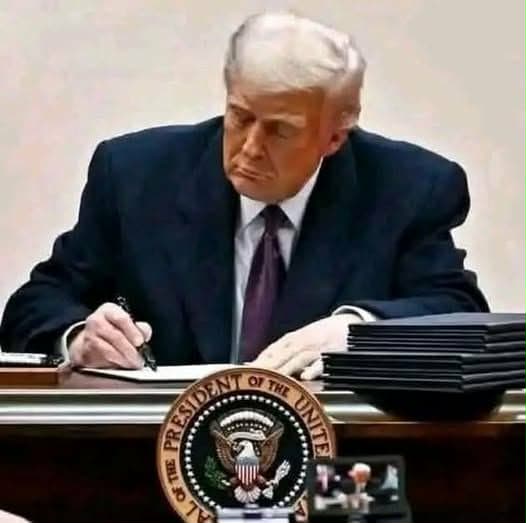
In the opening weeks of 2026, the United States has entered a phase of profound structural transformation that historians may eventually categorize as the “Quiet Reset.” On the surface, the transition appeared to follow the traditional theater of American power: a sequence of executive signatures, the flash of cameras at a familiar mahogany podium, and a series of speeches defined by a relentless insistence that the nation would finally “play to win.” However, beneath the polished veneer of these public appearances, the fine print of a new administrative philosophy began to detonate across the federal landscape. This was not merely a change in partisan priority, but a fundamental attempt to rewrite the nation’s socio-economic source code, prioritizing speed and aggression over the traditional cautious deliberations of a representative democracy.
One of the most disruptive pillars of this reset was the establishment of a massive sovereign wealth fund, designed to buy into the future of global technology and infrastructure. Simultaneously, rumors regarding the imminent ban or forced sale of major social media platforms like TikTok signaled a shift toward a more isolationist and protective digital posture. The economy was being rewired for a high-stakes competition with global rivals, and the traditional guardrails of the regulatory state were the first obstacles to be removed. This was characterized by the implementation of a staggering ten-for-one deregulation rule. Under this mandate, for every new regulation proposed, ten existing ones had to be eliminated. This turned the very act of governance into a political liability for federal agencies, forcing them to gut long-standing protections simply to maintain their basic operational functionality.
The impact was immediate and chaotic. What had historically required years of public hearings, environmental impact studies, and bipartisan debate began to dissolve into a blur of rushed repeals and triumphant press conferences. The bureaucratic machinery, once criticized for its glacial pace, was suddenly forced into a sprint that many felt sacrificed safety for velocity. In the corporate world, the reaction was polarized. Major industrial sectors and speculative markets soared, reveling in their newfound freedom from constraints they had long resented as “red tape.” However, in the quieter corners of corporate boardrooms, a sense of panic began to take hold. Many executives realized that the predictable legal and regulatory guardrails they had relied on for long-term planning were disappearing, replaced by a volatile environment where the rules of the game could change with a single pen stroke.
The symbolic weight of this reset was further cemented by the nation’s formal exit from the Paris Climate Agreement for the second time, coupled with an aggressive revival of single-use plastics and a pivot back toward traditional energy dominance. The message sent to the global community and domestic critics was unmistakable: the administration would prioritize immediate economic stability and industrial output over the abstract, long-term consequences of environmental degradation. Ecological targets, once touted as essential for the survival of the next generation, were reclassified as luxuries the current economy could no longer afford. In this new era, environmental protection became a secondary concern to the pursuit of “winning” in the global marketplace.
This shift represents a collective national decision to trade the principle of precaution for the rush of economic adrenaline. It is a philosophy rooted in the hope that the inevitable bills—social, environmental, and systemic—will come due somewhere else and at some other time. The “Quiet Reset” is effectively a wager against the future, betting that immediate dominance can outrun the long-term fallout of dismantled protections. As the guardrails fall, the country moves faster, but the question remains whether it is moving toward a sustainable renaissance or a high-speed collision with the consequences of its own impatience.
The social fabric of the country has begun to reflect this high-velocity shift as well. The sense of a shared civic reality, already strained by years of polarization, has been further challenged by the sheer speed of change. When policy moves faster than the public’s ability to process it, a vacuum of understanding is created, often filled by anxiety and speculation. The “Quiet Reset” is not just about laws and money; it is about the psychological recalibration of a population being told that the old ways of consensus and slow progress are obsolete. The new American identity being forged in early 2026 is one of unapologetic pragmatism, where the ends of national prosperity are seen as justifying almost any means of deregulation.
In the midst of this, the role of the individual citizen has undergone a subtle but significant change. The democratic process of input and feedback has been sidelined by the efficiency of executive action. For many, the sensation is one of being a passenger in a vehicle that has suddenly tripled its speed; there is an undeniable thrill in the momentum, but also a growing fear about the condition of the brakes. The legislative branch, often bogged down in its own internal conflicts, has struggled to keep pace with an executive branch that sees itself as the CEO of a nation-sized corporation. This corporate-style governance prizes results above all else, often viewing the traditional checks and balances of the American system as “inefficiencies” to be bypassed.
The global ramifications of this reset are equally significant. As America withdraws from international climate commitments and leans into a more aggressive economic stance, the delicate balance of international cooperation has been disrupted. Alliances that were built on shared values of environmental stewardship and collective security are being re-evaluated through the lens of a new, transactional American foreign policy. The world is watching a superpower turn inward, focusing its vast resources on its own domestic reset, even if it means stepping back from its traditional role as a guarantor of global norms.
Ultimately, the true legacy of the Quiet Reset will not be found in any single executive order or a specific percentage increase in the stock market. It will be found in the permanent alteration of the relationship between the government and the governed. It will be seen in the health of the air and water twenty years from now, and in the stability of a market that has forgotten what it is like to have a safety net. For now, the adrenaline is high, the press conferences are frequent, and the pens are never far from the podium. America has decided to reset its clock, choosing the immediate glare of the present over the shadowed uncertainty of the future. Whether this reset leads to a more competitive and resilient nation, or simply a faster journey toward a systemic breaking point, is a question that only time—the one thing the reset tries to ignore—will be able to answer.