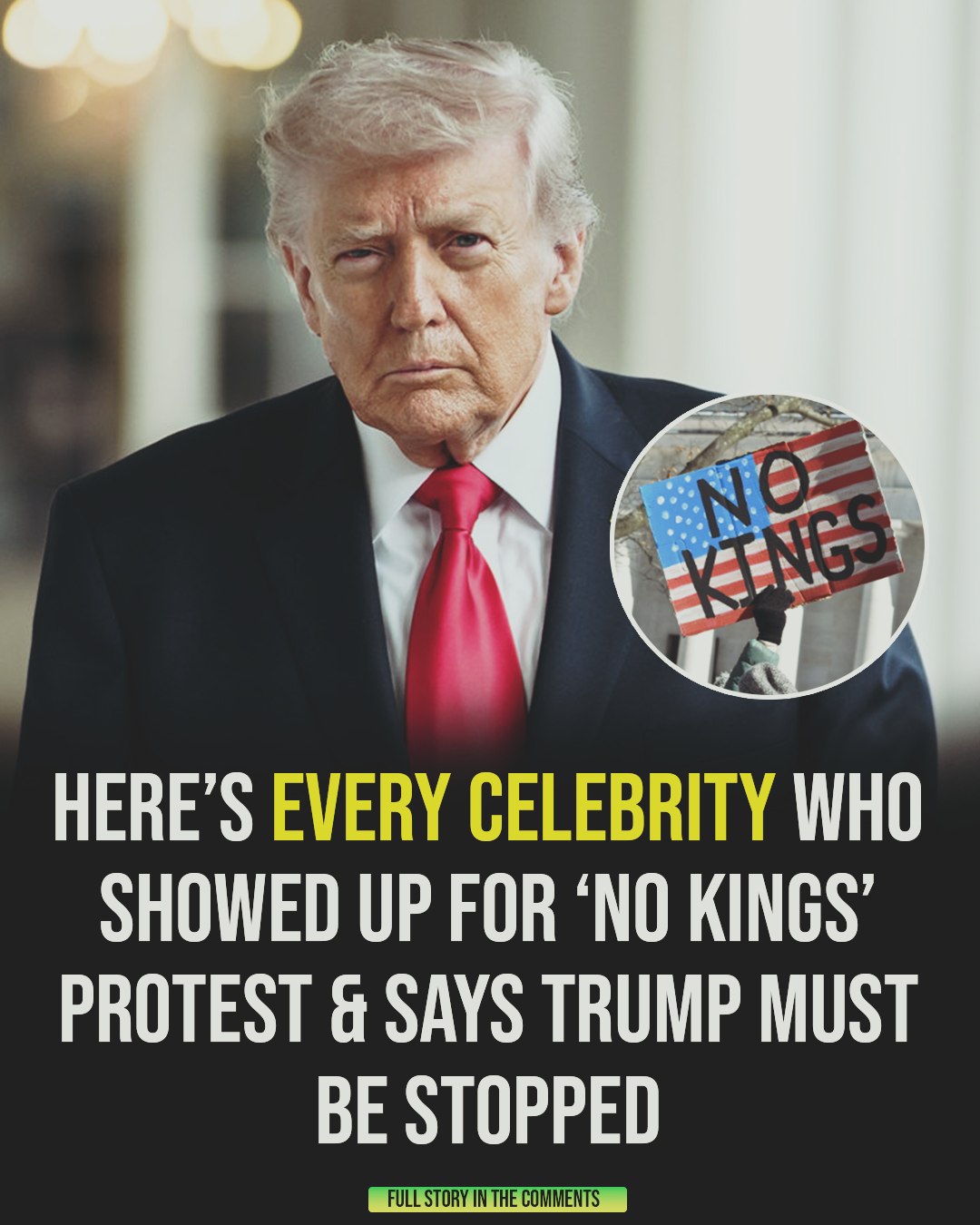
On Saturday, March 28, 2026, an estimated eight million citizens participated in a massive coast-to-coast demonstration labeled the “No Kings” movement. These protests, which erupted in major metropolises from New York to Los Angeles and Minneapolis to Miami, served as a powerful rebuke of Donald Trump’s governance and his political trajectory. The rallies represented a vast mosaic of Americans from diverse backgrounds, all united in a singular demand for government transparency and a return to democratic norms.
The momentum of these gatherings was significantly bolstered by a roster of high-profile cultural icons who utilized their massive reach to amplify the concerns of the general public.
A Convergence of Cultural Icons and Activism
The “No Kings” demonstrations were characterized by the heavy involvement of Hollywood veterans and musical legends, ensuring the movement’s message dominated both traditional news cycles and digital feeds.
In New York City, acclaimed actor Robert De Niro delivered a blistering keynote address. He characterized the current political climate as an “existential threat” to the Republic, asserting that the “No Kings” chant was a direct rejection of concentrated executive authority. De Niro highlighted a litany of grievances, ranging from economic disparity and healthcare barriers to the perceived personal enrichment of those in power.
Meanwhile, in Minneapolis, the atmosphere was one of somber reflection and resilience. Jane Fonda took the stage to recite a poignant letter from a grieving widow, emphasizing that the movement was fueled by love and a desire to honor those lost to systemic failures. Fonda also took the opportunity to condemn what she described as a systematic attempt to rewrite American heritage through censorship and the banning of books.
The legendary Bruce Springsteen also made a powerful appearance in Minnesota. He performed “Streets of Minneapolis,” a protest anthem that critiques federal overreach and law enforcement tactics. Springsteen’s presence served to bridge the gap between artistic expression and civic duty, reminding the crowd that the right to dissent is a cornerstone of American identity.
The Digital Reach and Coastal Coordination
The West Coast saw equally significant activity. In Malibu and Los Angeles, figures such as Doug Emhoff, Annette Bening, and Edward James Olmos stood alongside protesters. Comedian Kathy Griffin and artist Maggie Rogers played pivotal roles in engaging a younger demographic, utilizing real-time social media updates and the hashtag #NoKings to turn a physical protest into a viral global event.
The organization behind these events was remarkably sophisticated. Local volunteers and advocacy groups managed the logistics across dozens of cities simultaneously, ensuring that the demonstrations remained peaceful while providing a platform for a wide array of voices. While older participants provided historical context and established organizational networks, younger activists leveraged digital platforms to document the events and spark a national dialogue.
A Final Message of Accountability
As the weekend drew to a close, the “No Kings” movement had succeeded in sending an unmistakable signal to the nation’s leadership. The protests were not merely about a single politician, but about a collective resistance against authoritarian impulses and a demand for a government that serves the public interest rather than an elite few.
The integration of celebrity influence with grassroots energy transformed the rallies from simple political gatherings into a major cultural milestone. By the end of March 28, it was evident that millions of Americans remain deeply committed to the principles of equality, transparency, and participatory democracy, proving that public dissent remains a vital instrument for holding power accountable.