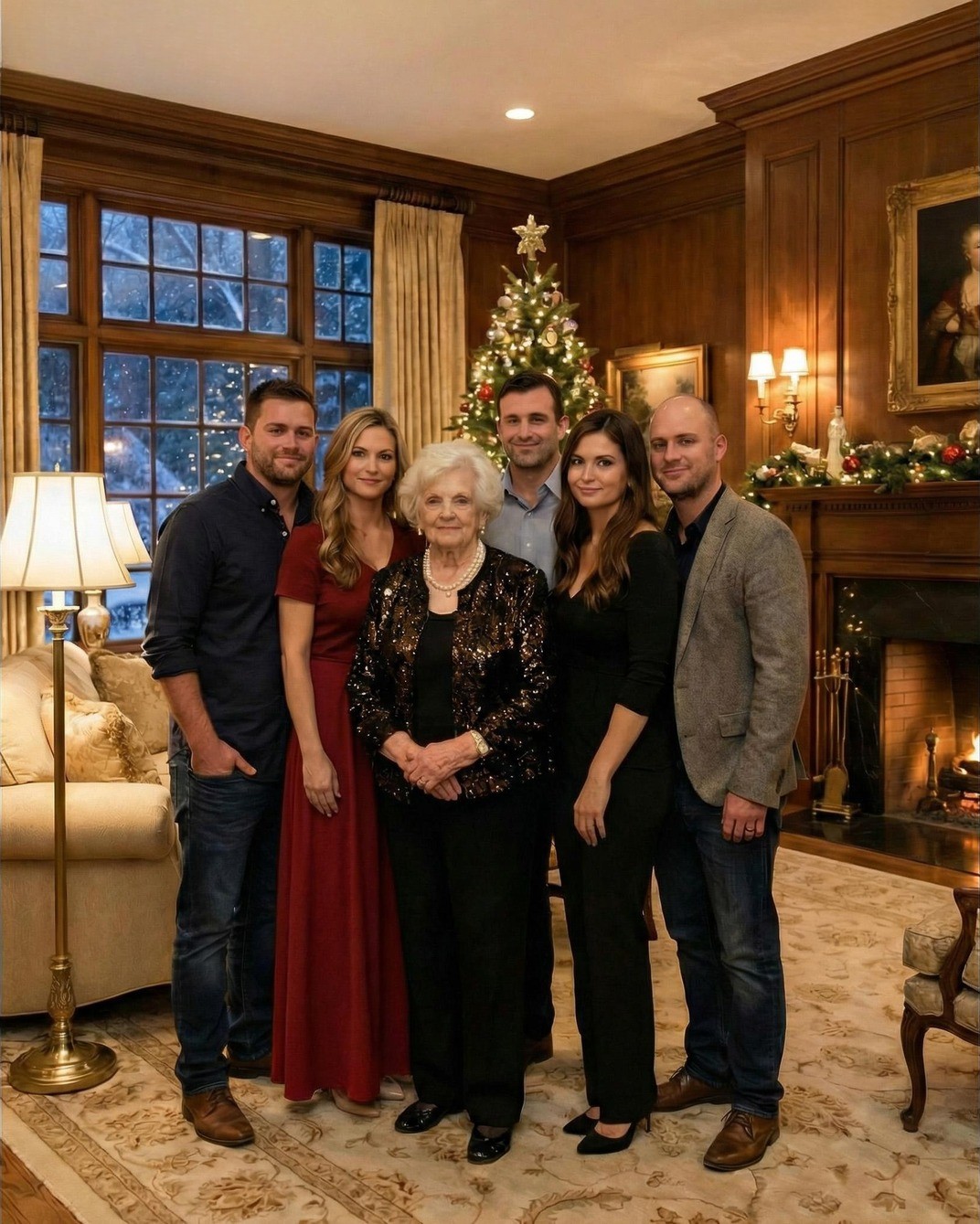
For most of my adult life, independence was my quiet source of pride. When my husband died, the world felt suddenly hollow and unsteady, but I made a promise to myself that I would not let grief undo me. I learned how to manage the house alone, how to budget carefully, how to live within my means without feeling deprived. I saved what I could, paid my bills on time, and built a life that was modest but secure. There was comfort in knowing I could stand on my own.
As the years passed, Christmas became the anchor of my calendar. It was the one time each year when the house felt full again. My five grandchildren would arrive with coats half-buttoned, laughter trailing behind them, bringing noise and warmth into rooms that were usually quiet. I baked for days in advance, set the table with care, and made sure every detail felt special. After dinner, when the plates were cleared and the coffee was poured, I would hand each grandchild an envelope. Inside was a generous gift of money, something I could afford and something I told myself was practical and helpful.
At first, it felt good. They smiled, hugged me, thanked me. I convinced myself that this tradition was simply another way of showing love. But over time, subtle things began to bother me. Conversations felt shorter. Phones appeared more often at the table. People glanced at their watches, shifted in their chairs, talked about traffic and plans waiting for them elsewhere. The evening always seemed to end sooner than I hoped. When the last coat was grabbed and the door closed, the house fell silent again, and I was left wondering whether the envelopes had become the real reason for the visit.
I tried to dismiss the thought. I didn’t want to believe it. Still, the feeling lingered, uncomfortable and persistent.
The next Christmas, without announcing anything or making a show of it, I decided to change the tradition slightly. I prepared smaller gifts, still thoughtful, still given with love, but noticeably different. I told myself this wasn’t a test. I wasn’t trying to judge anyone. I simply wanted to see how the evening would feel without the familiar expectation attached to it.
When the envelopes were opened, everyone was polite. Smiles appeared, thank-yous were said, hugs were exchanged. Yet something shifted. The warmth thinned, just slightly, like a room where someone has opened a window. The visit ended even earlier than usual. No one said a word, but I felt the disappointment hanging in the air long after they left.
The following year, I sent out my usual Christmas dinner invitations. This time, the replies came back differently. One grandchild had already made other plans. Another sent a brief message apologizing and saying they were overwhelmed. A third left a voicemail, promising to visit “soon,” though no date was mentioned. By Christmas Eve, only one response remained certain.
Julian arrived just before dusk, snow dusting her coat. I felt a mix of gratitude and quiet sadness as I welcomed her inside. The table was set for more, but we sat across from each other, two plates instead of six. I told myself that empty chairs didn’t diminish the meaning of the evening, but it still hurt.
Dinner was calm and unhurried. Julian asked me how I’d been sleeping, how my knees were holding up, what books I’d been reading lately. She laughed at my stories, really laughed, and when I spoke, she listened—without checking her phone, without glancing toward the door. For the first time in years, I felt fully seen in my own home.
After we finished eating and cleared the dishes, I brought out an envelope and handed it to her. I told her to open it. Inside was more than I had ever given before, money I had saved deliberately. Julian stared at it for a long moment, then quietly pushed it back across the table.
She told me she hadn’t come for money. She said she loved spending time with me and that the evening itself was enough. Then, gently and without judgment, she suggested that the money might do more good elsewhere—helping people who truly needed it. Her voice was calm, sincere, and firm in a way that felt deeply honest.
Something settled inside me then, like a truth finally landing where it belonged. I realized how tightly I had clung to the idea that generosity had to be tangible, measurable, and visible. I had confused giving with connecting. Julian hadn’t rejected the gift to make a point. She had simply shown me, without ceremony, what mattered more.
In the weeks that followed, Julian came by often. Sometimes we drank tea. Sometimes we watched old movies. Sometimes we just sat and talked about nothing important at all. Together, we chose a few charities and donated the money. The act felt lighter than I expected, freer somehow. And every visit after that felt genuine, unhurried, and real.
The other grandchildren eventually reached out again, but I no longer felt the same pull to impress or provide. I learned to value who showed up without incentives, who stayed without expectation, who listened without distraction.
At 87 years old, I finally understood something that had taken me a lifetime to learn. Love cannot be bought. It cannot be secured with envelopes or proven through generosity alone. It lives in presence, in attention, in time given freely without conditions. It reveals itself in who chooses to stay when there is nothing to gain.
That Christmas didn’t make my family smaller. It made my understanding of family clearer.