I was fifty-five years old and newly widowed when I learned how fragile certainty really is.
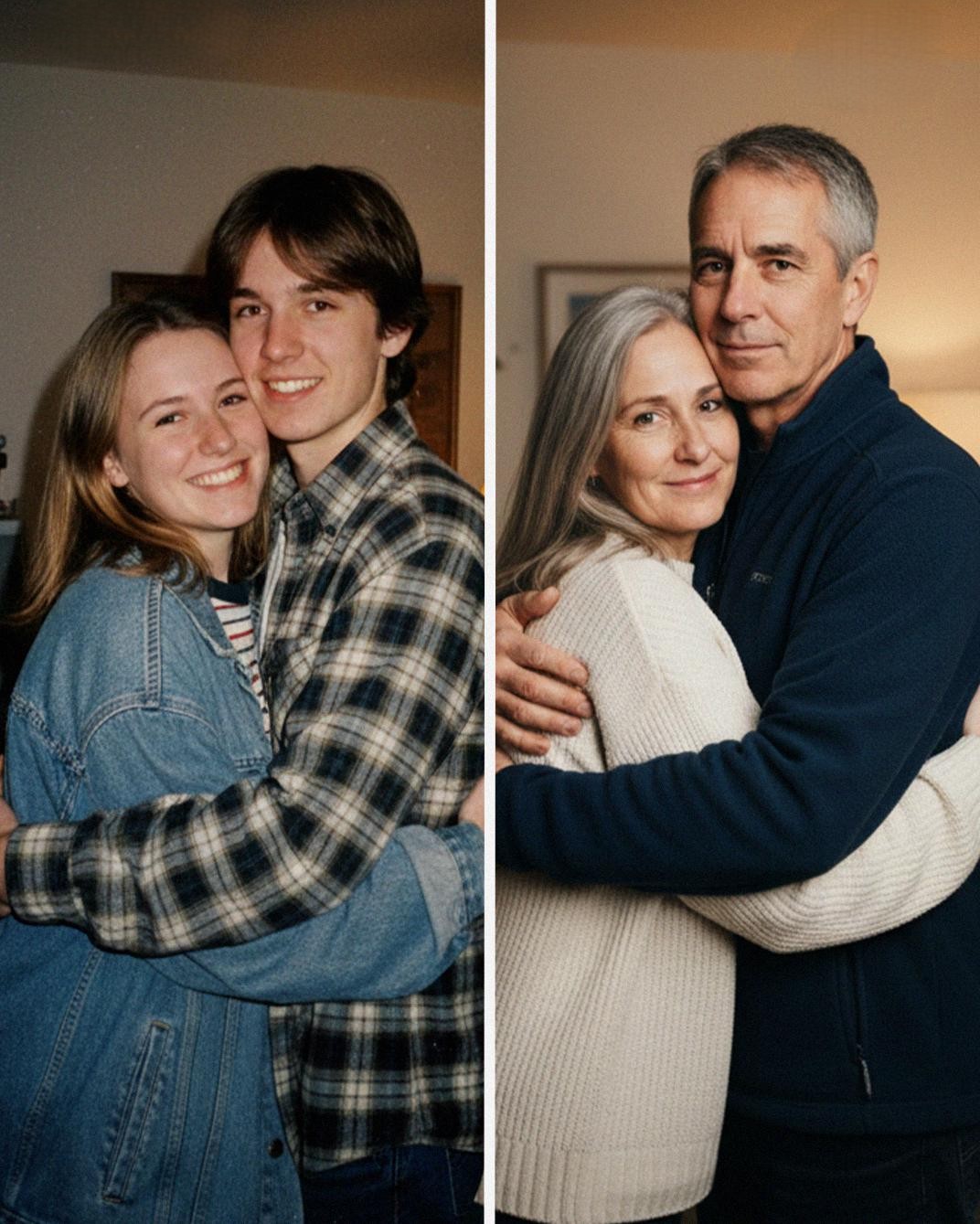
For thirty-six years, I had been someone’s wife. Since I was nineteen, there had always been a man whose name followed mine on forms, whose shoes sat by the door, whose breathing filled the quiet at night. Then, on a rainy Tuesday, a truck failed to stop in time, and my life split cleanly into Before and After.
His name was Greg. Raymond Gregory on paperwork, Greg to me. He wasn’t dramatic. Neither was our marriage. We built a life out of grocery lists, oil changes, quiet routines, and small rituals—him always taking the outside seat at restaurants “in case some idiot drives through the window.” It wasn’t a fairytale, but it was solid. I believed that was enough.
The phone call came. The hospital came. The doctor’s voice came. “I’m so sorry.” And then Greg was gone.
By the day of the viewing, I felt emptied out. I had cried until my face hurt, until my skin felt raw from salt and grief. My sister had to zip my dress because my hands wouldn’t stop shaking. People touched my arm as if I might shatter under pressure. The chapel smelled like flowers and coffee. Soft piano music drifted through the air, too gentle for the weight in my chest.
Greg lay there in a navy suit I’d bought for our last anniversary. His hair was smoothed back, just as he always did for weddings. His hands were folded neatly, like he was only resting.
He looked peaceful.
When the line thinned, I stepped forward holding a single red rose. This felt like my last act of care, my final chance to do something for him. I leaned down and gently lifted his hands to place the stem between them.
That’s when I saw it.
A small white rectangle tucked beneath his fingers. Too small to be a prayer card. Too deliberate to be an accident.
Someone had put something in my husband’s casket and hadn’t told me.
I glanced around. No one was watching closely. No one looked guilty. And a thought cut through my hesitation with sudden clarity: he was my husband. If there was a secret in there, it belonged to me more than anyone.
My fingers trembled as I slid the paper free and replaced it with the rose. I slipped the note into my purse and walked straight to the restroom.
I locked the door and unfolded the paper.
The handwriting was neat, careful, written in blue ink.
“Even though we could never be together the way we deserved… my kids and I will love you forever.”
For a moment, the words didn’t register.
Then they did.
Greg and I didn’t have children.
Not by choice. By biology. Years of appointments and quiet disappointment. Years of me crying into his chest while he whispered that it was okay, that I was enough, that we were enough.
My kids.
I stared at my reflection in the mirror. Mascara smeared. Eyes swollen. A woman who suddenly didn’t recognize her own life.
Who wrote this? Who had children with my husband?
I didn’t cry. Not then. Something colder took over.
Someone had put this in his casket.
I went looking for answers.
The security office was small and dim, four monitors glowing against the wall. The man inside looked startled when I walked in.
“My husband is in the viewing room,” I said. “Someone put something in his casket.”
I held up the note.
“I need to know who it was.”
After a moment’s hesitation, he rewound the footage. We watched people pass the casket—flowers, touches, bowed heads. Then I saw her.
Dark hair in a tight bun. A black dress. She stepped forward alone, glanced around, slipped her hand beneath Greg’s, tucked something in, and patted his chest.
Susan.
Susan Miller. The woman who owned the supply company that serviced Greg’s office. I’d met her at events. Efficient. Polite. Always laughing a little too hard.
I took a photo of the paused screen and thanked the guard.
Then I walked back into the chapel.
Susan stood near the back, tissue in hand, eyes red, talking with two women from Greg’s office. She looked like a grieving widow in another version of my life.
When she saw me approach, something flickered across her face.
Guilt.
“You left something in my husband’s casket,” I said.
She blinked. “What?”
“I watched you do it.”
Her chin trembled. “I didn’t think you’d find it.”
“Who are the kids?” I asked.
People nearby went quiet. Listening.
“He didn’t want you to know,” she whispered. “They’re his.”
The room seemed to tilt.
“You’re saying my husband has children with you?”
She nodded. “A boy and a girl.”
I couldn’t breathe. I couldn’t scream. I couldn’t collapse in front of Greg’s body.
So I walked out.
After the burial, the house felt wrong. His shoes were still by the door. His mug sat on the counter. His glasses rested on the nightstand.
I sat on the edge of the bed and stared at the shelf in the closet.
Eleven journals. Greg’s handwriting on the spines.
“Helps me think,” he used to say.
I had never read them.
I opened the first one. It began a week after our wedding. He wrote about our terrible honeymoon motel, the broken air conditioner, my laugh. Page after page, it was us. Our fights. Our jokes. My migraines. His fear of flying.
No other woman.
By the sixth journal, the tone shifted.
“Susan pushing again. Wants contracts locked in.”
“Last shipment bad. People got sick.”
“Told her we’re done. She lost it.”
Then, in heavier ink: “Lawyer says we’d win. But she has two kids. Don’t want to take food off their table.”
Her kids.
Not his.
I called Peter, Greg’s closest friend. He listened without interrupting.
“I believe you,” he said finally. “Greg was terrible at lying. He wouldn’t have managed a double life.”
The next day, Peter sent his son, Ben, to Susan’s house.
When Ben returned, he sat across from me at the kitchen table, voice steady but eyes heavy.
“Her husband answered the door,” he said. “I told him what she’d said at the funeral.”
Susan came out, panicked. At first, she denied everything. Then she broke.
“She said she wanted you to hurt,” Ben told me. “She said Greg ruined her business and she wanted revenge. The kids are her husband’s. She used Greg’s name to make you suffer.”
Just words.
Cruel, deliberate words tucked into a dead man’s hands.
I cried then. Deep, shaking sobs that left me hollow again, but this time with clarity.
My marriage wasn’t a lie.
Greg wasn’t perfect. He was stubborn. Annoying. Human. But he was loyal.
That night, I picked up an empty notebook and began to write. About Greg. About the rose. About the note. About the truth.
If someone could write lies and hide them in his hands, I could write the truth and carry it forward.
Because when I turn the pages of his journals, one thing appears again and again, in margins and quiet lines between thoughts.
“I love her.”
He never hid that.
And no lie could take it away.