When my twin brother Daniel and I turned eighteen, we believed adulthood would arrive slowly—college plans, part-time jobs, small steps toward independence. Instead, it crashed into us all at once and never asked whether we were ready.
It started with our mother’s diagnosis. Cancer. The word landed heavy and unreal, like it belonged to someone else’s family. She tried to stay strong for us, brushing off the exhaustion, pretending the pain wasn’t getting worse. Daniel and I watched her carefully, already sensing that childhood was slipping away faster than it should.
Our father didn’t stay.
One evening, not long after the diagnosis, he packed a bag and told us he couldn’t handle what was coming. He said he wasn’t strong enough to watch her suffer. Then, as if to soften the blow, he admitted he had met someone else—someone who made him “happy.” He didn’t apologize. He didn’t look back. He just left, abandoning a dying wife and five children who stood frozen in the hallway, trying to understand how love could vanish so quickly.
From that moment on, Daniel and I became something other than teenagers.
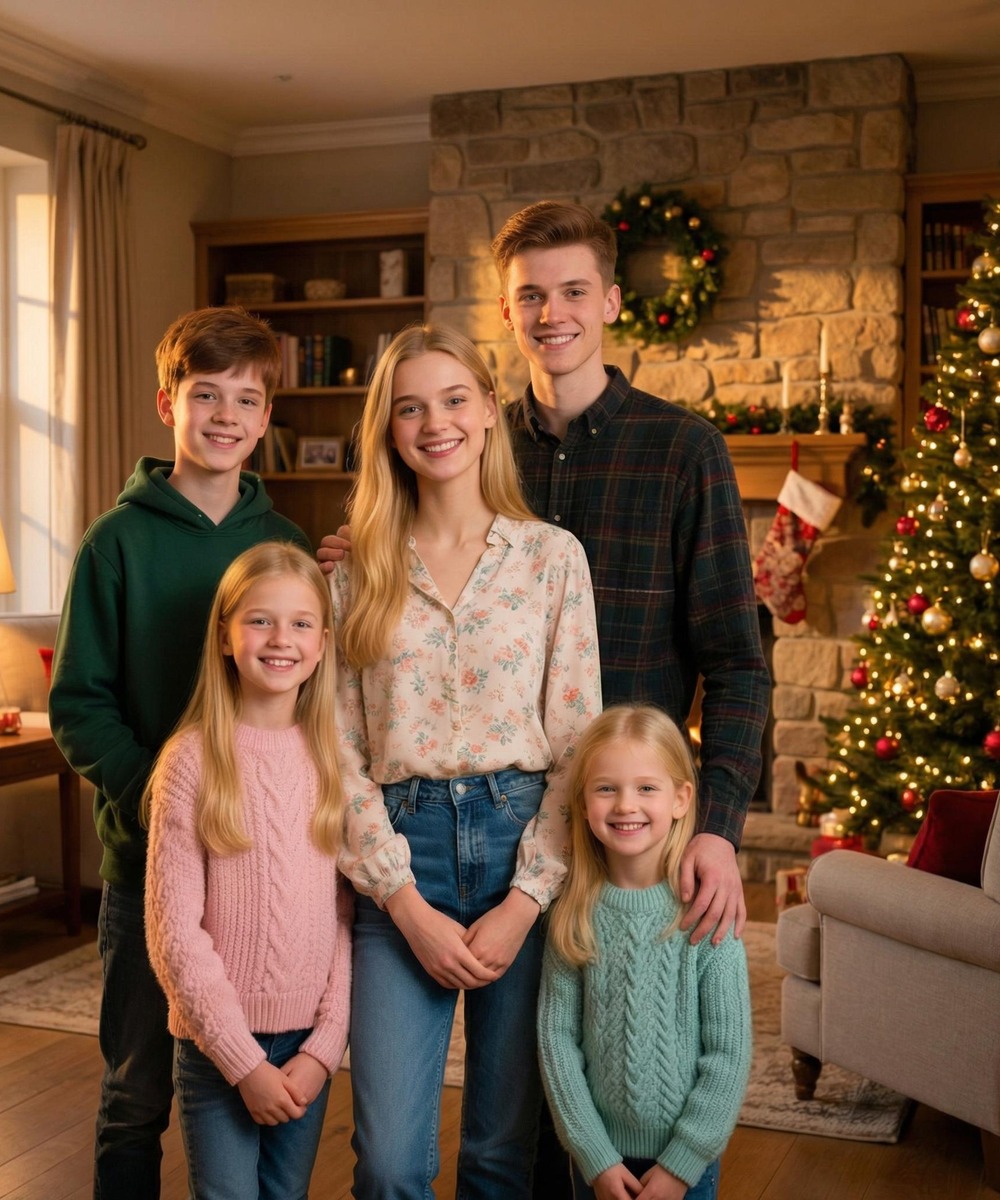
We took over quietly at first—cooking dinners, getting our younger siblings ready for school, helping Mom when she was too weak to stand. Liam was ten, Maya eight, and Sophie only five. They didn’t fully understand what was happening, only that Mom was tired all the time and Dad was gone. We lied when we had to. We smiled when we were breaking inside.
Less than a year later, our mother died.
On her final day, Daniel and I sat on either side of her bed, holding her hands as her breathing slowed. She looked at us with fear and love tangled together and made us promise something no eighteen-year-old should have to promise.
“Protect them,” she whispered.
We said yes without hesitation. We didn’t know how. We didn’t know what it would cost. We just knew we couldn’t fail her.
After the funeral, there was no dramatic handover of responsibility. No official ceremony. Life simply demanded more of us than we had ever given. Daniel took a night job at a warehouse. I balanced classes with two part-time shifts. Sleep became optional. Exhaustion became normal.
We learned everything the hard way.
How to stretch groceries to last the week. How to calm Sophie’s nightmares. How to help Liam with math homework we barely remembered ourselves. How to answer Maya’s quiet questions about why Dad never called.
Some days were unbearable. Bills piled up. Friends drifted away. While others our age worried about parties and dating, we worried about dentist appointments and heating costs. But there was also something else—something stubborn and unbreakable growing between us.
We became a unit.
The house changed. Slowly, laughter returned. We celebrated small victories: good grades, scraped knees healed, birthdays that didn’t end in tears. Daniel and I stopped thinking in terms of “my life” and started thinking in terms of “our family.”
Five years passed like that.
By then, Liam was taller and louder, Maya had discovered her love for books, and Sophie no longer remembered a time when Daniel and I weren’t the ones tucking her in. The house felt stable. Safe. Earned.
For the first time since Mom’s death, we believed the worst was behind us.
Then the knock came.
It was a Saturday morning. Quiet. Ordinary. I opened the door expecting a neighbor or a delivery. Instead, I found our father standing on the porch, smiling awkwardly, as if we had just seen each other last week instead of five years ago.
He stepped inside without waiting to be invited. He commented on how grown the kids looked. Complimented the house. Said he was “proud” of how we had handled things. Each word felt misplaced, like he was reading from a script written for a life he hadn’t lived.
Then he dropped the truth.
The house, he explained casually, was still legally his. He and his new partner were ready to settle down. They planned to move in. He suggested we should “start thinking about other arrangements.”
In other words, get out.
Something inside me snapped—but not loudly. It was a cold, steady anger, the kind that doesn’t scream. I looked at Daniel. He looked back. We didn’t need words.
I smiled politely and told our father to come back the next day. I said we’d have everything ready to discuss. He seemed pleased, as if cooperation was already assumed. He left without noticing how tightly my hands were shaking.
That evening, we sat our siblings down at the kitchen table.
We didn’t lie. We didn’t panic. We told them that families protect each other and that no one was going to be thrown away. Liam clenched his jaw. Maya reached for Sophie’s hand. Sophie asked if she would still sleep in her room.
“Yes,” Daniel said firmly. “You’re staying right here.”
That night, while the kids slept, Daniel and I spread documents across the table. Papers we had signed years earlier when we realized no one else was going to look out for us. Guardianship records. Financial statements. Savings accounts built dollar by dollar from exhaustion and sacrifice. Proof of responsibility. Proof of commitment.
We had prepared without knowing exactly what we were preparing for.
By morning, we were calm.
When our father returned, we didn’t argue. We presented facts. Legal ones. We showed him the paperwork that established our guardianship, the records that documented his abandonment, the protections we had quietly put in place to ensure the children’s stability.
His confidence collapsed.
For the first time, he saw us not as kids filling in temporarily, but as adults who had stepped into a role he had abandoned. He argued weakly. He threatened. Then he realized there was nothing left to take.
He left again.
This time, it didn’t hurt.
After the door closed, Sophie ran into Daniel’s arms. Maya hugged me. Liam stood taller than I had ever seen him.
We didn’t celebrate. We didn’t cry. We just went back to our lives.
Because the truth had become clear.
Family isn’t defined by blood alone. It’s defined by who stays when everything falls apart. It’s built in sleepless nights, shared sacrifices, and promises kept long after the people who made them are gone.
Daniel and I didn’t choose this life—but we chose each other, and we chose our siblings, every single day.
And no one was ever going to take that away from us.