For decades, Al Roker has been a constant presence in American mornings. His face, his laugh, his steady warmth—he wasn’t just delivering weather forecasts, he was part of the daily rhythm of millions of households. Al Roker felt dependable in a way few television figures ever achieve, like someone who would always be there no matter what storms rolled in. That’s why his sudden disappearance from the Today show in late 2022 hit so hard. At first, viewers assumed it was temporary. A routine medical issue. A short break. Instead, it became one of the most frightening health battles of his life, one that left his family, coworkers, and fans shaken to their core.
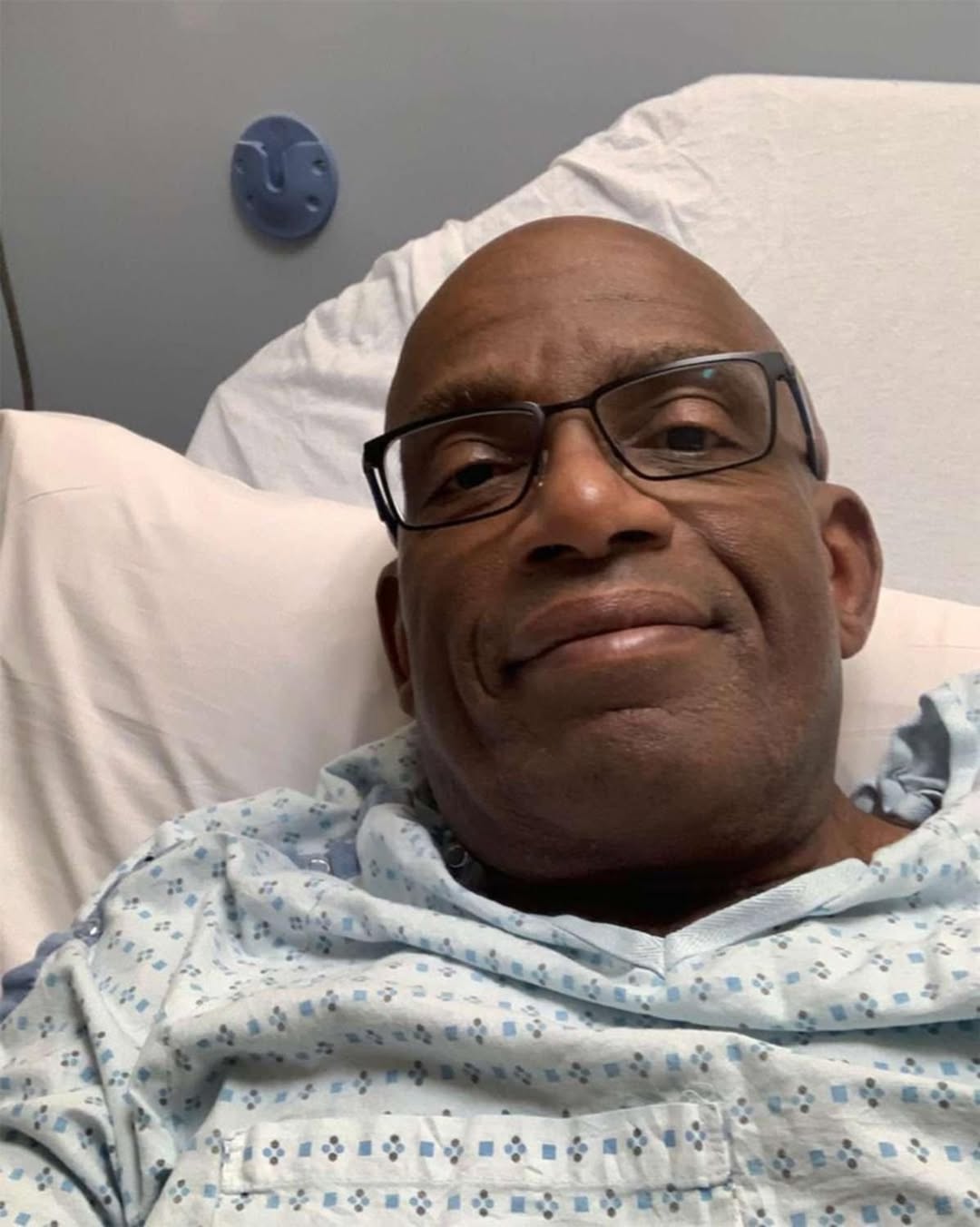
The crisis began quietly in November 2022, when Roker was hospitalized for what was initially described as blood clots in his leg. Those clots had traveled to his lungs, causing a pulmonary embolism—already a dangerous, potentially fatal condition. True to form, Roker tried to downplay the severity later, joking about it as “medical whack-a-mole.” But behind the humor was a far grimmer reality. Doctors soon discovered that the clots were only part of the problem. A cascade of internal complications was unfolding inside his body.
As physicians worked to address the embolism, they uncovered severe internal bleeding caused by ulcers. The bleeding was so extensive that Roker lost nearly half of his total blood volume. What might have been a manageable hospitalization turned into a medical emergency of the highest order. His condition deteriorated rapidly, forcing doctors to move quickly and aggressively.
Surgery followed, and then more surgery. What was expected to be a two-hour procedure stretched into a seven-hour ordeal as surgeons encountered complications involving his colon and gallbladder. For a terrifying 48-hour window, it was unclear whether Roker would survive. The man who had spent a lifetime reassuring others suddenly became the one everyone was praying for.
During this time, his wife, Deborah Roberts, carried an unimaginable burden. Later, she described the experience as the most frightening journey of their lives. While Roker lay in intensive care, she made the conscious decision to shield him from the full extent of the danger he was in. She understood that his recovery depended not only on medicine, but on his mindset. Letting him know just how close he came to dying could have crushed his spirit at the very moment he needed strength most.
This wasn’t Roker’s first encounter with serious illness. Over the years, he had been remarkably open about his health struggles, including a 2020 diagnosis of aggressive prostate cancer, along with multiple orthopedic surgeries. Yet this episode eclipsed them all. It was the first time his life truly hung in the balance.
Ironically, doctors later credited his survival in part to his physical fitness. Just months before the hospitalization, Roker had completed the Brooklyn Half Marathon. His cardiovascular conditioning, they said, gave his body the resilience it needed to endure massive blood loss and prolonged surgery. Without that foundation, the outcome might have been very different.
While Roker fought for his life behind hospital walls, his absence left a visible void on morning television. His colleagues on the Today show—Savannah Guthrie, Hoda Kotb, Craig Melvin, and Dylan Dreyer—became the public’s emotional bridge to him. They shared updates carefully, often struggling to maintain composure. Their concern wasn’t scripted. It was deeply personal. The gravity of the situation was impossible to hide.
The impact of his absence was felt most sharply during moments traditionally defined by his presence. For the first time in 27 years, Al Roker did not host the Macy’s Thanksgiving Day Parade. His familiar voice, narrating giant balloons floating through Manhattan streets, was missing. For many Americans, it felt wrong—like Thanksgiving itself had lost something essential. His absence at the Rockefeller Center Christmas tree lighting only reinforced how deeply woven he was into the country’s collective traditions.
After nearly two months of hospitalization, physical therapy, and painstaking recovery, Roker finally returned to Studio 1A in January 2023. His comeback was emotional and raw. The audience rose to its feet. His colleagues openly cried. The moment wasn’t about television ratings or spectacle—it was relief, gratitude, and love made visible.
Sitting beside Deborah Roberts, Roker spoke candidly about the ordeal. He joked that he went in for one operation and “got four for free,” but the humor didn’t mask the reality of what he had endured. He had lost half his blood. His body had been pushed to its limits. He admitted it was the scariest experience of his life.
Roberts described the immense “prayer circle” that formed around them—family, friends, coworkers, and strangers alike. People stopped them on the street, wrote letters, and sent messages. That collective concern, she said, carried them through the darkest days.
In the years following his recovery, including into 2025 and 2026, Roker has continued to use his platform for something larger than weather. He has become an outspoken advocate for preventive healthcare, especially prostate cancer screening. Marking the five-year anniversary of his cancer surgery, he urged men—particularly men of color—to monitor their PSA levels and take early warning signs seriously.
The experience fundamentally changed him. Roker now speaks often about gratitude, about the awareness that tomorrow is never guaranteed. He credits his family, his faith, and the overwhelming support of the public for giving him the strength to heal. His daily routines—walking miles, staying active, prioritizing health—are no longer just habits. They are acts of intention.
Today, Al Roker is back where he belongs. He delivers forecasts, shares laughter, and continues to bring comfort through the screen. But there is something different now. The man who once felt indestructible carries the quiet knowledge of how close he came to being gone.
The news of his health crisis initially broke hearts across the country. But his survival did more than mend them—it reminded people of resilience, of preparation, and of the power of community. His story stands as proof that even when life turns suddenly and brutally, recovery is possible. And that sometimes, after the darkest storm, the sunshine means more than it ever did before.