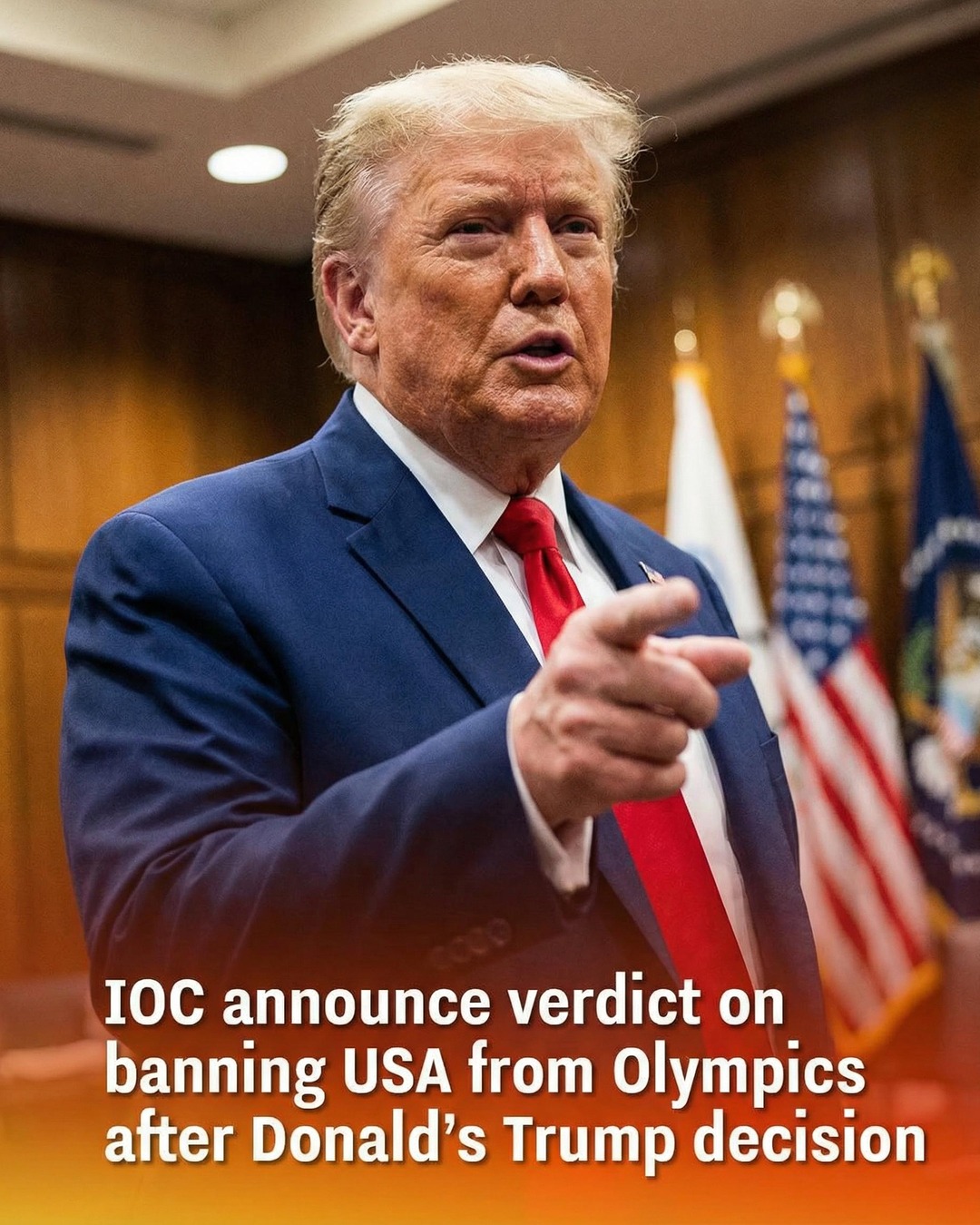
The International Olympic Committee has issued a formal statement addressing growing speculation about whether the United States would face any restrictions at the upcoming Winter Olympic Games in Milan and Cortina. With the opening ceremony scheduled for early February, anticipation is building across the sporting world, and questions surrounding eligibility and participation had begun to circulate widely in recent weeks. The IOC’s clarification was intended to put those rumors to rest and refocus attention on the Games themselves.
The Milan–Cortina Winter Olympics are expected to welcome thousands of athletes, officials, and spectators from across the globe. The United States is set to send one of the largest national delegations, with competitors participating in events ranging from alpine skiing and snowboarding to ice hockey and figure skating. As preparations intensified, online discussions and political commentary began to suggest that recent policy shifts and international developments involving the U.S. could potentially influence its standing within global sporting institutions.
Those conversations gained momentum amid heightened global tensions and ongoing debates about the role of international sport during periods of political or military conflict. In some corners of the media and political sphere, voices argued that international sporting organizations should take stronger stances when major powers are involved in controversial actions on the world stage. Historical precedents were cited, including past Olympic boycotts and restrictions imposed on certain countries during times of war or diplomatic isolation. Against that backdrop, questions emerged about whether similar scrutiny could extend to the United States.
Despite the speculation, no formal action had been proposed or initiated by any recognized sporting authority. Still, the sheer volume of commentary led to uncertainty among fans and prompted requests for clarification. The IOC responded by reiterating its core principles, emphasizing that the Olympic movement exists to bring athletes together across national, cultural, and political divides.
In its statement, the IOC underscored its commitment to political neutrality, a foundational element of the Olympic Charter. According to the committee, the Olympic Games are designed as a forum for peaceful competition, not a mechanism for resolving or responding to geopolitical disputes. The organization made clear that it does not serve as a political body and does not possess the mandate to pass judgment on the domestic or foreign policies of individual nations.
The IOC further explained that decisions related to athlete participation are governed by established rules within the Olympic Charter. These rules focus on issues such as compliance with anti-doping regulations, adherence to eligibility standards, and respect for the integrity of sport. Political debates, even when intense or globally significant, fall outside the scope of these criteria. The committee noted that each situation involving international conflict is evaluated on a case-by-case basis and within the strict framework of Olympic regulations, rather than through broad political considerations or public pressure.
The statement confirmed unequivocally that American athletes will participate in the Milan–Cortina Winter Olympics as planned. Team USA’s preparations remain unchanged, and qualifying events, training camps, and logistical planning are moving forward without disruption. For athletes who have spent years preparing for this moment, the clarification provides reassurance and stability during a critical phase of their Olympic journey.
Organizers in Italy also welcomed the IOC’s clarification, as the final stages of preparation continue across multiple venues. Milan and Cortina d’Ampezzo are hosting events in coordination with several surrounding regions, showcasing both modern infrastructure and historic alpine settings. With construction nearing completion and test events already underway, the focus for organizers has shifted toward athlete services, transportation, security, and fan engagement.
For the IOC, the statement serves a broader purpose beyond addressing one specific concern. It reinforces the organization’s long-held stance that the Olympic Games should remain a rare space where nations compete under shared rules, even when political relationships outside the arena are strained. The committee acknowledged that global events inevitably influence public discourse around the Olympics but emphasized that preserving the Games as a unifying platform is essential to their continued relevance.
Athletes themselves have largely echoed this sentiment. Many competitors have spoken publicly about the importance of separating their years of training and personal sacrifice from political debates beyond their control. For them, the Olympics represent the culmination of lifelong goals, not a forum for international disputes. The IOC’s clarification allows those athletes to remain focused on performance rather than uncertainty.
From a fan perspective, the announcement restores attention to what traditionally defines the Winter Games: competition, sportsmanship, and shared moments of excellence. Events like the Olympics carry symbolic weight precisely because they bring together individuals from vastly different backgrounds under a common set of values. The IOC’s message emphasizes that, even in complex global circumstances, those values remain central.
As the opening ceremony approaches, attention is returning to medal contenders, rivalries, and breakthrough stories expected to unfold on the ice and snow. The United States is projected to be a strong contender across multiple disciplines, and its athletes will compete alongside peers from dozens of nations in what remains one of the largest and most visible international sporting events in the world.
The IOC expressed hope that the Milan–Cortina Games will serve as a reminder of sport’s ability to foster dialogue, respect, and mutual understanding. While political realities continue to shape global headlines, the Olympic movement aims to offer a temporary space where competition replaces conflict and shared humanity takes precedence over division.
With participation confirmed and preparations on track, the path is now clear for the Winter Olympics to proceed as planned. For athletes, host communities, and viewers worldwide, the focus shifts back to the performances, the stories, and the moments that define the Olympic experience—reminding the world, once again, of sport’s unique power to unite beyond borders and politics.