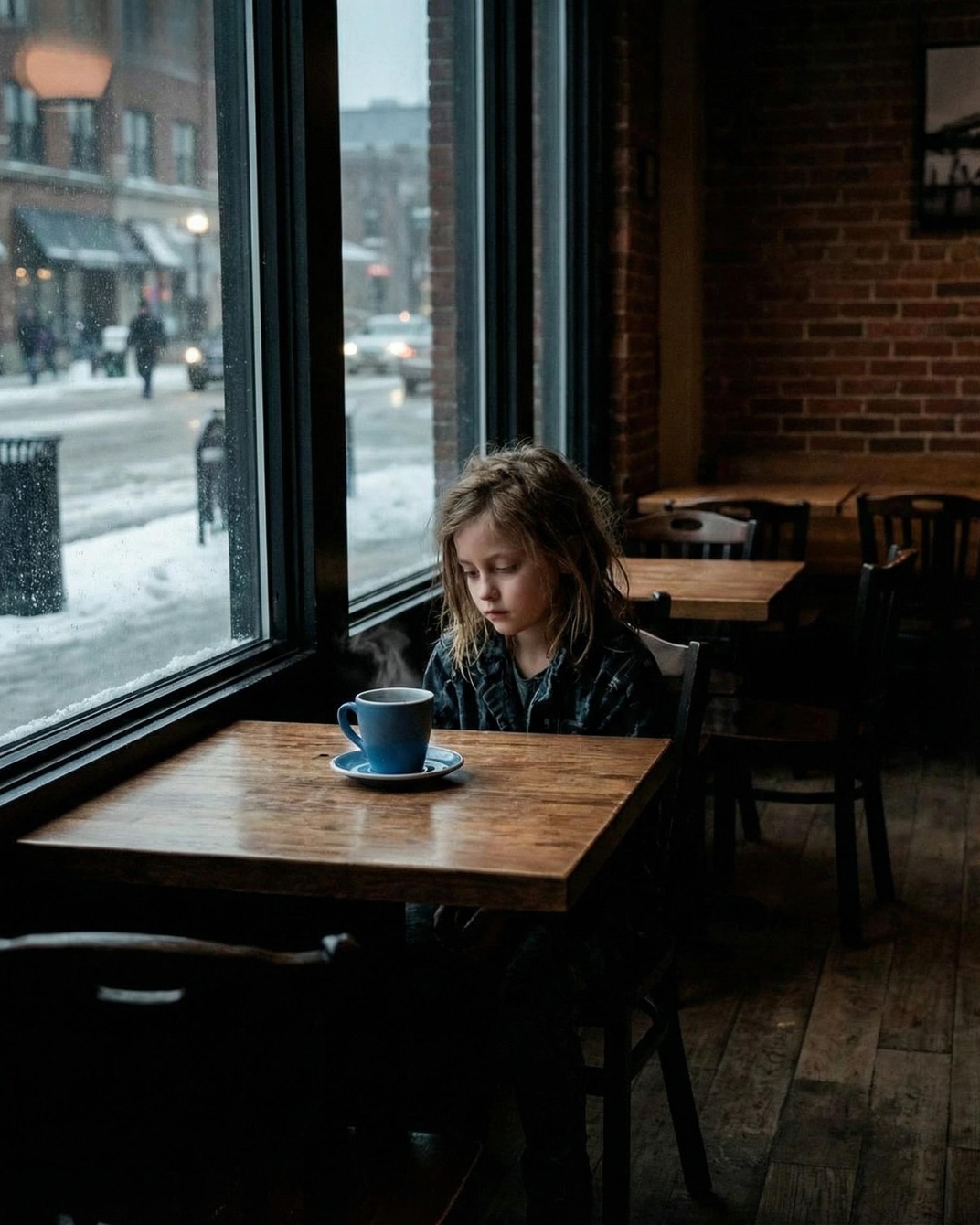
What began as a mundane Tuesday in mid-January, characterized by the biting chill of a relentless winter wind, transformed into a profound lesson on the delicate architecture of human empathy. I had ducked into a small, familiar neighborhood café, seeking nothing more than the temporary sanctuary of a hot coffee and a few minutes of quiet. The air inside smelled of roasted beans and damp wool, a comforting contrast to the gray slush on the streets. As I waited for my order, my attention was drawn to a young girl sitting alone in a booth near the frosted window.
She couldn’t have been more than ten years old. She sat remarkably still, a cup of tea cooling into a stagnant pool before her. What caught my breath were the tears—not the loud, performative sobs of a frustrated child, but silent, rhythmic drops that traced paths down her pale cheeks. It was the kind of heavy, concentrated sadness that felt far too large for such a small person to carry. Instinctively, I moved toward her, keeping my voice low so as not to startle her or draw the eyes of the other patrons.
When I gently asked if she was all right, she looked up with a startling clarity. She explained that it was her mother’s birthday. Her mother had passed away several years prior, and every year since, they had celebrated by sharing a specific cupcake from this café. It was their sacred, small tradition—a way to bridge the gap between the living and the dead. But this year, she whispered, there wasn’t enough money for the cake. She had come just to sit in the space they used to share, even if she couldn’t afford the tribute.
Through the condensation on the café window, she pointed toward a man on the sidewalk. He was bundled in a thin, worn jacket that offered little protection against the elements, laboring to clear the heavy snow from the front of the shop. That was her father. The image was a heartbreaking portrait of resilience: a man physically exerting himself to provide for his daughter, and a child mentally anchoring herself to the memory of the woman who had once completed their family.
Moved by a sudden, sharp impulse of compassion, I returned to the counter. I ordered two of the most elaborate cupcakes they had—one for the girl and one for her father. When I brought them over, her shy, fractured smile felt like a physical warmth in the room. It was a small gesture, perhaps even a trivial one in the grand scheme of their loss, but it was a recognition of her mother’s importance. Before I left, I did something else. I slipped a fifty-dollar bill under her saucer, telling her it was a “birthday gift” to be given to her father. I walked out into the cold believing the story was over, feeling that brief, quiet satisfaction that comes from an anonymous act of human decency.
The world, however, is rarely as simple as a storybook. A few days later, a sharp, authoritative knock at my front door shattered the silence of my afternoon. Standing on my porch were two police officers. My first reaction was not guilt, but a cold, plunging sensation of confusion. They were polite but firm, asking if I had been at the café earlier that week and if I had interacted with a minor. As they escorted me to the station for questioning, the warmth of the original memory began to curdle into anxiety. In a world characterized by caution and hyper-vigilance, I realized that my unfiltered kindness looked suspicious when viewed through a lens of clinical protocol.
Sitting in a sterile interview room, I had to recount the details of that afternoon. I described the girl’s tears, the father’s thin jacket, the flavor of the cupcakes, and the money left behind. I felt a strange sense of shame, as if I were being forced to defend the very concept of being a good neighbor. I worried that by trying to help, I had inadvertently caused trouble for a family already teetering on the edge of survival.
However, the tension broke as quickly as it had formed. The lead officer returned with a softened expression, closing his folder. It turned out that the father, overwhelmed by the anonymous gift and the cupcakes, had gone to the café manager to try and find out who I was. He wanted to return the money, fearing it was a mistake, or at the very least, he wanted to thank me. The manager, following store policy regarding “unusual interactions” and the exchange of cash involving a minor, had felt compelled to file a report.
Once the security footage was reviewed and the father’s own testimony was heard, the pieces of the puzzle aligned. The police weren’t investigating a crime; they were untangling a misunderstanding born of a father’s stunned gratitude and a corporation’s liability. The officers eventually apologized for the inconvenience, even offering a small nod of respect for the gesture.
As I walked out of the station, the winter air felt sharper and more clarifying than it had days before. I sat in my car for a long time, watching the snow fall against the windshield. The experience had been jarring, but it hadn’t left me bitter. It taught me that in a cautious, often cynical world, kindness can be a complicated endeavor. It can be misinterpreted, scrutinized, and processed through bureaucracy, but that doesn’t diminish its necessity. If anything, it makes the act of giving more vital.
We often believe that to make a difference, we must do something monumental—fund a charity, lead a movement, or change a law. But the reality of human connection is often found in the “cupcake moments”—the small, inconvenient decisions to acknowledge someone else’s pain. Even if those moments lead to an afternoon in a police station, they are worth the risk. Because for a few minutes in a crowded café, a little girl felt that her mother’s memory mattered to a stranger, and a father felt that his labor was seen.
I returned home that day and made a mental note to keep looking for those windows of opportunity. Compassion is a muscle that requires exercise, even when it’s uncomfortable.1 I would do it again—every cupcake, every anonymous bill, every quiet word of encouragement. In the end, the stories we carry are not the ones where we stayed safe and silent, but the ones where we reached across the divide to remind another human being that they were not alone. That, in its purest form, is the only legacy that truly lasts.