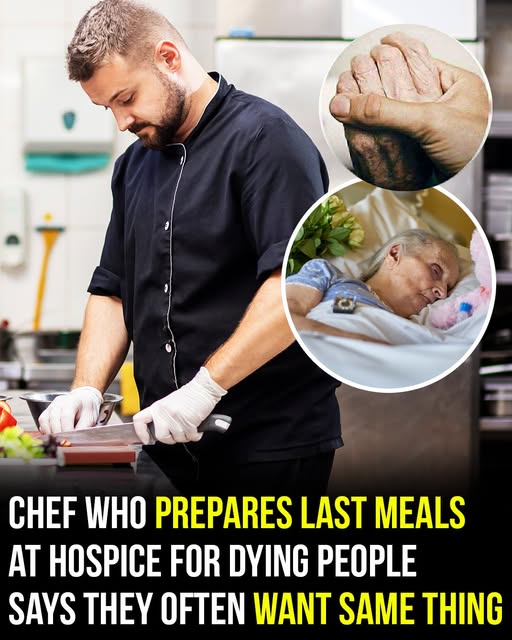
In the quiet, reflective halls of Sobell House Hospice in Oxfordshire, Spencer Richards operates at the delicate intersection of culinary art and terminal care. To the outside world, he is a chef, but to the residents navigating their final chapters, he is a curator of memories, a restorer of dignity, and a vital provider of emotional comfort. In a setting where time is often measured in days or hours, Richards understands that a meal is never just about caloric intake or biological survival. Instead, it is a powerful medium of communication—a way to say to a patient that they are seen, respected, and deeply cared for.
Richards describes his role as a unique calling, one that requires a rare blend of high-level culinary expertise and profound human empathy. “There can be no greater honor as a chef than serving someone their final meal,” he notes, acknowledging the immense responsibility that comes with his position. For many in hospice, the ability to control one’s life is stripped away by the progression of disease. Choices about medication, mobility, and even sleep are often dictated by clinical necessity. However, the choice of what to eat remains one of the final vestiges of personal agency. By prioritizing these requests, Richards returns a sense of selfhood to those who feel they are losing it.
The challenges of hospice cooking are as much physiological as they are emotional. Terminally ill patients often face significant barriers to eating.1 Medications can turn favorite flavors into metallic or bitter disappointments; radiation can make the mouth as dry as parchment; and conditions like dysphagia make the simple act of swallowing a dangerous struggle. To combat this, Richards employs a strategy of extreme personalization. He doesn’t just look at a chart; he listens to the person.
He recalls the story of a 21-year-old man who found the traditional hospice menu unappealing and alien. This young man didn’t want the bland, “safe” foods often associated with medical facilities; he craved the bold, vibrant flavors of the street food he had enjoyed with friends before his diagnosis. Richards didn’t hesitate. He adapted his kitchen to recreate those dynamic spice profiles and textures, providing the patient with a meal that felt like a connection to his youth and the world outside the clinic walls. This gesture transformed a standard dinner into a moment of defiant joy, a sensory reminder of the life the young man had lived.
Similarly, Richards recounts the experience of a 93-year-old woman who, through a series of life’s hardships, had never actually celebrated her own birthday with a cake. In a place where many might focus only on the end, Richards focused on a beginning. He baked her a cake, complete with the ceremony and joy such a milestone deserves. The patient was moved to tears, overwhelmed by the realization that even at the very end of nearly a century of life, she could still experience a “first.” These instances demonstrate that the kitchen at Sobell House is a place of advocacy, where the humanity of the individual is defended against the encroaching silence of illness.
Beyond individual stories, the broader philosophy of the hospice kitchen is one of total innovation. Richards views texture modification not as a limitation, but as an art form. For patients with swallowing difficulties, he doesn’t merely serve unappealing bowls of mush. He utilizes molds and creative layering to ensure that pureed food retains the visual silhouette of a traditional roast or a decadent dessert. He understands that we “eat with our eyes first,” and maintaining the aesthetic dignity of a meal is a form of psychological support. He uses aromatic herbs and natural flavor intensifiers to compensate for dulled taste buds, ensuring that even a small, miniature portion of food packs an emotional and sensory punch.
This level of care extends outward to the families and caregivers.2 Hospice care is a holistic endeavor, recognizing that the family is often under as much emotional strain as the patient.3 When a family member sees their loved one—someone who may have refused food for days—take a bite of a favorite childhood pudding and smile, the relief is palpable. It provides a momentary respite from the weight of grief and creates a shared space of normalcy and hope. Richards often collaborates with families to uncover “lost” recipes or cultural dishes that resonate with a patient’s heritage, ensuring that the legacy of a person’s life is reflected on their plate.+1
The nutritional aspect of Richards’ work remains rigorous, even as the focus shifts toward comfort. He balances the need for hydration and energy maintenance with the reality of a fading appetite. He might fortify a chocolate mousse with nutrients or create high-protein, calorie-dense smoothies that taste like a luxury indulgence rather than a medical necessity. The goal is to sustain the body just enough to allow the spirit the energy to engage with loved ones for one more afternoon, one more conversation.
At Sobell House, the philosophy is that food is a bridge. It bridges the gap between the clinical and the personal, the past and the present, and the caregiver and the cared-for. It is a silent form of advocacy that affirms that every person, regardless of their health status, deserves to experience pleasure and dignity. Richards’ work proves that the role of a chef in a hospice is to be a guardian of the human spirit. Through the thoughtful application of heat, spice, and care, he transforms the act of eating into a celebration of a life lived.
The lasting impact of this compassionate culinary care is seen in the memories left behind. Families do not just remember the medical care; they remember the birthday cake, the favorite soup, and the chef who took the time to ask, “What would make you happy today?” In a setting defined by loss, Spencer Richards manages to create a sanctuary of fulfillment. He demonstrates that while medicine can treat a disease, it is often a meal—prepared with love and served with respect—that truly nourishes the soul.
Ultimately, Richards’ approach is a reminder to all of us that the smallest gestures often carry the greatest weight. A simple dish, when infused with empathy and purpose, can alleviate the profound loneliness of a terminal diagnosis. It can spark a laugh, trigger a cherished memory, and provide a sense of peace. In the final days of life, when so much is being let go, a well-cooked meal is a way to hold on—to flavor, to memory, and to the enduring beauty of being human. Through his work, Richards ensures that the final taste of life for his patients is one of sweetness, warmth, and the unmistakable flavor of home.