The public image of Ashley Judd has long been defined by a certain cinematic elegance—a mixture of intelligence, poise, and the kind of classic Hollywood beauty that suggests an effortless ascent to stardom. However, to view Judd solely through the lens of her filmography is to miss the most profound aspects of her identity. Behind the red-carpet smiles and the critically acclaimed performances lies a narrative forged in the crucible of trauma, a life defined not by the ease of success, but by the sheer, gritty determination to survive. Her story is a complex tapestry of systemic failures, personal violations, and a relentless, defiant refusal to remain a silent victim.
Judd’s journey began in a world that was paradoxically filled with both fame and instability. While her mother, Naomi, and sister, Wynonna, were rising to the pinnacle of country music royalty as The Judds, Ashley’s early reality was often characterized by a startling degree of neglect and upheaval. In her own candid reflections on her youth, she has described a childhood marked by poverty, a lack of consistent protection, and a sense of isolation that would leave lasting emotional scars. She moved between schools and homes with dizzying frequency, a lifestyle that forced her to develop an internal resilience long before she had the maturity to understand why it was necessary. The bright lights of her family’s public success served as a distracting mask for a private life that was, at times, dangerously precarious.
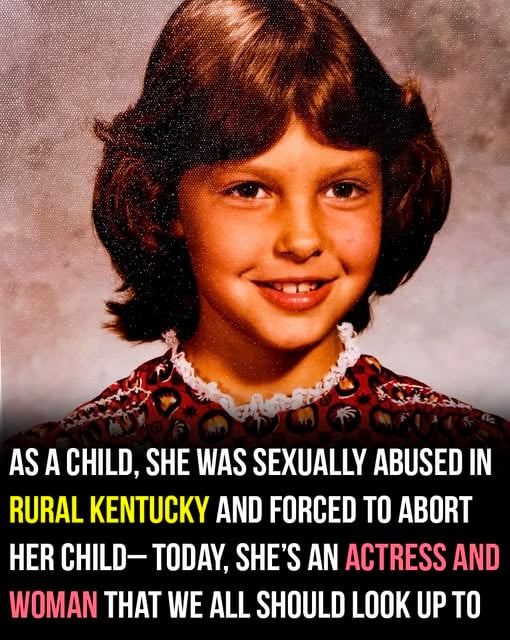
As she transitioned into adulthood and found her own footing in the entertainment industry, the shadows of her past were joined by new, more visceral horrors. Judd became a survivor of sexual violence, an experience that is traumatic under any circumstances but was made uniquely grotesque by the legal systems then in place. She has spoken openly about the “unimaginable” reality of facing laws that could have forced her into a co-parenting arrangement with her rapist had she conceived. Rather than retreating into the traditional Hollywood sanctuary of private recovery, Judd chose to leverage her trauma as a wrecking ball. She didn’t just survive the injustice; she interrogated the very foundations of a legal and social system that could allow such a scenario to exist.
On the silver screen, Judd often gravitated toward roles that mirrored her internal fortitude. In films like Double Jeopardy and Kiss the Girls, she portrayed women who were hunted, marginalized, or underestimated, only to emerge as the architects of their own liberation. For Judd, these weren’t just characters; they were echoes of her lived experience. However, the true test of her resolve came when she decided to challenge the power structures of Hollywood itself. When she became one of the first prominent voices to speak out against the systemic abuse and predatory behavior of industry titans, the retribution was immediate and calculated.
The industry’s response followed a well-worn script of erasure. Roles that seemed certain suddenly vanished; whispers about her being “difficult” began to circulate in the boardrooms of major studios, and opportunities that were once plentiful began to dry up. It was a sophisticated form of professional blacklisting intended to serve as a warning to anyone else who might consider breaking the “omerta” of the studio system. But where the industry expected a retreat, they found a revolutionary. Judd refused to view the loss of her acting career as a defeat. Instead, she viewed it as a liberation, a chance to pivot from the art of representation to the work of global advocacy.
She began to travel to some of the most volatile regions on Earth, moving through war zones and refugee camps with a purpose that far exceeded the typical scope of celebrity philanthropy. She didn’t just visit these places to be photographed; she went to listen. She sat with survivors of exploitation and violence in the Democratic Republic of the Congo, in brothels in Southeast Asia, and in the aftermath of humanitarian disasters. In their stories, she found the mirror of her own pain, and in their resilience, she found a renewed sense of mission. She transformed her voice from a tool for dialogue into a weapon for accountability, demanding that the world look at the uncomfortable truths of gender-based violence and systemic oppression.
Even her physical body seemed to test her endurance in ways that felt almost biblical. In 2021, while researching bonobos in the Congolese jungle, Judd suffered a catastrophic accident. A fall resulted in a shattered leg, leaving her stranded for hours in the wilderness with a life-threatening injury. The story of her rescue—a fifty-five-hour ordeal involving being carried out of the rainforest in a hammock and a grueling journey to medical care—became a visceral metaphor for her entire life. She was broken, in agony, and far from safety, yet she remained conscious and focused on the next step toward survival. Her recovery was not just a medical process but a spiritual one, another chapter in a biography that seemed to be written in the ink of resolve.
As of early 2026, Ashley Judd’s legacy has undergone a total transformation. She is no longer just the “girl next door” from the nineties or the star of psychological thrillers. She has become a pillar of the global human rights movement. Her impact is measured not in box office receipts, but in the shifts in legislation she helped inspire and the cultural sea change she helped ignite within the #MeToo movement. She proved that truth-telling is not a career-ender, but a soul-builder.
The beauty of Judd’s defiance lies in its lack of bitterness. Despite the industry’s attempt to discard her and the personal tragedies that sought to break her, she maintains a profound capacity for empathy and joy. She has demonstrated that survival is not a static state; it is a dynamic, evolving process of turning pain into purpose. She has become a beacon for those who have been told that their voices don’t matter or that their trauma defines them.
Ultimately, the story of Ashley Judd is a reminder that the most powerful thing a human being can do is refuse to be silent. It is a legacy of endurance that extends into the lives of countless survivors who now feel seen because she stood up first. She has shown the world that even when the bright lights fade and the roles vanish, the truth remains. Ashley Judd did not just survive Hollywood; she survived life, and in doing so, she gave the world a masterclass in how to live with an unbroken heart. The scars are there, but they are no longer hidden—they are the medals of a woman who fought for herself and, in the process, fought for us all.