My name is Alyssa Kincaid, and this morning I sat across from the people who gave me life, watching them meticulously attempt to erase mine. We were separated by six feet of industrial carpet in Courtroom 14B, a space that smelled of lemon polish and recycled anxiety. The fluorescent lighting buzzed overhead, sharp and sterile, casting long shadows that made everyone look skeletal. While the bailiff called the case number in a bored monotone, I studied the opposition. On the plaintiff’s side sat Charles and Loretta Kincaid—my parents. On the defense, there was just me.
They were suing me for fraud. The legal filing was a masterpiece of creative fiction, claiming I had stolen the identity of a deceased veteran, forged government documents to collect benefits, and built my entire adult existence on a fabricated lie. They didn’t even look at me. They stared straight ahead, their posture rigid with self-righteous indignation. I didn’t flinch when their lawyer, a slick litigator named Mr. Sterling, laid out their so-called evidence. He presented the absence of military photos on our family mantelpiece, the missing discharge papers in public records, and the fact that no one in their social circle could confirm I had ever worn a uniform. “This is a case of delusion,” Sterling declared, pacing in front of the judge. “A daughter desperate for attention, constructing a fantasy to exploit state resources and shame a respectable family.”
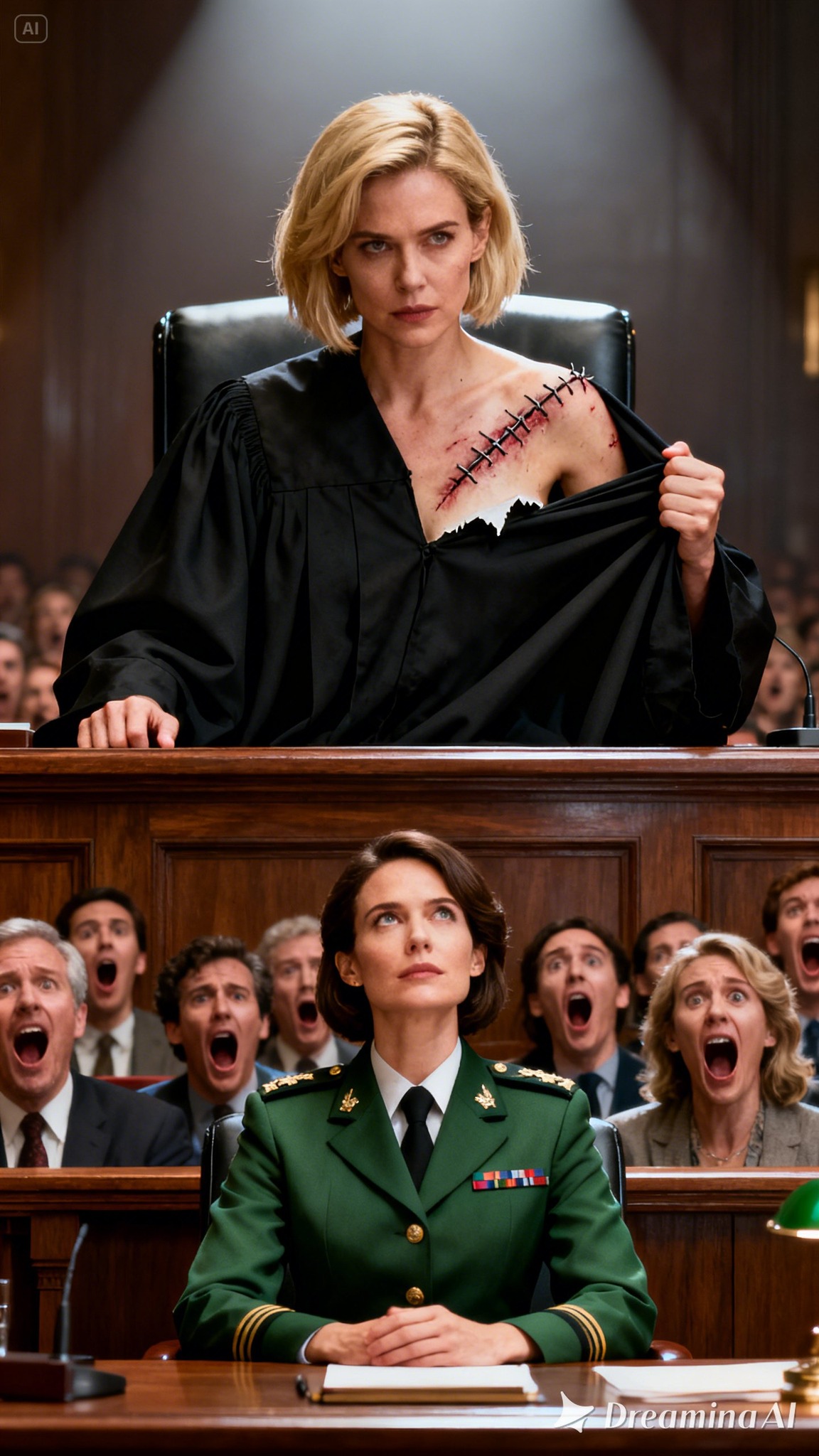
I stayed silent, my hands folded on the table. My uniform wasn’t on my body; it was folded neatly at home in a cedar chest, but I could still feel the phantom seam of the combat patch itching under my skin. I could still taste the copper tang of Kandahar sand and hear the tremor in the medic’s voice when I took over chest compressions in the back of a shaking Humvee. They thought my silence was an admission of guilt. They didn’t understand that silence is a soldier’s first language. Then, the judge spoke. She leaned forward, her voice cutting through the humidity of the room. “I recognize the defendant,” she said. Mr. Sterling paused mid-stride. My parents blinked, confused. “I served with her,” Judge Talia Mendez continued, her eyes locking onto mine. The room froze. “Mr. Kincaid,” she said softly, “you have accused this woman of stealing valor. Before we proceed, I suggest you look very closely at the scar on my right shoulder. Because your daughter is the one who stitched it closed while mortar rounds were falling on our heads.”
I was eighteen when I left that house in Savannah. My mother’s goodbye had been a cold nod; my father had merely warned me not to “embarrass” them. Growing up Kincaid meant earning affection like paying rent. My brother, Mason, was the golden asset—the varsity quarterback turned lobbyist. I was the liability. When I enlisted, they told neighbors it was a “phase” or a “retreat.” When I came home three years later, scarred and limping, they didn’t meet me at the gate. My mother looked through the peephole, opened the door halfway, and said, “Oh. You’re back.” They never asked about the night the convoy was hit or why I flinched at the sound of propane igniters. Eventually, I stopped trying to explain and moved into a studio apartment, filing for the benefits I had earned through a secure, low-cost legal aid group.
But even my survival was an insult to them. When the lawsuit arrived, I realized they weren’t just trying to win money; they were trying to annihilate my history. In court, Mr. Sterling argued that I didn’t exist in the general enlistment database. Technically, he was right. My unit in Kandahar operated under a provisional Joint Task Force for MedEvac extraction on classified routes. For two years, my identity had been redacted for operational security. I was listed as “Active Non-Disclosed,” and my discharge paperwork sat on a secure server. I couldn’t explain this without breaking my non-disclosure agreement. I sat there, quiet, honoring the uniform even if no one else would.
When the court reconvened after lunch, Judge Mendez took control. “I can tell you exactly where she has been,” she said, her tone as sharp as the winter air in the Hindu Kush. “112th Medical Evacuation Battalion. She pulled me from a burning vehicle in the Arghandab Valley. She held my femoral artery shut with her bare hands for forty minutes while we waited for the chopper.” The room went silent. Loretta clutched her pearls so hard the string threatened to snap. Judge Mendez then produced a sealed manila envelope. Under emergency judicial exception, she had declassified my record for the hearing. The clerk read it aloud: Combat Action Badge, Purple Heart, Bronze Star with ‘V’ Device for Valor. Fourteen wounded personnel extracted under hostile fire. Every word was a hammer blow to my parents’ narrative.
Judge Mendez dismissed the lawsuit with prejudice. I didn’t cry or smile. I just exhaled for the first time in years. As I left the bench, a young woman in a Marine uniform stood in the back and rendered a slow, sharp salute. My father looked smaller than I remembered, and my mother looked like a layer of plaster over ice. I stayed seated until they were gone, wanting to walk away from them entirely. That night, back in my apartment, I realized it didn’t feel like a triumph; it felt like grief. Not for what they did, but for how easily they had done it.
The news didn’t run my name in bold print, which I preferred. My parents never called to apologize, though my father sent a formal letter two weeks later mentioning “regretful confusion.” I burned it in the kitchen sink. I realized then that I couldn’t stay in Savannah, a city haunted by a version of me that didn’t exist. Three months later, I moved to the mountains of western North Carolina, finding a small house at the edge of the Pisgah National Forest. I found work as a peer counselor at a veterans’ clinic. Most who came through didn’t ask for my story, and I didn’t offer it; they just needed someone who understood why the scent of diesel made them twitch.
One Friday, a Marine veteran with a scar across his neck walked in. He sat across from me and asked, “You the one from the trial?” I nodded. He didn’t demand receipts. “You stayed quiet,” he said. “That’s the kind of strength people don’t know how to praise. But the right people notice.” After he left, I checked my mailbox and found an old, grainy photograph of me kneeling beside a smoking Humvee, blood-soaked gauze in my hands. In the corner, a single word: Mendez. She had kept it all these years as a reminder that she survived.
I framed the photo and placed it on the shelf above my fireplace. The truth doesn’t need to shout. Justice arrived in the way my breath steadied and the way my name no longer burned in my mouth. I no longer measure time by deployments or court dates, but by the sunlight on my porch and the shift of the wind before a storm. My name is Alyssa Kincaid, and I am no longer missing.