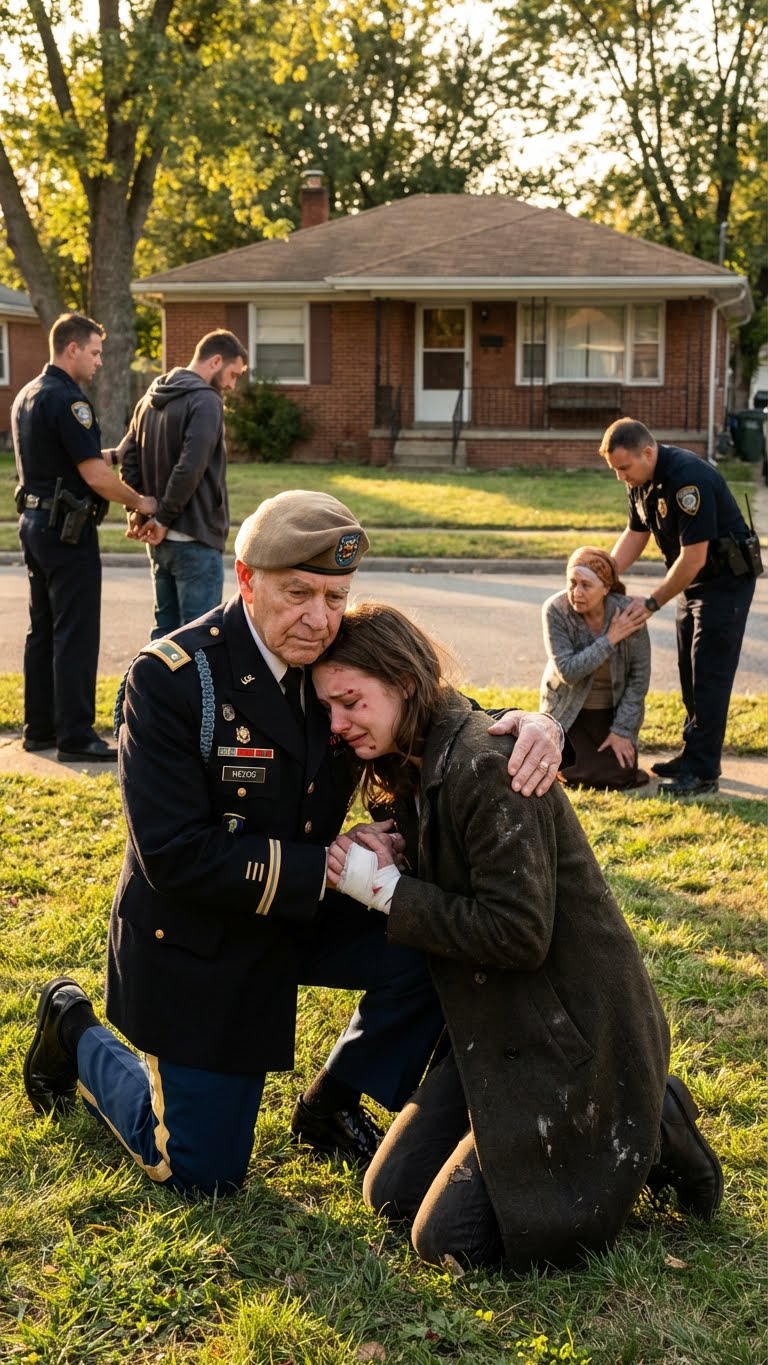
The neighborhood knew me only as Frank, the quiet retiree with a slight limp and a meticulously kept garden. They saw a man in his late sixties wearing faded flannel and denim, a man whose life seemed to revolve entirely around the health of his Peace roses and the seasonal battle against aphids. They saw the gray hair and the weathered skin, but they didn’t see the shrapnel in my leg from Grenada or the decades I spent as a Marine Scout Sniper and Chief Instructor of Close Quarters Battle. To the world, I had become a gentle old man. In reality, I was a machine of precision and destruction that had simply been set to idle.
The transition from a life of high-stakes violence to the tranquil rhythm of gardening is not a change of nature, but a change of focus. The same hands that once mastered the mechanics of a rifle now mastered the delicate pruning of a stem. I lived in a self-imposed peace, a quiet pact with the world that I would stay retired if the world left me alone. But on a Saturday morning in mid-January, that pact was shattered by a phone call. It was Sarah, my only daughter. Her voice was a fragile, broken whisper—not a scream, but a moan of pure distress that cut through the morning air like a cold blade. Then, the line went dead.
Most fathers would have been paralyzed by panic, their heart rates spiking and their judgment clouded by fear. But as the phone clicked shut, a switch flipped in my psyche that had remained untouched for years. My heart rate didn’t climb; it slowed, a physiological recalibration honed by years of combat. The birdsong in the garden faded into a distant hum, and the colors of the roses sharpened into high-contrast clarity. Frank the gardener stepped aside. Master Gunnery Sergeant Frank Miller was back on the clock.
I didn’t run to the garage; running is a waste of energy and a compromise of focus. I moved with long, purposeful strides. I bypassed my biometric safe—guns are for enemies at a distance, and this was far more intimate. I climbed into my 1995 Ford F-150 and drove toward Sterling Estates, a gilded fortress of wealth and arrogance where Sarah’s husband, Jason, lived with his mother, Eleanor. They treated their wealth like armor, but to a man who had breached actual bunkers, their iron gates were merely a suggestion. I floored the gas, bypassed the security barrier by driving over the manicured grass, and parked my truck directly on their begonia beds.
Jason was waiting on the porch, a man who had never known the weight of a day’s labor, holding a Louisville Slugger like he was playing a role in a movie. He shouted about “private family matters” and “discipline,” using the language of authority to mask the behavior of a bully. He threatened to break my legs, swinging the bat with a clumsy, telegraphed motion that would have been comical if the stakes weren’t so high. I didn’t retreat; I stepped inside the arc of his swing, closing the distance until I could smell the expensive cologne masking his sweat. I delivered a single, focused hook to his solar plexus. The air didn’t just leave him; it was evicted. He folded like a broken chair, gasping for a breath his paralyzed diaphragm couldn’t provide.
I stepped over him and moved into the house, guided by the sound of my daughter’s muffled sobbing. Upstairs, I found a scene of medieval cruelty. Sarah was on her knees, her long hair lying in ragged clumps on a Persian rug. Eleanor, draped in diamonds and malice, was pinning her down, wielding fabric shears to “teach her a lesson” for being too ill to host a social committee. I crossed the room in two strides, grabbed Eleanor by her silk collar, and threw her across the room with just enough force to stop the assault without ending her life.
Sarah was burning with a 104-degree fever, her eyes glassy and unfocused. She had been tortured for the crime of being sick. Eleanor scrambled up from the floor, screaming about lawsuits and social standing, completely unaware of the man standing before her. She saw a gardener in a flannel shirt; she didn’t see the predator who had spent thirty-five years assessing threats and neutralizing them. I scooped Sarah into my arms—she was terrifyingly light—and carried her to my truck, locking her safely inside with the air conditioning running.
Then, I went back for the reckoning. Jason had managed to sit up, his face twisted with the entitlement of the rich. He threatened me with lawyers and prison, his voice spitting venom. I grabbed him by the throat and pinned him against a brick pillar, leaning in until our noses nearly touched. I didn’t shout; I used my “Instructor Voice,” a tone designed to bypass the conscious mind and strike directly at the primitive centers of fear. I told him who I was. I told him I had trained the men who ran this county. I told him I had killed for much less than what he had done to my daughter.
Eleanor was frantically dialing the sheriff on her phone, shrieking that a maniac had broken in. I pulled out my own phone—a rugged, outdated flip phone—and dialed a number from a different life. I reported a “Code Black” situation to a Colonel I had served with, requesting a cleanup crew and a medical evacuation. The response was immediate and steel-cold. Five minutes later, the Sterling Estates echoed with the sirens of authority they thought they controlled.
Captain Rodriguez was the first out of the lead patrol car. Ten years ago, he was a terrified corporal I had pulled from a burning vehicle in Fallujah. He didn’t look at Jason; he looked at me, snapped to attention, and delivered a sharp, respectful salute. The realization hit Jason and Eleanor like a physical blow. The flannel shirt and the dirt under my fingernails were just camouflage. I wasn’t just a gardener; I was an institution.
With smart-home footage providing an undeniable record of their cruelty, the pair was led away in zip-ties, their reputations and arrogance shattered. Rodriguez ensured the case was a “slam dunk,” and as the sirens faded, the silence of the neighborhood felt different—cleansed.
Two weeks later, the peace returned to my garden. Sarah sat on the bench, her hair now a soft pixie cut, watching the sunlight filter through the trellis. She apologized for not telling me sooner, admitting she thought they were too powerful for me to handle. I sat beside her, taking her hand in mine. I explained that wealth isn’t power and that screaming isn’t strength. True power is the ability to destroy, tempered by the choice to plant roses instead. I told her that while the Marine Corps had retired me, a father’s commission never expires.
I am back to pruning my roses and tending to the soil. The world sees an old man in flannel, and I prefer it that way. Underestimation is the greatest advantage a man like me can have. I have chosen peace, but the steel shears in my hand are always sharp, and I am always ready.