Under a low, gray sky along Chile’s southern coast, the road to Curanipe Parish Cemetery filled slowly with people who had never expected to gather for this reason. They came carrying white flowers wrapped in newspaper, framed photographs worn soft at the edges, and handwritten scraps of lyrics that had once played through kitchens, buses, and late-night celebrations. At the center of it all was the coffin of Ivana Pino Arellano, lowered into the earth far too soon.
She had just celebrated her birthday. One more candle, one more promise. Then, within a day, everything stopped.
To many, she was known as La Rancherita de Chanco, a nickname that carried more weight than fame. It rooted her in the soil, in the accent of her voice, in the everyday lives of people who rarely see themselves reflected in the spotlight. She didn’t sing from a distance. She sang with them. Her music blended traditional Latin American country sounds with modern rhythms, not to chase trends, but to keep the past alive while letting it breathe.
Her songs were heard at family barbecues, roadside diners, harvest celebrations, and quiet evenings when radios were left on just for company. She had a way of making ordinary moments feel larger, more emotional, almost cinematic. For many rural listeners, she wasn’t just an artist. She was a presence woven into memory.
That presence vanished on a rain-soaked stretch of the M-80 Route.
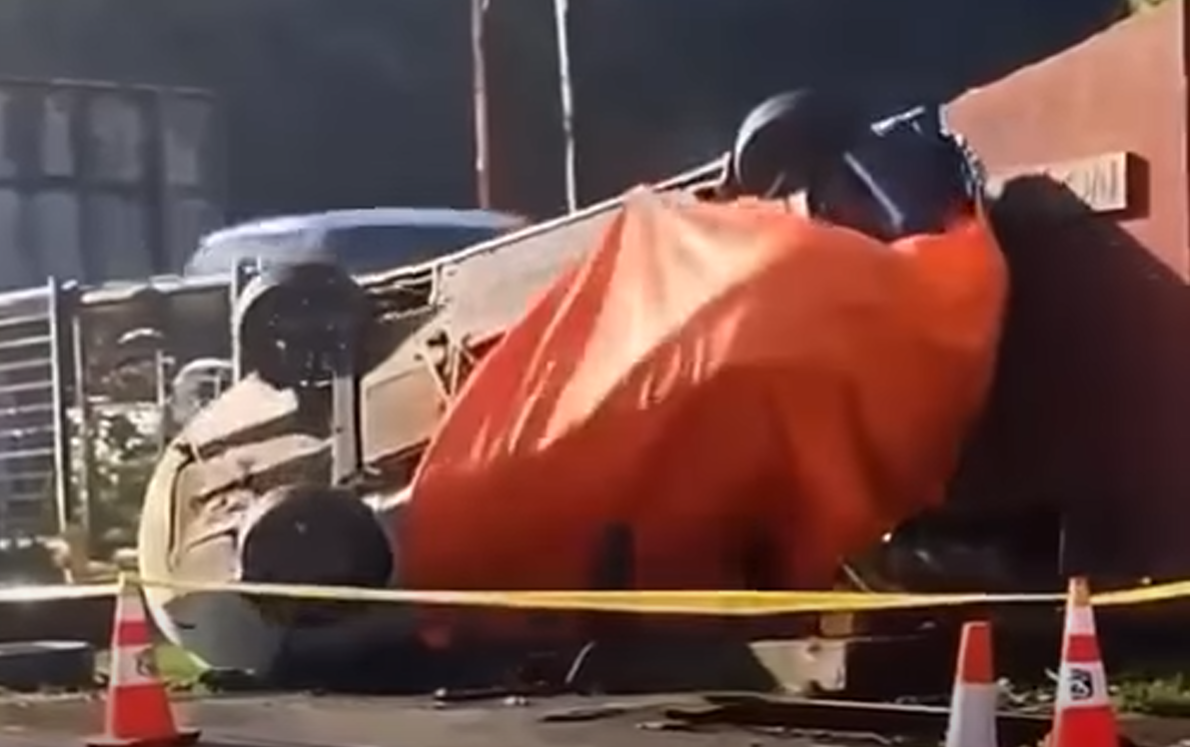
The storm that night was relentless. Rain blurred the road, pooled along the edges, and turned asphalt slick and unforgiving. Somewhere along that route, her car lost control, overturned violently, and came to rest in silence. Ivana died at the scene. The passenger with her survived, but with serious injuries—injuries that will heal in body while leaving behind a far heavier burden to carry.
The news spread quickly, but disbelief spread faster. People refreshed their phones, waiting for a correction that never came. Radio hosts choked up mid-sentence. DJs let her songs play longer than scheduled, unable to interrupt them. In Chanco, candles appeared in windows by nightfall, flickering against glass as if refusing to let the dark fully settle in.
At the funeral, grief was quiet but dense. No screaming, no spectacle. Just the sound of boots on damp ground, muffled sobs, and the wind pushing through trees as if even the landscape was trying to say something. Older women whispered prayers. Younger fans stood frozen, holding phones they didn’t raise, knowing no video could capture what they were losing.
Ivana’s career was still unfolding. She had plans—new songs, collaborations, performances that would take her beyond the places she loved without ever abandoning them. Those close to her said she talked constantly about growth, not fame for its own sake, but reach. She wanted her music to travel where she couldn’t yet go, to remind people from small towns that their stories mattered.
Now, that future exists only in fragments: unfinished lyrics, demo recordings, messages sent hours before the crash that read like nothing out of the ordinary. That is the cruelty of sudden loss. It doesn’t announce itself. It interrupts.
Municipal officials called her legacy “impossible to replace.” On paper, that sounds formal, even routine. In reality, it was an understatement. You can find another singer. You cannot replace a voice that felt like home to thousands of people who rarely hear themselves echoed back.
In the days after her death, something strange happened. Her music didn’t fade into mourning silence. It grew louder. Cars drove with windows down despite the cold, her songs pouring out onto wet streets. Markets played her albums on repeat. People sang along, sometimes smiling through tears, sometimes breaking halfway through a verse.
Grief doesn’t always sound like crying. Sometimes it sounds like refusing to turn the radio off.
For the passenger who survived, recovery will be long and public in ways that are deeply unfair. Every update, every scar, every step forward will carry the shadow of the one who didn’t get up. Survivors of accidents often speak about guilt that no apology can quiet. That burden now walks beside them, invisible but constant.
Ivana’s family has asked for privacy, but their pain is shared whether they want it to be or not. When an artist becomes a symbol of place and memory, their loss doesn’t stay contained. It spreads outward, touching people who never met them but feel as though they did.
She didn’t live long enough to see how deeply she was loved. That may be the sharpest edge of this tragedy.
Yet, even in death, Ivana Pino Arellano remains present. In the way her songs still drift through homes at dusk. In the way people hum her melodies while driving the same roads she once traveled. In the way her name is spoken softly, with familiarity, not distance.
Legacies aren’t built only on time. Sometimes they’re built on resonance. On how completely a voice fits into the lives of others.
Ivana fit perfectly.
And now, where she should have been—writing, singing, celebrating another year—there is an absence so loud it echoes across rain-soaked highways, quiet towns, and every place her music once made people feel seen.
That is not a phrase. It is a wound.