Grief drove me into the kitchen before I knew what to call it. I wasn’t trying to be generous or noble. I just needed my hands busy so my heart wouldn’t tear itself apart. Flour was quieter than screaming. Dough didn’t ask questions.
The night my life split in two was a hard January night, the kind where the cold presses against the windows until they cry. I was sixteen, half-listening to music through earbuds, pretending homework mattered, while my parents laughed at something dumb on television. Then the smell cut through everything—burnt plastic, metal, panic. The smoke alarm went feral. My dad came into my room fast, grabbed my arm, didn’t explain, didn’t slow down. We ran. Down the stairs, out the door, into snow that stabbed my bare feet. He turned back for my mom. For my grandpa, who lived with us. I never saw any of them again.
They said it was an electrical fault in the kitchen. A sentence that neat shouldn’t be able to erase three lives, but it did. The fire ate everything: photos, savings, furniture, the ceramic horse my mom gave me for my tenth birthday. By morning there was nothing left but a blackened foundation and me, wrapped in a borrowed coat, standing in the yard like an afterthought.
I landed in a youth shelter with dorm beds and rules taped to the walls in faded marker. It was clean, safe, quiet. My aunt Denise—my mother’s older sister and technically my only family—called once. She said she had no room. Her husband needed the spare room as an office. She said she was grieving too. She still managed to claim half the insurance payout “to help with clothes and therapy.” She bought a new car, a wine fridge, and called her sudden interest in designer outfits a “grieving wardrobe.” I didn’t fight her. I barely spoke. Shock looks like obedience if you stare at it long enough.
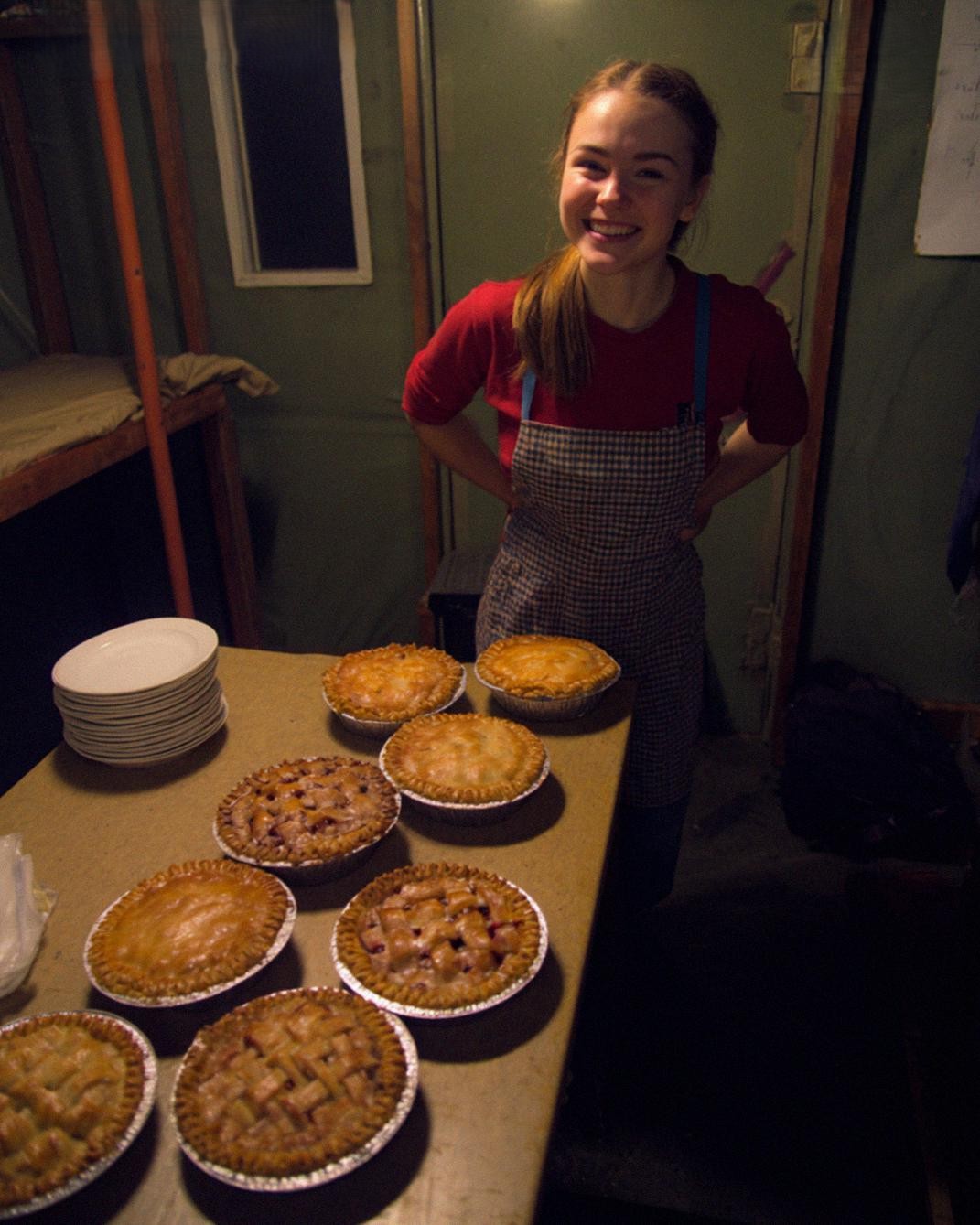
I studied like my life depended on it, because it did. Scholarships were the only way out. At night, when the common room filled with noise and screens, I went to the shared kitchen. I taught myself to bake. I learned what butter feels like when it’s ready, how dough tells you when to stop, how a wine bottle works fine as a rolling pin if you clean it properly. I baked whatever I could afford: apple, blueberry, cherry, peach. Sometimes ten pies. Sometimes twenty.
I boxed them up and walked through the dark to the homeless shelter and the hospice center nearby. I gave them to volunteers or nurses, didn’t leave my name, didn’t wait to see who ate them. Loving anonymously felt safer. No expectations. No chance of losing anyone again. Denise still found reasons to call. She said I was wasting money, that those people didn’t matter, that the money should be going to her. “I lost my sister too,” she said, like it was a receipt she could cash. I hung up and kept kneading.
Two weeks after I turned eighteen, the receptionist at the shelter called my name and placed a box on the desk. My name was written on top in careful cursive. No return address. Inside was a pecan pie, flawless, braided edges, golden and dusted with powdered sugar like fresh snow. I cut into it with the dull knife from the drawer and hit something solid. A plastic sleeve. Inside it, a note.
“To the young woman with the kind heart and golden hands. Your pies made my final months warm. I never saw your face, but I felt your love. I have no family left. I’d like to leave my home and my blessings to someone who knows what love tastes like. — M”
My legs gave out. I slid to the floor, staring at the pie like it might explain itself. The receptionist knelt beside me, rubbed my shoulder, and told me to rest. Some truths are easier after your body stops shaking.
Three days later, a lawyer called. His name was Paul. His voice was calm in that practiced way people use when they’re about to change your life. He asked if I’d been delivering pies to the hospice for months. When I said yes, he told me Margaret Hendley had passed away and named me her sole beneficiary.
I laughed. It came out wrong, sharp and hollow. “What estate?” I asked.
He listed it plainly. Her house. Her car. Her belongings. And a trust her late husband had left her, untouched, compounding interest for nearly twenty years. Five point three million dollars.
“She didn’t even know me,” I said.
“She did,” he replied. A nurse recognized my red coat with the missing button and once followed me to be sure I got home safely. Margaret had gone blind near the end. She asked staff to describe every pie in detail. She saved slices to share. She kept a journal. She said once that whoever baked them was young and grieving but still knew how to love. She told them to find me quietly.
I sat at a bus stop afterward, scholarship forms in my lap, watching a sky that felt too big. I didn’t tell anyone. I was afraid the truth would disappear if I said it out loud. Denise found out anyway. Probate notices are public, and bitterness reads fast. She called to say I owed her, that she raised me, that family deserved the house and the money. I hung up. Then I blocked her number.
Margaret’s house is on a quiet street where neighbors still talk from their porches. It smells like cedar and old books. There’s a greenhouse out back, built by her husband for their thirtieth anniversary, full of roses and orchids. I moved in last month. I haven’t touched the money yet. I don’t need to rush it.
I bake in her kitchen now, using her wooden spoons and the heavy rolling pin that turns dough into silk. Above the oven is a note in her handwriting: “The best ingredient is time.” I still bring pies to the hospice and the shelter. Now I add the hospital too. I leave a small card on each box: “Baked with love. From someone who’s been where you are.”
Sometimes I think about the last pie I made for Margaret, the one she never saw, only smelled. Sometimes I think about my father pulling me into the snow. About how grief lies, tells you love is finished, when it’s really just changed shape.
A stranger sent a pie to my door and rewrote the story I was telling myself about what survives. It wasn’t the money that mattered. It was the proof that the love I poured out in the dark found its way back, whole and warm, without ever needing my name. In a life that burned down to almost nothing, that felt like peace.