The call about my parents’ deaths didn’t come as a single, devastating moment. It arrived in pieces, spaced just far enough apart to let hope flicker before being extinguished. I was standing alone in my Brooklyn studio apartment, a lopsided cake from the corner deli sweating onto a paper plate, a single candle burning because I couldn’t justify buying more. The lawyer spoke in a steady, practiced tone, explaining logistics as if he were reading a grocery list. My younger sister, Savannah, had inherited the Westchester estate—our childhood home with its manicured hedges, the investment accounts, the artwork, everything that looked impressive on paper and in photographs. I, on the other hand, was left with a decaying cabin in Alaska.
That was it. A cabin. No apology in the lawyer’s voice, no explanation beyond a brief mention that my mother had left a note for me. When I hung up, the silence felt louder than the traffic outside. I stared at the flame on the candle, thinking there must have been a mistake. Savannah had always been the obvious choice—the golden child, the one my parents showcased. I had learned early how to take up less space, how to be dependable without being noticed.
My fiancé didn’t help. When I told him, he laughed, sharp and humorless, as if I’d just delivered a punchline. He said something about wasted potential, about how this proved I was never going to rise above “background character energy.” Then he ended our engagement with the efficiency of someone canceling a subscription. He left behind the ring on the counter, a rusted key mailed by the lawyer, and my mother’s handwritten note. It said only this: You’ll understand why it had to be you.
I didn’t understand. Not then.
I went to Alaska because there was nowhere else to go. Brooklyn felt hostile, full of reminders of what I no longer had. The cabin sat miles from the nearest town, half-swallowed by snow and silence. The roof sagged. The door groaned in protest when I forced it open. The air inside smelled of damp wood and old memories. I stood there, shivering, wondering if my parents had been cruel or simply indifferent.
The only bright thread in those memories was my grandfather Elias. He’d lived there for decades, spending his summers teaching me things my parents never cared about—how to split wood properly, how to listen to the land, how to fix something instead of replacing it. He rarely praised anyone, but when he did, it felt earned. He used to say the world hides its value well, not because it’s rare, but because most people don’t slow down enough to notice it.
At the time, I thought it was just one of his odd sayings.
I stayed because leaving felt like admitting defeat. Each day I repaired a little more—patching walls, reinforcing beams, clearing snow. My hands cracked and bled. My muscles screamed. But the work gave me something I hadn’t felt in years: purpose. One evening, exhausted and half-delirious, I noticed a section of the floor that sounded hollow when I stepped on it. It didn’t match the rest of the planks. I remembered my grandfather’s voice telling me to look closer.
I pried it open.
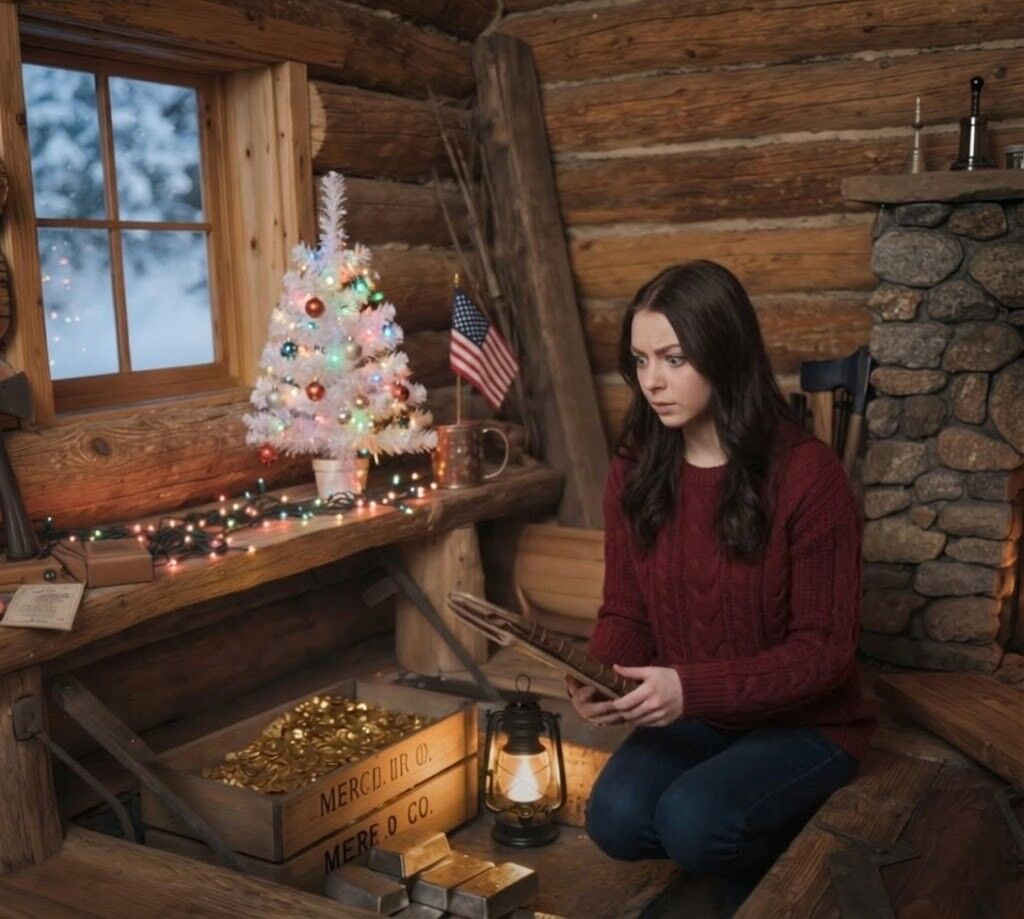
Beneath the cabin was a concealed cellar, meticulously sealed. Inside were crates—heavy ones. Gold and silver bars. Antique jewelry wrapped in oilcloth. Documents, land deeds, handwritten ledgers detailing leases, mineral rights, protected reserves. It wasn’t just wealth; it was an entire hidden infrastructure. My grandfather hadn’t been a quiet old man living in isolation. He had built something vast and deliberately invisible.
I sat there on the cold stone floor and laughed until I cried. Not because of the money, but because I finally understood. The cabin wasn’t a consolation prize. It was a filter. Anyone chasing quick value would have sold it off or walked away. Anyone impatient would have missed what was beneath their feet. My sister would have. My fiancé certainly would have.
I secured everything quietly. I hired experts who valued discretion. I honored my grandfather’s work instead of exploiting it, protecting the land, funding conservation and education programs in his name. When Savannah found out—when the truth finally surfaced—she called, furious and confused, accusing me of theft, of manipulation. I didn’t argue. There was nothing to explain.
By spring, the cabin stood strong again. Warm. Lived-in. It felt like home in a way no apartment or mansion ever had. People from my old life reached out once they heard whispers of money. I declined every invitation. Wealth had revealed them too clearly.
Each morning, I reread my mother’s note. I understand it now. Inheritance isn’t about fairness or appearances. It’s about trust. My parents hadn’t given me less. They had given me responsibility, knowing I was the one who wouldn’t squander it.
In the stillness of Alaska, surrounded by work that mattered and silence that healed, I finally stopped measuring myself against anyone else. I know who I am. And for the first time, that’s more than enough.