The story of Keith Urban is not merely a chronicle of chart-topping hits and sold-out arenas; it is a profound narrative of transformation, anchored by a legendary love story and a deep-seated commitment to turning personal grief into public good. To understand the man behind the guitar, one must look past the rhinestones and the stage lights to the moments of vulnerability that have defined his character. His journey is a masterclass in how a life, once marred by the chaos of early fame and personal struggle, can be recalibrated through the steadying influence of family and a relentless drive to give back to the world that embraced him.
The catalyst for this transformation was arguably a single moment in 2005 at the “G-Day LA” gala, an event honoring Australians in Los Angeles. It was there that Urban encountered Nicole Kidman. At the time, they were two of the most famous Australians on the planet, yet they were virtual strangers to one another. Kidman, who was still navigating the long shadow of a very public divorce, was not looking for a whirlwind. Urban, meanwhile, was grappling with his own demons. Despite the baggage and the glare of the paparazzi, the connection was instantaneous and seismic. Their romance did not simmer; it ignited. Within months, the pair was engaged, embarking on a partnership that would become one of Hollywood’s most resilient and respected unions.
However, the fairy-tale beginning was quickly tested by the realities of life. For Keith Urban, the early years of his marriage were not just about domestic bliss; they were about survival and sobriety. Kidman’s unwavering support during his most difficult transitions provided the foundation upon which he could build a new legacy. As they welcomed their two daughters into the world, Urban’s perspective shifted. He was no longer just a musician chasing the next number-one record; he was a husband and a father with a newfound sense of responsibility toward the future.
The strength of this family unit was never more apparent than during the dark days surrounding the illness and eventual death of Keith’s father, Robert Urban. Robert passed away after a long and grueling battle with prostate cancer, a loss that shook Keith to his core. For many, such a tragedy results in a period of quiet mourning, but Urban chose a different path. He decided that his father’s legacy would not be defined by the disease that took him, but by the lives Keith could save in his honor. This loss became the pivot point for his philanthropy, transforming a general desire to do good into a laser-focused mission to advance cancer research and awareness.
This commitment reached a spectacular crescendo in 2018 at the “It’s A Bloke Thing” luncheon. The event, dedicated to raising funds for prostate cancer research, saw Urban fly in specifically to perform. In a world where celebrity appearances are often transactional, Urban waived his performance fee entirely. He took the stage not as a distant superstar, but as a grieving son who understood the stakes. That afternoon, his presence and his music helped galvanize the crowd to raise over two million dollars. It was a staggering sum, but for Urban, the true value lay in the message he was sending to men everywhere: that vulnerability is a strength, and that health is a collective responsibility.
This philanthropic spirit is not an outlier in Urban’s life; it is woven into the very fabric of his daily existence. He has spent years balancing the high-octane demands of a global music career with the grounded realities of his home life in Nashville. Fans have marveled at his ability to headline a stadium tour one night and be seen the next morning doing the school run with his daughters. This duality is what makes him so relatable to his audience. He does not position himself as someone above the fray, but as someone walking through it alongside them.
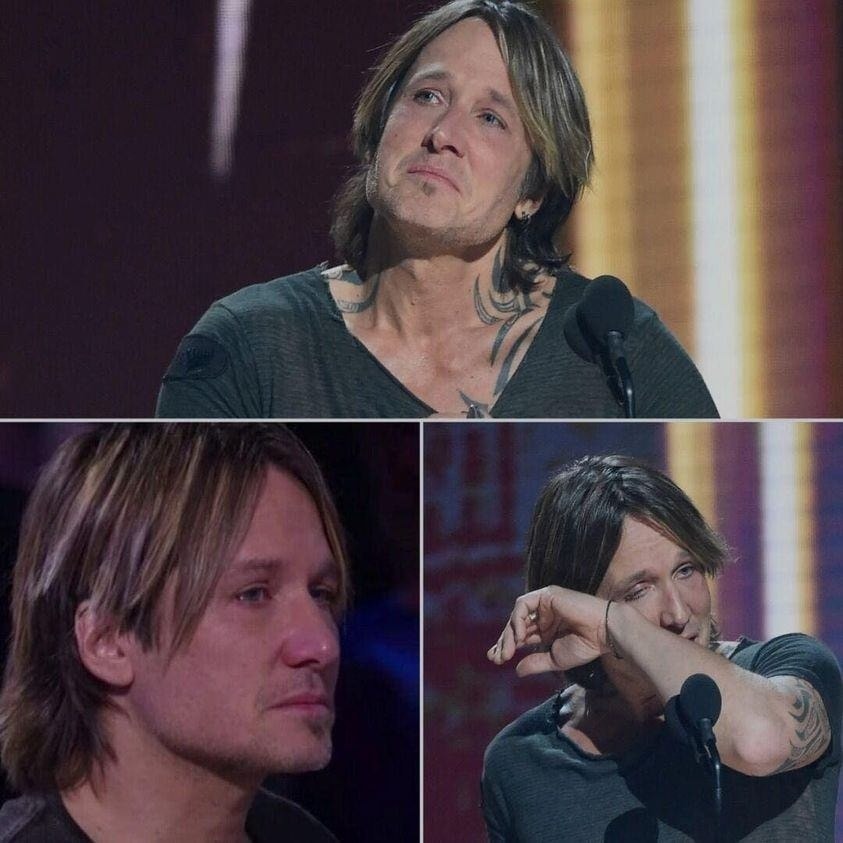
Recently, the narrative surrounding Urban took a more somber turn, prompting a massive outpouring of support from his global fanbase. When news broke that he had reached out to his followers asking for their thoughts and prayers, the response was immediate and overwhelming. In an era where digital interactions can often feel fleeting or superficial, the rally for Urban was deeply sincere. It was a reflection of the goodwill he has banked over decades of kindness. Fans did not just offer prayers; they shared stories of how his music had helped them through their own battles with illness, loss, and heartbreak. This reciprocal relationship—where the artist heals the audience and the audience, in turn, supports the artist—is the hallmark of Urban’s career.
The complexity of Keith Urban’s life lies in the balance between the heartwarming and the heart-wrenching. He has enjoyed the highest peaks of professional success, winning multiple Grammy Awards and being inducted into the Grand Ole Opry, yet he has also walked through the valley of the shadow of death with his family. He has learned that the same hands that play a masterly guitar solo can also be used to hold a grieving spouse or sign a check for a research lab.
As he continues to navigate his roles as a musician, husband, father, and advocate, Urban remains a testament to the power of second chances. His life serves as a reminder that we are not defined by the obstacles we face, but by how we choose to respond to them. Whether he is advocating for better health screenings for men or sharing a quiet moment of prayer with his fans, he does so with a transparency that is rare in the upper echelons of celebrity.
Looking forward, the legacy of Keith Urban will likely not be measured by his trophy shelf, but by the millions of dollars raised for cancer research and the countless families who found hope in his story. His bond with Nicole Kidman remains a beacon of stability in an industry known for its volatility, proving that a marriage built on mutual respect and shared values can withstand even the most intense public scrutiny.
Ultimately, Keith Urban’s journey is one of profound resonance. It is the story of a man who found himself by losing himself in the service of others. From the stages of Sydney to the heart of Tennessee, he has demonstrated that music is most powerful when it is used as a vehicle for empathy. As the fans continue to rally around him, it is clear that the “knight with the ticking clock” in his own life has learned the ultimate lesson: that the most important work we do is the work of the heart. He continues to live his life with an open hand, ready to catch those who are falling just as he was once caught, ensuring that his father’s memory and his own convictions continue to light the way for others.