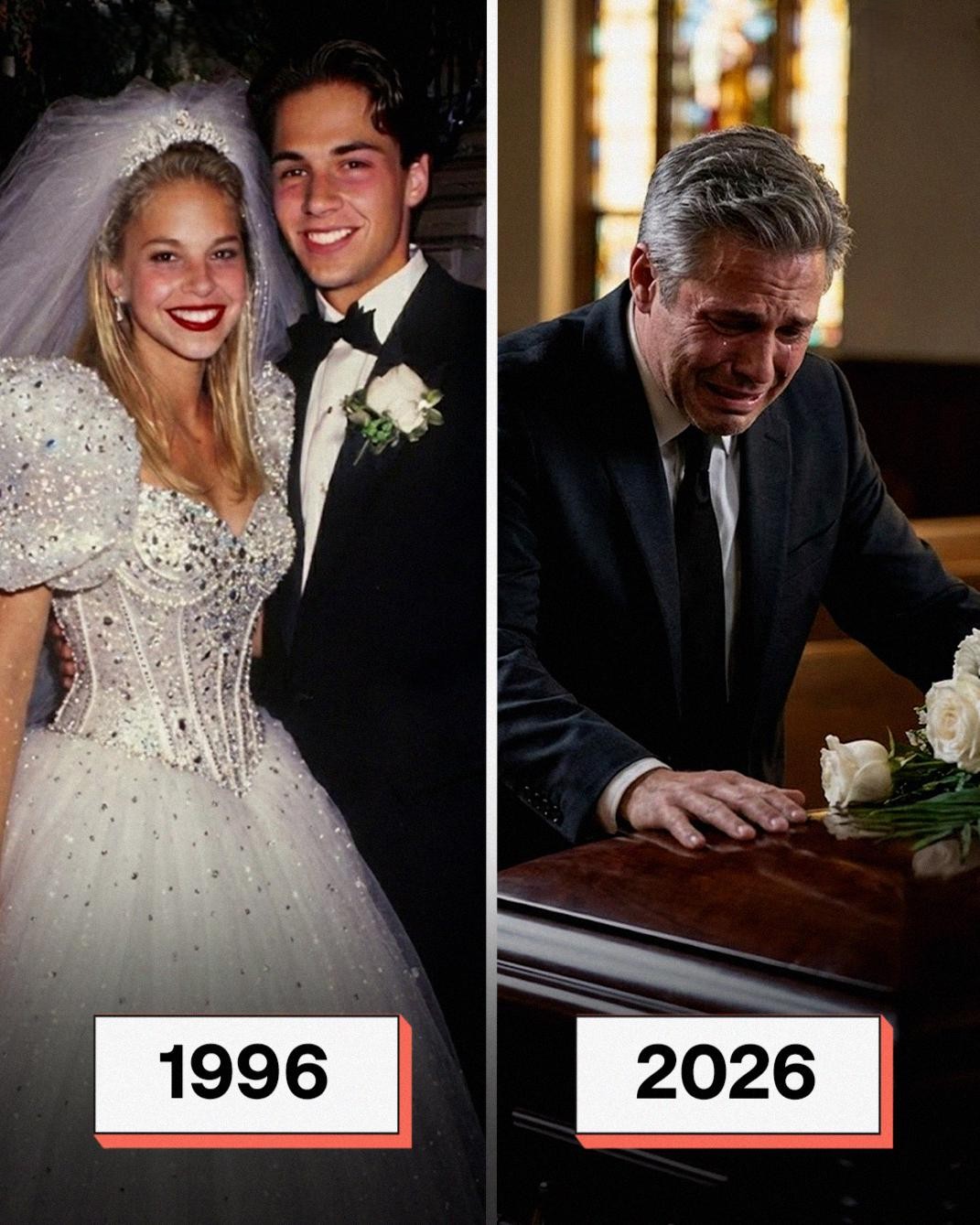
The day my wife, Claire, died, the house seemed to forget how to breathe.
Sunlight still poured through the living room windows, warming her favorite chair the way it always had, but it felt misplaced now—like it didn’t know what it was supposed to illuminate. I stood in the doorway longer than necessary, staring at the empty cushion, half-expecting it to remember her better than I could.
“You’ll never win an argument standing in a doorway, James,” she used to say, one eyebrow raised over the edge of her book. “Come sit and face the music with me.”
Her voice echoed so clearly that it stopped me cold. She’d said it once when I suggested painting the kitchen beige.
“Beige?” she’d scoffed, mock horror written all over her face. “James, darling, we are not beige people.”
And we weren’t. Not then. Not ever.
Claire was my partner in everything—brilliant, stubborn, endlessly curious. We raised two children together, Pete and Sandra. We argued over parenting philosophies and nursery colors, then made peace over cups of tea in bed. We whispered nonsense and poetry beneath the covers long after the kids were asleep. She was woven into every ordinary moment of my life.
Her death came too quickly. One week she was planning a weekend by the coast, insisting on a balcony and a strict no-email rule. The next, we were sitting in a hospital room filled with quiet machines and words no one ever wants to hear.
On her last night, she took my hand and squeezed gently.
“You don’t have to say anything,” she whispered. “I already know.”
After the funeral, I drifted through the house in a haze. Her glasses still rested beside the book she’d been reading. A mug of chamomile tea sat cold on the nightstand. I couldn’t bring myself to move anything. It felt like she might return if I kept the house exactly as she’d left it.
Three days later, I went looking for her will. That’s when I found the box.
It was tucked deep in the back of our bedroom closet, beneath coats and photo albums. The tape sealing it looked surprisingly new. I carried it to the bed and sat down slowly, expecting something harmless—letters, keepsakes, maybe an old card.
The first thing I saw was a manila envelope.
Inside was a divorce decree.
My name. Claire’s name. A judge’s signature. Dated twenty-one years earlier.
I stared at it, unable to process what I was seeing. We’d celebrated our thirtieth anniversary just last year. We’d laughed, toasted, planned more time together. Yet here was proof that, on paper at least, we hadn’t been married for most of that time.
The memory gaps from my accident came rushing back. The crash. The coma. Weeks lost to fog and pain. Doctors telling me memory loss was normal. Claire filling in only what I asked for—and maybe what she thought I could handle.
Beneath the divorce papers was another document. A birth certificate.
A girl. Lila. Born three years before Claire and I married. Father unlisted.
My wife had a child I’d never known about.
The grief I was already drowning in deepened into something heavier and more complex. Confusion tangled with sorrow and a quiet sense of betrayal I didn’t know how to name.
Then came a knock at the door.
A man in a charcoal suit introduced himself as Claire’s attorney and handed me an envelope with my name written in her familiar handwriting. Inside was a letter she’d written knowing I would read it only after she was gone.
She explained everything.
The child she’d had young. The adoption she believed was best at the time. The quiet reunion years later, just before my accident. The divorce she filed while I was still recovering, unsure if our marriage could survive the weight of everything she carried.
And then, when I came home and found my footing again, she stayed. We wore our rings. Life moved forward. The paperwork faded into the background of a life rebuilt on love and routine.
She wrote that the love we shared was real. Every bit of it.
She asked me, if I could, to reach out to Lila. To offer her something she never had—a connection, a choice.
Four days passed before I dialed the number the lawyer gave me.
Lila’s voice was cautious when she answered. I told her who I was, what had happened, and what Claire believed might be true. I told her I wasn’t sure what I was to her—but that I wanted to know her, if she was willing.
We met a week later in a small café. The resemblance to Claire was immediate and undeniable. Not just in her features, but in her presence. She carried herself with the same quiet strength.
Over time, the truth came out gently. Her life hadn’t been easy. She’d survived in ways that demanded resilience most people never have to learn. She wasn’t looking for saving. Just honesty. Stability. Respect.
I offered what I could: time, patience, and a place to land if she wanted it. We agreed to a DNA test, but I told her the results wouldn’t change whether I stayed.
Slowly, something new formed.
I helped her move into a small apartment. We argued over curtains and laughed about burnt toast. She met Pete and Sandra, who welcomed her with awkward warmth and cautious curiosity. The four of us learned, imperfectly, how to be something like a family.
The grief didn’t disappear. But it shifted. It made room.
Claire was still everywhere—in our children, in Lila’s stubborn streak, in the way our lives had quietly aligned despite everything working against us.
In the end, I realized she hadn’t left me with a secret to destroy what we had. She’d left me a truth that expanded it.
And in that, somehow, she was still taking care of us.