Fifteen years is a long time to live inside a question with no answer.
My wife, Lisa, disappeared on an ordinary Tuesday afternoon. Our son, Noah, was three weeks old. We were exhausted, running on caffeine and instinct. She kissed Noah on the forehead, grabbed her purse, and said she was going to the store to buy diapers. We were out, and the baby had a talent for proving urgency at the worst possible moments.
She never came back.
No accident report. No activity on her phone. No withdrawals, no trail. Her car wasn’t found abandoned. It was as if she had stepped off the edge of the world.
The police were kind but blunt. Adults vanish sometimes. Not every mystery has a dramatic ending. Weeks turned into months. Months turned into years. Eventually, people stopped asking how I was holding up and started assuming I must be “strong.”
I learned how to function on autopilot. I learned how to heat bottles with one hand and fold laundry with the other. I learned how to smile at Noah so he wouldn’t grow up inside my grief. At night, when the house went quiet, the questions came back. Was she dead? Had someone hurt her? Or had she chosen to leave?
That last possibility was the one I refused to touch. It felt crueler than any other explanation.
Noah grew. He learned to walk, to talk, to ask questions I dreaded. “Where’s Mommy?” became “Why doesn’t Mommy come see me?” I told him she loved him but couldn’t be here. It wasn’t a lie. It was the kindest version of the truth I could manage.
By the time fifteen years had passed, Lisa existed more as an outline than a person. A memory smoothed down by time. I had stopped looking for her face in crowds. Stopped imagining explanations. Life moved forward because it had to.
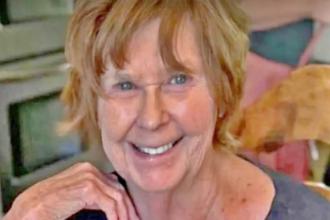
Then one afternoon, I saw her in the cereal aisle.
At first, my brain rejected it outright. Familiarity can play tricks on you. Grief can manufacture ghosts. But she tilted her head while reading a label the same way she always used to, like she was solving a puzzle. My chest tightened.
I followed at a distance, my hands shaking. Same posture. Same walk. Older, yes, but undeniably her.
“Lisa?” I said, barely louder than a breath.
She turned.
Shock flashed across her face, raw and unfiltered. Her color drained. “Bryan?” she whispered, like saying my name might shatter something fragile.
For a moment, the noise of the store faded. People passed us with carts and shopping lists, unaware that time had just collapsed in on itself.
We didn’t hug. We didn’t cry. We stood there, frozen, two people staring at a version of life that shouldn’t exist.
Outside, in the parking lot, she finally spoke. Her words came out carefully, like stepping across thin ice.
She told me she had been drowning back then. Not just tired. Terrified. Terrified of being needed by a helpless child. Terrified of disappearing into a role she didn’t feel capable of filling. She said she hadn’t planned to leave forever, but once she bought the plane ticket, once she stepped onto that flight, it felt like breathing for the first time in months.
She changed her name. Moved countries. Built a life where no one knew her history. No one expected her to be a wife or a mother. She said she watched Noah grow up through social media at first, then stopped because it hurt too much.
I listened without interrupting.
Anger burned hot and immediate. Then sadness. Then something quieter and heavier settled in. Not forgiveness. Not hatred. Just understanding without acceptance.
“How could you leave him?” I asked. Not accusing. Just asking.
She cried then. Full, shaking sobs. Said she thought he’d be better without her. That she believed absence was less damaging than resentment.
I wanted to tell her how wrong she was. I wanted to list every birthday, every fever, every night Noah cried himself to sleep as a toddler. But I realized something in that moment.
I didn’t want to fight her. I didn’t want answers that would reopen wounds we’d spent years learning to live with.
I didn’t want her back.
The life Noah and I built wasn’t perfect, but it was real. Stable. Hard-earned. Introducing her back into it wouldn’t heal anything. It would fracture it.
She looked at me like she was waiting for permission. For forgiveness. For a doorway back in.
“I’m sorry,” she said. “I didn’t know how else to survive.”
I nodded. Not because it was okay. Because the conversation was over.
“I understand,” I said quietly. And I did. Understanding doesn’t mean agreement. It just means the mystery is gone.
She asked about Noah. I told her he was good. Kind. Strong. That he loved soccer and hated broccoli and laughed too loud at his own jokes. I didn’t give her photos. I didn’t give her contact information.
Some doors close for a reason.
When I walked away, I expected to feel hollow. Instead, I felt lighter. The ghost I’d been chasing for fifteen years finally had a face and a voice and an explanation. And that meant it could stop haunting me.
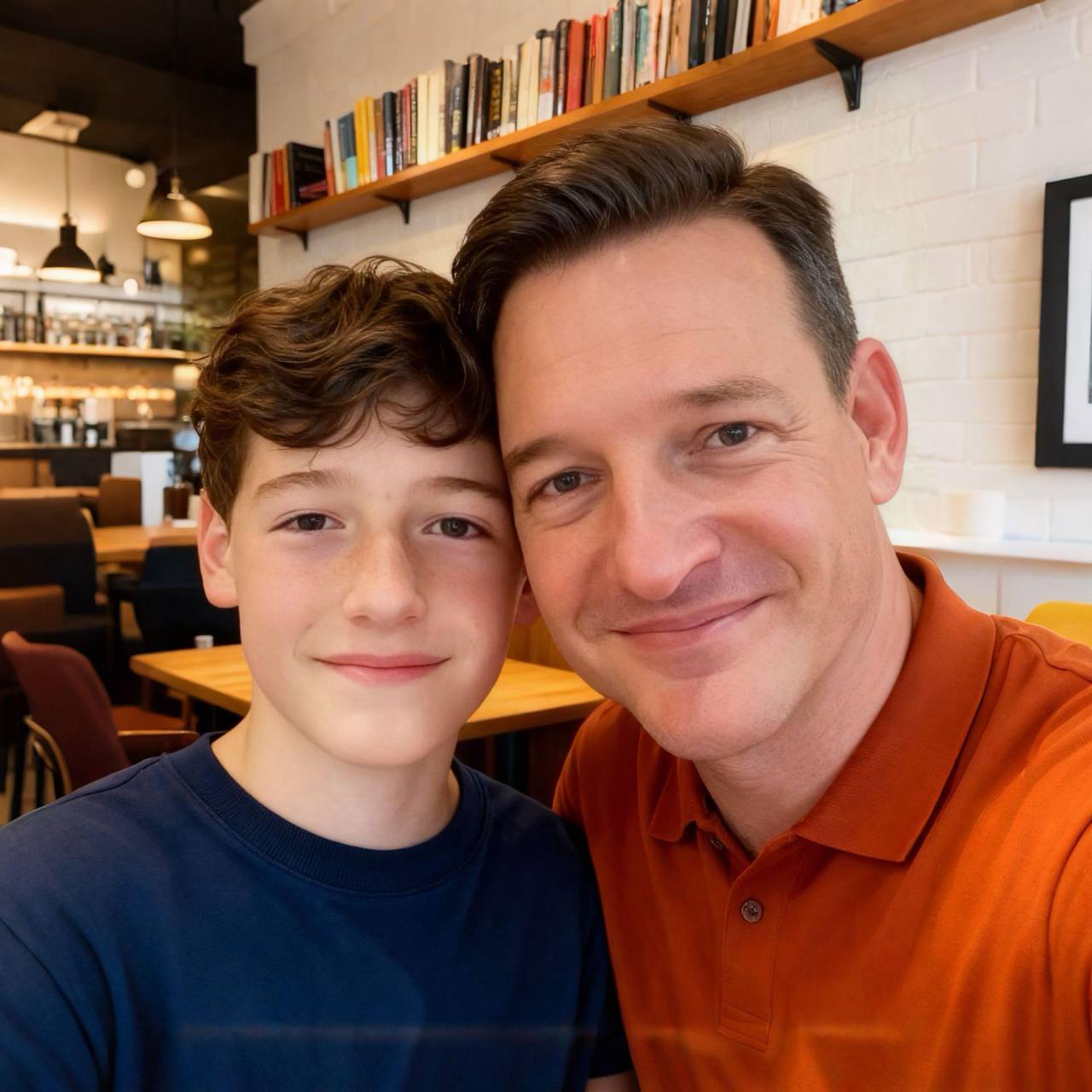
That night, I went home and watched Noah do homework at the kitchen table. The same table where I’d once sat alone with unanswered questions. He looked up and smiled at me, completely unaware that a chapter had quietly ended somewhere else.
I didn’t tell him about the supermarket. Maybe one day I will. Maybe I won’t. Some truths are about timing.
I went to bed knowing something I hadn’t known in fifteen years.
The past was done with me.
And for the first time since the day Lisa walked out the door to buy diapers, I slept without wondering where she was.
I already knew where I belonged.