A linked article accompanying a dramatic reel describes a rocket attack on Los Angeles. It says explosions affected residential and commercial areas, that fires spread after the blasts, and that emergency crews began rescue operations. The page supplies no date for the supposed attack, identifies no particular neighborhood and provides no attributable emergency-agency statement. It should therefore be read as an unverified account, not confirmation that the described attack occurred.
The distinction is especially important because the Facebook caption says Donald Trump confirmed a death. The linked body does not identify the person who supposedly died or provide a transcript, recording or dated statement establishing that claim. Its subject instead becomes a broad account of urban destruction. A caption and a page can appear together without the page supporting the specific announcement promised by the caption.
Within the page’s narrative, the emergency begins with loud blasts and people fleeing buildings. It then moves to fires, damaged infrastructure and the arrival of firefighters, police and medical teams. These are descriptions supplied by the page. They are not accompanied by named witnesses whose accounts can be checked, addresses that locate the damage, or records that establish the time and sequence of events.
The casualty language is similarly unspecific. Mentioning injuries or deaths without identifying the authority reporting them leaves readers unable to distinguish a confirmed count from an assertion. The page’s general account of rescue activity does not resolve that problem. Nor does the use of a familiar city name make the narrative more precise: Los Angeles covers many communities, and a real incident report needs a location within that wider area.
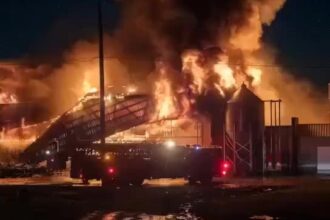
The reel’s imagery adds urgency, showing explosions and smoke beneath a breaking-news style overlay. Visual intensity alone does not establish where or when footage was made. Without an original recording, identifiable landmarks or another clear connection to the described event, the images cannot independently establish that the page’s Los Angeles account is accurate. The overlay repeats a message; it is not a separate source for it.
A confirmed account would connect the central details. The time, location, responsible reporting authority and evidence of the damage would need to describe the same event. A presidential statement, if one formed the basis of the headline, would also need to be identifiable and relevant to that event. Those connections are missing from the material supplied by the linked page.
The most accurate way to preserve the item is to identify what the page claims and what it leaves unsupported. It describes a severe attack scenario, but it does not provide the evidence needed to present that scenario as an established occurrence. Readers encountering the link should not infer a verified death announcement from the Facebook caption or mistake the dramatic video presentation for official confirmation.
The absence of a date also prevents the story from functioning as a reliable current alert. A reader has no way to place it in a specific news cycle. That limitation remains even if the same caption is shared repeatedly, because repetition does not supply the missing time, place or attribution.