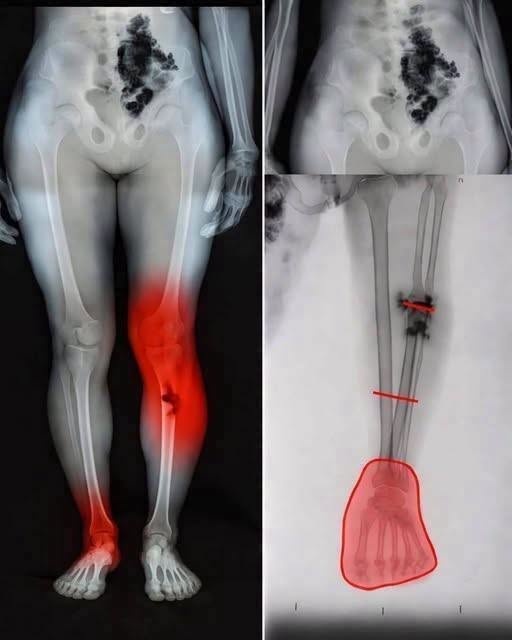
Researchers continue to investigate how the body responds to vaccination and what certain post-vaccination findings may mean for long-term health.
5
Researchers Explore Post-Vaccination Health Findings
A growing number of scientific studies have examined how the body responds after vaccination. Researchers are particularly interested in understanding temporary immune reactions and biological changes that may occur as part of the body's natural response.
One area of investigation involves inflammation markers and how they appear in medical imaging. Some studies have reported findings that suggest short-term changes in certain tissues following vaccination, prompting additional research into their significance.
Scientists emphasize that immune activation is expected after vaccination because the body's defense system is responding to a perceived threat and building protection.
Understanding the Body's Immune Response
Vaccines work by training the immune system to recognize and respond to specific pathogens.
When the immune system is activated, several temporary changes may occur, including:
Swelling of nearby lymph nodes
Mild inflammation
Fatigue
Fever
Muscle soreness
These responses are generally considered signs that the immune system is reacting as intended.
Researchers continue to monitor how long such responses last and whether they vary between individuals.
6
Why Medical Imaging Sometimes Reveals Changes
Advanced imaging technologies can detect subtle biological activity throughout the body.
In some cases, scans performed shortly after vaccination have shown temporary increases in activity within lymph nodes or nearby tissues. Medical experts note that these findings are often consistent with a normal immune response.
Because imaging technology has become increasingly sensitive, doctors are able to observe biological processes that might previously have gone unnoticed.
Researchers caution that imaging findings should always be interpreted within the broader context of a patient's medical history, symptoms, and clinical evaluation.
Scientists Continue to Gather Data
Medical researchers around the world continue to collect information about vaccine responses, including both expected effects and less common observations.
The goals of ongoing research include:
Better understanding individual variations in immune response
Improving vaccine design
Enhancing patient guidance
Identifying factors associated with stronger or weaker immune reactions
Experts emphasize that scientific understanding evolves as new data become available.
5
The Importance of Context in Medical Research
Health professionals stress that individual studies should be interpreted carefully and within the context of the broader body of scientific evidence.
Medical conclusions are typically based on multiple studies, long-term data, peer review, and ongoing observation.
As research continues, scientists hope to gain a clearer understanding of how different people respond to vaccines and other medical interventions.
Looking Ahead
The study of immune responses remains an active area of research. New findings continue to help researchers better understand human biology, improve medical care, and refine public health strategies.
While individual studies may raise new questions, experts agree that continued investigation and evidence-based analysis remain essential for drawing reliable conclusions.
Mình sẽ phát triển nội dung thành một bài báo tiếng Anh dài, theo hướng khoa học sức khỏe phổ thông, đồng thời phân biệt rõ giữa phản ứng miễn dịch tạm thời, những thay đổi trên hình ảnh y khoa và bằng chứng về nguy cơ sức khỏe lâu dài. Vì bài gốc chưa nêu tên nghiên cứu cụ thể, bài viết sẽ không gán các kết luận chưa được xác minh cho một nghiên cứu cụ thể.
Scientists continue to investigate how vaccines activate the immune system, why certain inflammation-related findings appear after vaccination, and how doctors can distinguish expected immune activity from changes that require further evaluation.
Understanding the Science Behind Post-Vaccination Changes
Vaccination is one of the most extensively studied tools in modern preventive medicine. By introducing the immune system to a harmless form, component, or set of instructions associated with a pathogen, vaccines help the body prepare to recognize and respond to a future infection.
That process involves a series of biological reactions. Immune cells communicate with one another, inflammatory signals may increase temporarily, and the body begins developing a targeted defense against the disease in question.
For many people, these processes occur without noticeable symptoms. Others experience a sore arm, fatigue, a mild fever, muscle aches, or temporary swelling near the injection site.
Researchers are also interested in changes that may be detected through blood tests or medical imaging, even when a person feels well. Such findings can provide valuable information about how the immune system responds to vaccination.
However, interpreting these observations requires care. A temporary change in an inflammatory marker does not automatically indicate tissue damage, chronic inflammation, or an increased risk of future disease.
The meaning of any finding depends on the specific marker measured, the size and duration of the change, the person's medical history, and the quality of the evidence connecting that finding to a clinical outcome.
The article discussed here does not identify a specific study, vaccine, biomarker, or patient population. Consequently, its headline should be understood as a general description of an area of scientific investigation, not as proof of a newly established health risk.
What Are Inflammation Markers?
Inflammation is a normal part of the body's defense system. It helps the immune system respond to infection, injury, and other challenges.
When immune cells detect a potential threat, they release signaling molecules that coordinate the response. Blood vessels may become more permeable, immune cells may move toward the affected area, and the body may increase the production of certain proteins involved in immune activity.
Doctors can measure some of these processes through laboratory tests.
Common examples include C-reactive protein, often called CRP, and erythrocyte sedimentation rate, or ESR. Other tests may measure particular cytokines, immune-cell populations, or proteins associated with specific inflammatory pathways.
These measurements are useful, but they do not tell the whole story.
CRP, for example, can rise in response to many conditions, including infections, injuries, and inflammatory diseases. An elevated result does not identify a single cause on its own.
Similarly, changes in immune-signaling molecules may reflect a response that is expected to occur during immune activation. Their significance depends on the context in which they are measured.
A test result that differs from a person's previous measurement is therefore not necessarily evidence of illness. Doctors consider the degree of change, other test results, symptoms, and the timing of the measurement before drawing conclusions.
The same principle applies to research involving vaccination: scientists must determine whether an observed change is expected, clinically meaningful, persistent, or associated with an adverse outcome.
Why Vaccines Activate the Immune System
Vaccines work by preparing the immune system to recognize a particular pathogen without requiring a person to experience the full disease itself.
Depending on the vaccine, the immune system may encounter an inactivated pathogen, a weakened form of the pathogen, a specific protein or other component, or genetic instructions that help cells temporarily produce a target protein.
Immune cells recognize the relevant material and begin a coordinated response. This can involve both the innate immune system, which responds rapidly to potential threats, and the adaptive immune system, which develops more targeted responses.
The adaptive response includes the production of antibodies and the formation of memory B cells and T cells. These components help the immune system respond more effectively if it encounters the pathogen later.
During this process, inflammatory signals can temporarily increase. This is part of the biological communication that helps coordinate immune activity.
Some people notice these changes through symptoms such as tiredness, chills, headache, or muscle soreness. Others experience little or no discomfort.
Importantly, the absence of side effects does not mean a vaccine has failed to work. A person can develop an immune response without experiencing a fever or other noticeable symptoms.
The Centers for Disease Control and Prevention explains that common vaccine side effects are generally temporary, although the precise effects vary according to the vaccine and the individual. CDC: Possible Side Effects from Vaccines.
What Medical Imaging Can Reveal After Vaccination
One area of particular interest is the appearance of lymph nodes on medical imaging.
Lymph nodes are small structures distributed throughout the body. They help filter lymphatic fluid and provide sites where immune cells can encounter and respond to foreign material.
After vaccination, nearby lymph nodes may become temporarily enlarged or more active. This can occur because immune cells are responding to the vaccine and developing a targeted defense.
In some cases, the change is noticeable as swelling in the armpit or neck. In other cases, it is discovered incidentally during an ultrasound, mammogram, CT scan, or other imaging examination.
Radiologists may see enlarged lymph nodes or increased activity that would not otherwise have been apparent to the patient.
These findings can be surprising, particularly when someone undergoes imaging for an unrelated reason. A person having a routine breast examination, for example, may learn that a lymph node appears enlarged after a recent vaccination.
That observation does not automatically indicate cancer or another serious condition.
The Radiological Society of North America has published guidance discussing vaccine-associated lymph-node enlargement and the importance of interpreting imaging results in light of recent vaccination history. RSNA: Post-COVID-19 Vaccine Imaging Recommendations.
The practical lesson is that doctors need the right context. Knowing the date of vaccination, the type of vaccine when relevant, and which arm received the injection can help a radiologist interpret an imaging finding more accurately.
Nevertheless, recent vaccination should not be used to dismiss every abnormal result. A clinician must consider the complete medical picture, including symptoms, other imaging findings, and any relevant history of cancer or other disease.
Temporary Immune Activity Is Not the Same as Chronic Inflammation
One of the most important distinctions in vaccine research is the difference between a short-lived immune response and persistent inflammation.
Temporary immune activation is a normal biological process. It can occur after vaccination and during many everyday immune challenges.
Chronic inflammation, by contrast, refers to a prolonged or persistently dysregulated inflammatory process. Depending on the cause, it can be associated with conditions such as autoimmune diseases, chronic infections, and certain metabolic disorders.
These two situations should not be treated as equivalent.
If a study identifies a short-term increase in a particular inflammatory marker after vaccination, researchers must determine whether the change falls within an expected response pattern and whether it has any meaningful effect on health.
A single measurement cannot establish that inflammation will persist. Nor can it demonstrate that an individual will develop a chronic disease years later.
To assess persistence, researchers may need repeated measurements over time. To evaluate clinical significance, they may need information about symptoms, diagnoses, medical treatment, and long-term outcomes.
The timing of the test is also important. Measurements taken shortly after vaccination may capture a different stage of the immune response from those taken several weeks or months later.
Without those details, broad claims about lasting inflammation risk more confusion than understanding.
What Does the Research Say About Long-Term Health?
Understanding the long-term effects of any medical intervention requires more than identifying a biological change immediately afterward.
Researchers generally consider several kinds of evidence: controlled clinical trials, observational studies, post-authorization safety monitoring, case reports, and longer-term follow-up.
Each approach has strengths and limitations.
Clinical trials can compare outcomes between groups under defined conditions. Observational studies can examine larger populations and detect patterns that may not emerge in smaller trials, although differences between groups can complicate interpretation. Safety-monitoring systems help identify possible rare events that deserve further investigation.
When an unexpected finding appears, researchers ask whether it occurs more frequently among vaccinated people than among appropriate comparison groups. They also investigate alternative explanations, including existing health conditions, infections, medications, age, and other factors.
The distinction between an event occurring after vaccination and an event being caused by vaccination is especially important.
The World Health Organization explains that an adverse event following immunization is a medical occurrence after vaccination that does not necessarily have a causal relationship with the vaccine. Some events may be related to vaccination, while others are coincidental or have different causes. WHO: Vaccine Safety.
This does not mean that every concern should be dismissed. Rather, it means that suspected problems should be investigated systematically before conclusions are reached.
The current article provides no specific study details that would allow readers to assess whether the reported inflammatory changes were transient, persistent, clinically important, or associated with long-term outcomes.
It would therefore be inaccurate to conclude from the supplied material alone that vaccinated individuals face a newly established long-term inflammation risk.
Why Study Design Matters
Scientific findings are strongest when the methods used to obtain them are clear and appropriate for the question being asked.
When evaluating a study about vaccination and inflammation, several questions are especially useful.
How many people were studied?
A study involving a small group may identify an interesting pattern, but it may not provide enough evidence to determine how common that pattern is across a larger population.
Was there a comparison group?
Without an appropriate comparison group, researchers may struggle to determine whether an observed change is related to vaccination or reflects changes that would have occurred anyway.
When were the measurements taken?
A study measuring biomarkers within hours or days of vaccination answers a different question from one following participants for several years.
How large was the change?
A statistically detectable difference is not necessarily large enough to affect a person's health. Researchers need to consider both statistical significance and clinical importance.
Were participants followed over time?
Repeated measurements can help show whether a change resolves, persists, or develops into a pattern associated with symptoms or disease.
Have other researchers found similar results?
Independent replication helps establish whether a finding is consistent and reliable.
These questions do not invalidate preliminary research. Early studies often help scientists identify new questions and design more detailed investigations. But preliminary findings should be described as preliminary until stronger evidence is available.
Understanding the Difference Between Statistical and Clinical Significance
A study may report a statistically significant change in an inflammatory marker. That phrase can sound alarming, but it does not necessarily mean that participants experienced a serious health problem.
Statistical significance generally concerns whether the observed difference is unlikely to be explained by random variation under a particular statistical model.
Clinical significance asks a different question: does the difference matter for health, symptoms, diagnosis, treatment, or future outcomes?
For example, a laboratory measurement may change slightly after an immune stimulus. Researchers may be able to detect that difference because modern tests are sensitive. Yet the change may remain within a range that does not indicate disease.
In other circumstances, a small change could matter if it occurs in a particularly vulnerable patient or forms part of a larger pattern. Interpretation depends on the specific marker and clinical context.
This is why a headline referring to “changes in inflammation markers” cannot, by itself, tell readers whether the findings are reassuring, concerning, or simply expected.
The study's actual data and conclusions are necessary.
What Vaccinated Individuals Should Know
For most people, common post-vaccination reactions are mild and resolve within a short period. These may include soreness at the injection site, fatigue, headache, muscle aches, or a low-grade fever.
Some vaccines can also cause temporary swelling of nearby lymph nodes.
The precise likelihood and duration of these effects depend on the vaccine, the person's age and health, and other individual factors.
People should follow the aftercare guidance provided by their healthcare professional and seek medical advice if symptoms are severe, worsening, unexpected, or persistent.
A new or persistent lump should not automatically be attributed to vaccination. Although vaccine-related lymph-node swelling is a recognized phenomenon, a clinician may need to assess the timing, location, and other features of the swelling.
Anyone with a history of cancer or an ongoing medical investigation should tell their healthcare team about recent vaccination before imaging or other relevant examinations. This information can help clinicians interpret findings without unnecessarily delaying important care.
Urgent symptoms should never be ignored simply because they occur after a vaccine. For example, difficulty breathing or swelling of the face or throat may indicate a serious allergic reaction and requires emergency care.
People who are concerned about a possible adverse reaction can discuss their symptoms with a healthcare professional, who can determine whether further evaluation or reporting is appropriate.
How Scientists Monitor Vaccine Safety
Vaccine safety does not depend on a single study or one round of testing.
Before a vaccine is authorized, it undergoes evaluation for safety and effectiveness. After authorization, monitoring continues because vaccines are used across broader populations, including people with different health conditions and backgrounds.
Safety systems collect reports of possible adverse events, investigate patterns, and assess whether particular events occur more often than expected.
A report can serve as an early warning, but it does not prove causation on its own. Investigators must evaluate the clinical details, timing, known biological mechanisms, and available population-level evidence.
When a genuine safety concern is identified, health authorities can update guidance, recommend additional precautions, or take other regulatory action as appropriate.
This ongoing process allows scientific understanding to evolve as evidence accumulates.
The WHO describes vaccine safety monitoring as a continuing responsibility of national health authorities and international expert groups. WHO: Vaccine Safety.
The existence of a monitoring system reflects the importance of identifying potential risks, not evidence that every reported event was caused by a vaccine.
Looking Ahead: Better Data, Clearer Answers
Researchers will continue to investigate how immune responses differ among individuals and how particular biological measurements relate to health outcomes.
Future studies may examine the timing of inflammatory changes, the differences between vaccine types, the influence of age and underlying conditions, and whether particular patterns have clinical significance.
Longitudinal research—following participants over an extended period—can be especially useful for distinguishing temporary biological responses from persistent changes.
Researchers may also combine laboratory testing with clinical assessments and imaging to build a more complete picture of how the body responds.
As these studies develop, communication will be just as important as the science itself. Findings should be presented in language that distinguishes a measurable biological effect from a demonstrated health risk.
That distinction allows the public to take scientific discoveries seriously without drawing conclusions that the evidence cannot support.
The Bottom Line
Vaccination activates the immune system, and some temporary inflammatory changes are an expected part of that process. Swelling of nearby lymph nodes, mild fever, fatigue, and muscle aches are recognized examples of post-vaccination reactions.
Medical imaging can sometimes reveal immune-related changes that are not otherwise noticeable. These findings must be interpreted in the context of vaccination history and the person's overall clinical picture.
However, a change in an inflammation marker is not, by itself, evidence of chronic inflammation or future disease. Establishing a long-term health risk requires specific, well-designed studies and evidence of meaningful clinical outcomes.
Because the supplied article does not identify the study it refers to, its particular claims cannot be independently assessed from the information provided.
For readers, the most balanced approach is to remain open to new scientific evidence while avoiding conclusions that go beyond what the research demonstrates. Vaccine safety deserves careful investigation, transparent communication, and continued monitoring—not exaggerated reassurance or unsupported alarm.
Scientific progress depends on asking difficult questions, examining the evidence carefully, and being willing to revise conclusions when stronger data become available.
Sources for further reading
World Health Organization — Vaccine safety — explains adverse events and how vaccine safety is monitored.
Centers for Disease Control and Prevention — Possible side effects from vaccines — summarizes common reactions and safety considerations.
Radiological Society of North America — Post-vaccination imaging recommendations — discusses temporary lymph-node changes that may appear on imaging after COVID-19 vaccination.
For readers, the most balanced approach is to remain open to new scientific evidence while avoiding conclusions that go beyond what the research demonstrates. Vaccine safety deserves careful investigation, transparent communication, and continued monitoring—not exaggerated reassurance or unsupported alarm.
Scientific progress depends on asking difficult questions, examining the evidence carefully, and being willing to revise conclusions when stronger data become available.