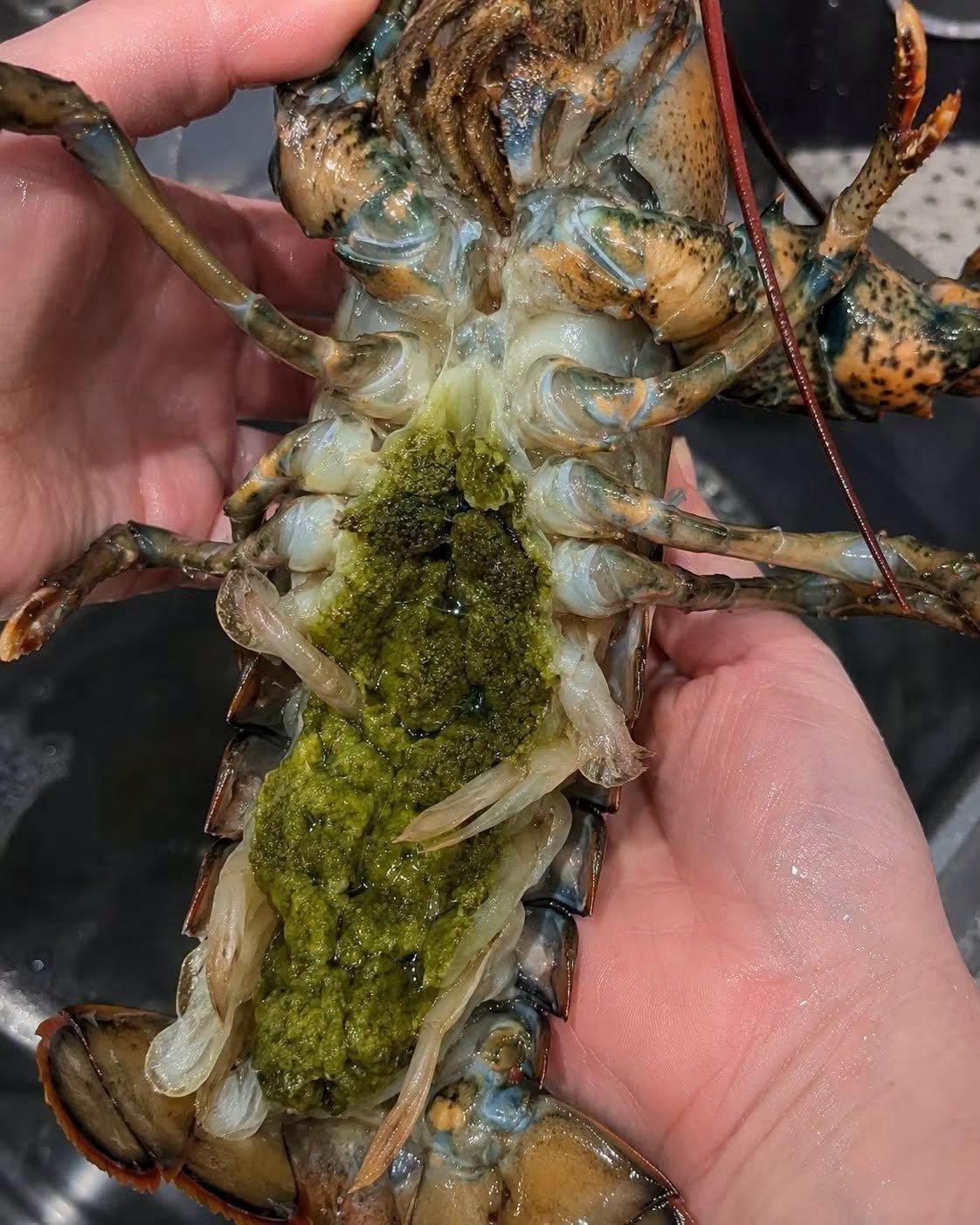
The first time you crack open a cooked lobster and notice a bright green substance inside, it can be surprising. Many people immediately wonder whether it’s safe to eat, a delicacy, or something that should be avoided altogether. That green material is called tomalley, and it serves as the lobster’s digestive gland, functioning much like a combination of a liver and pancreas. It helps the lobster digest food, store nutrients, and filter substances from its body.
Tomalley has long been considered a delicacy by some seafood enthusiasts. Its rich, creamy texture and intensely briny flavor make it a favorite ingredient for spreading on toast, stirring into seafood sauces, or enhancing lobster dishes. Many chefs appreciate its distinctive taste, while others prefer to leave it out, knowing that not everyone enjoys its strong flavor.
However, tomalley is also the part of the lobster where certain contaminants can accumulate. Because it filters and processes what the lobster consumes, it may contain higher concentrations of environmental pollutants, naturally occurring toxins, or harmful compounds produced during algae blooms. For this reason, several food safety agencies advise limiting or avoiding its consumption, especially during periods when shellfish advisories are in effect.
If you choose to eat tomalley, it’s best to ensure your lobster comes from reputable sources and waters that are regularly monitored for safety. Even then, moderation is generally recommended. Many people simply remove the green substance and enjoy the sweet, tender lobster meat instead.
Ultimately, there is no single right answer. Some diners consider tomalley one of the best parts of the lobster, while others prefer not to eat it at all. The decision comes down to personal preference and comfort level. Understanding what tomalley is, how it functions, and why experts sometimes recommend caution allows you to make an informed choice. After all, the true enjoyment of seafood comes not just from its flavor, but from knowing exactly what’s on your plate and deciding what’s right for you.
The color alone can make the discovery seem more mysterious than it is. Tomalley is part of the lobster's anatomy, rather than an unexpected filling added during preparation. Recognizing its digestive role explains both its texture and why the article discusses it differently from the ordinary muscle meat that most diners expect to find inside the shell.
Taste and safety are separate questions here. Describing something as a delicacy explains why some people value it; it does not establish that every serving carries the same conditions or that a warning can be dismissed because others enjoy the flavor. The account's discussion of contaminants is therefore part of understanding the ingredient, not merely a matter of whether someone likes its appearance.
The article also distinguishes the green digestive material from the rest of the meal. A diner may be familiar with lobster meat and still encounter tomalley for the first time. Knowing its name makes it possible to understand what is being discussed and to recognize that preferences about texture do not answer the separate questions raised by local shellfish advisories and food-safety guidance.