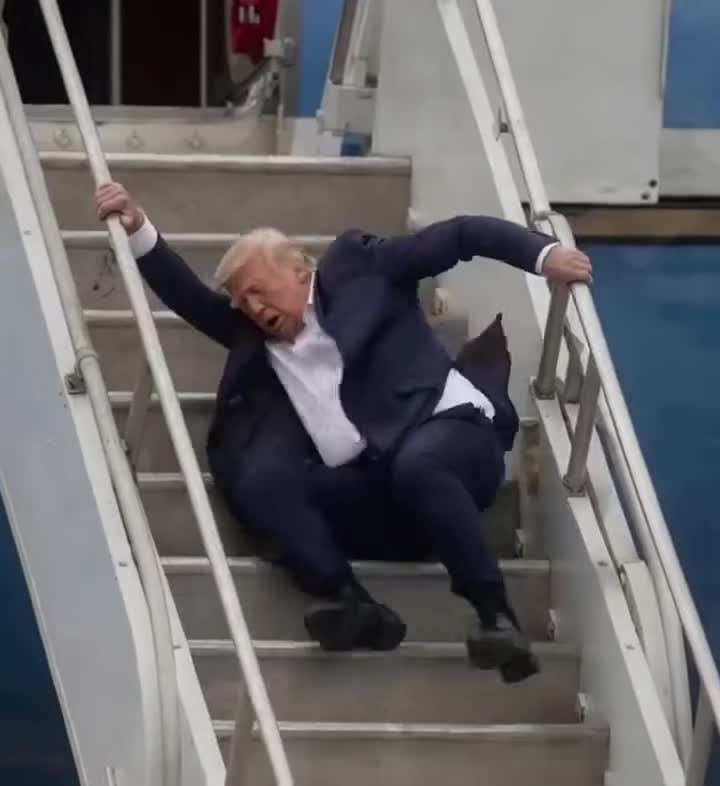
Recent online reports have circulated claims that Donald Trump stumbled while boarding Air Force One en route to Florida. These accounts suggested the former president was preparing for critical discussions regarding the Ukraine war, including a speculated meeting with President Volodymyr Zelensky. The rumors quickly gained momentum on social media, driven by sensationalist narratives questioning Trump’s physical health and overall stamina during a period of significant international focus.
The narrative was intensified by unverified allegations involving a White House physician, who supposedly risked their career to reveal a hidden medical diagnosis after a reported fall. However, journalists and fact-checkers note there is no official video footage, medical documentation, or confirmed statements to validate these claims.
Representatives for Donald Trump have dismissed the viral stories as exaggerations, asserting that minor missteps on aircraft stairs are frequently mischaracterized by the media for political or sensationalist purposes. Independent medical experts have also intervened, cautioning the public against making diagnostic conclusions without verified data.
They emphasize that occasional stumbles are not definitive indicators of serious underlying health issues. This wave of speculation occurred against a backdrop of intense geopolitical tension, as Russia launched large-scale strikes across Ukraine. The convergence of potential diplomatic maneuvers and unsubstantiated health rumors illustrates how domestic political narratives can become entangled with global events, highlighting the critical need for credible sourcing and official confirmation in the modern information ecosystem.
The difference between a recording and a medical conclusion is central to the controversy. Even when an ordinary movement is visible, it does not explain a person's health history or establish a diagnosis. In this case, the account goes further by noting the absence of confirmed documentation for the most dramatic claims. An allegation about a hidden condition should not become more credible simply because it has been attached to an attention-grabbing description of a stumble.
The same caution applies to the story about a physician supposedly breaking silence. A claim that someone has risked a career to reveal a secret is designed to give the narrative urgency and authority. But authority depends on an identifiable statement and its context. Without those details, the purported revelation remains part of the circulating story rather than a substantiated medical disclosure.
Political attention can magnify that gap. People may interpret the same ambiguous moment through strongly held views of the person involved. Supporters may see exaggeration, opponents may see a sign of decline, and others may share the clip without considering either interpretation carefully. None of those reactions creates the clinical information missing from the account.
The discussion of international events adds another layer of significance without resolving the underlying uncertainty. Reports about diplomatic plans and the war in Ukraine concern serious public matters, but placing a health rumor beside them does not establish a connection. The importance of a political moment should make precision more necessary, not make an unverified claim easier to accept.
The practical distinction is between what is observed, what is alleged, and what is confirmed. Keeping those categories separate allows readers to follow political news without turning a brief or uncertain incident into a diagnosis. The account's central point remains the need for identifiable sources and official confirmation before dramatic medical narratives are treated as established information.