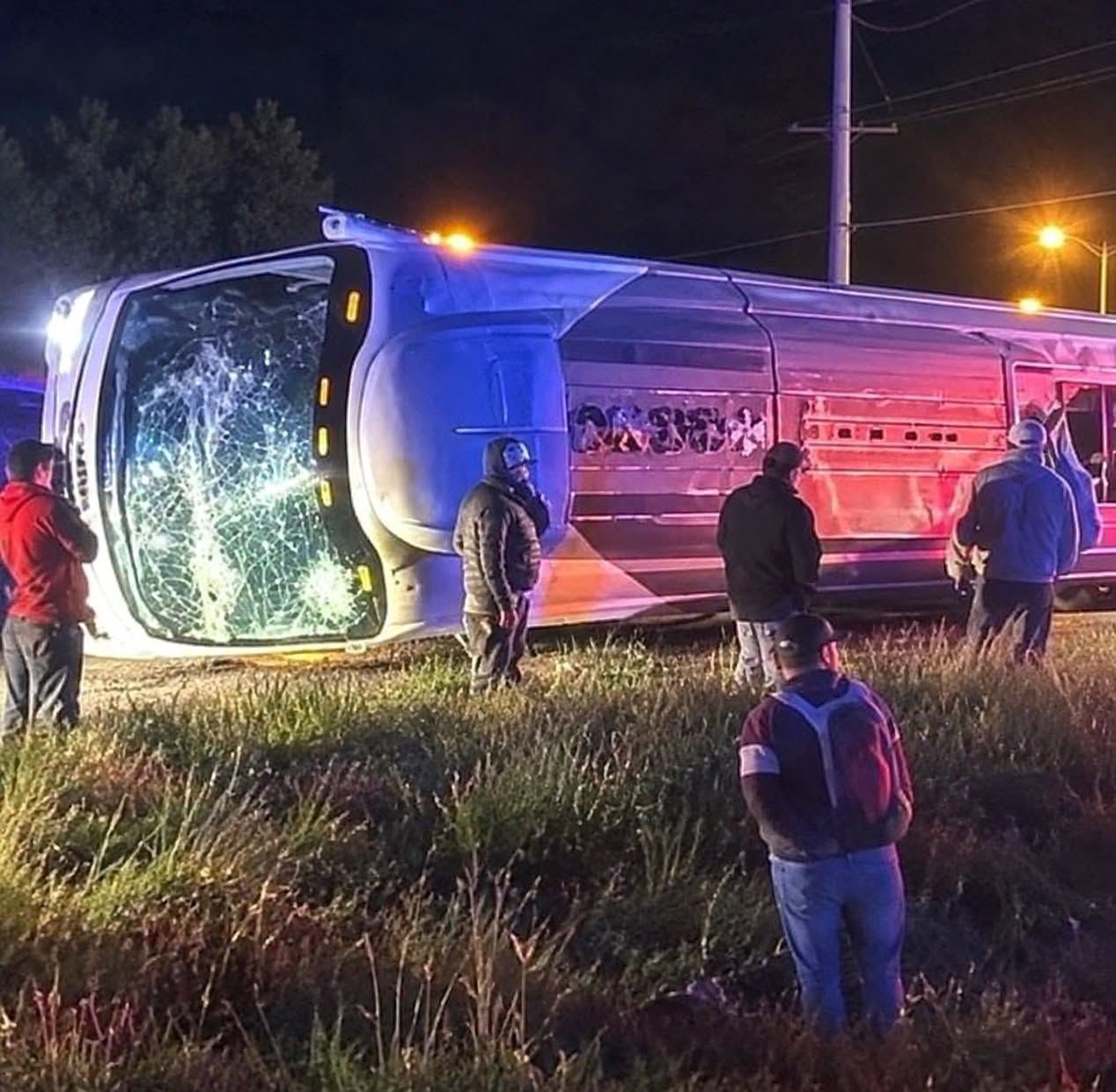
On a crowded Wednesday in Huehuetoca, a speeding trailer became the spark for a nightmare that could have ended far worse. Failing to brake in time, it slammed into a line of vehicles and skidded sideways, sealing off all north–south lanes on the Mexico–Querétaro Highway. In an instant, one of central Mexico’s most critical routes turned into a sprawling accident scene, with drivers trapped in their cars and others abandoning their vehicles to run for safety.
Paramedics, firefighters, and highway police arrived within minutes, weaving through kilometers of paralyzed traffic. Though multiple vehicles were heavily damaged, early reports confirmed only minor injuries and a few precautionary hospital transfers, a fragile stroke of luck in a situation that could have been deadly. As cranes lifted the wrecked trailer and crews swept shattered glass from the asphalt, investigators began piecing together the causes: speed, possible brake failure, fatigue, rain-slick pavement, and the relentless pressure of congestion. For thousands of commuters, the message was unmistakable—on this highway, one mistake is enough to change everything.
The wreckage told one part of the story, while the initial injury reports told another. The damaged vehicles and blocked lanes made the scene look overwhelming, but the account of the response described minor injuries and precautionary transfers. That distinction matters when considering the scale of the disruption. A crash can bring a major route to a standstill even when the earliest reports do not describe widespread serious injuries.
For emergency teams, reaching the collision was itself a challenge. The same congestion that trapped motorists also limited the space available for responding vehicles. Every stalled car narrowed the way forward. The arrival of paramedics, firefighters, and highway police therefore marked the beginning of a coordinated effort to help those involved and bring order to a road that had suddenly stopped functioning as a road.
The recovery work could not be reduced to moving a single truck. Crews had to deal with the trailer, the other damaged vehicles, and the broken material scattered across the asphalt. Until that work was completed, the north–south lanes remained part of an accident scene rather than a usable route. The cranes and cleanup crews were central to reopening a corridor on which thousands of ordinary journeys depended.
The possible contributing factors remained questions for investigators. Speed and the trailer's failure to stop were described in the account, while brake problems, fatigue, wet pavement, and congestion were among the circumstances being considered. Listing those possibilities does not establish which one caused the collision. The investigation would have to distinguish the sequence that could be observed from the reasons behind it.
For the motorists caught in the queues, the impact was immediate: plans interrupted, vehicles stranded, and a familiar journey replaced by uncertainty. The incident showed how closely the movement of a busy highway depends on each driver and vehicle responding to the traffic ahead. The initial reports of limited injuries offered reassurance, but the extensive damage and lengthy interruption still made the crash a serious event for everyone using that stretch of road.