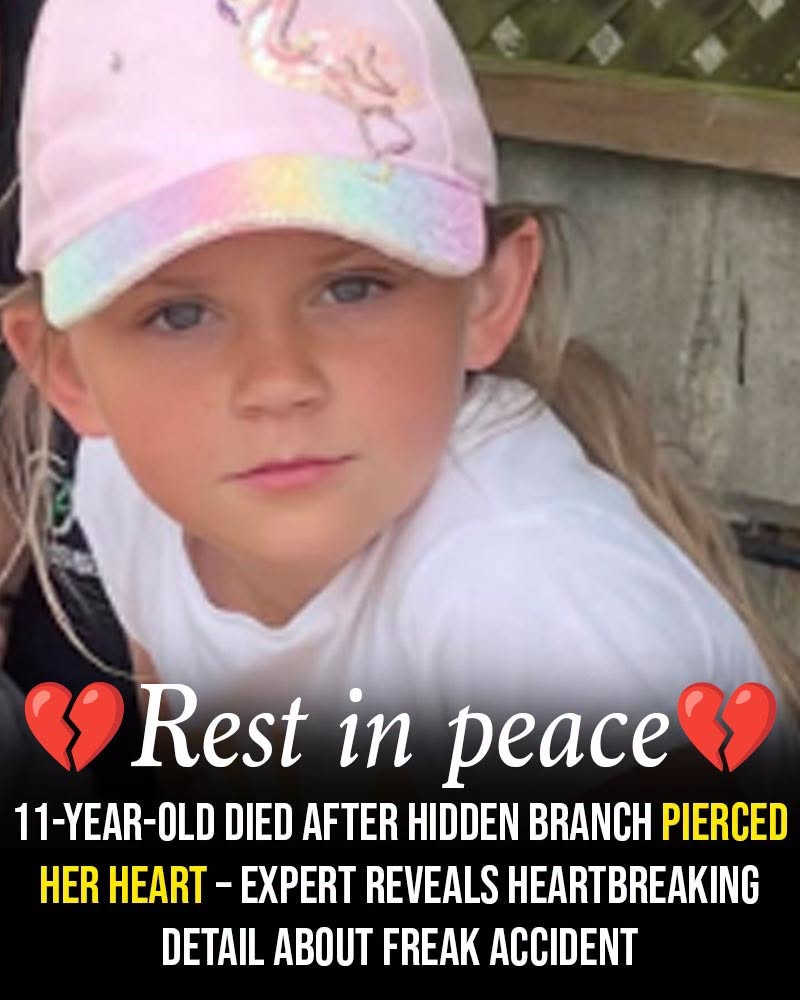
when she was pierced in the chest by a hidden branch. Despite attempts to save her, her life could not be saved after the horrific accident.
On a summer day in 2025, 11-year-old Lilly Angel Rodgers had gone to a muddy area near Plymouth in England together with two friends and several adults.
Lilly, who was described as an active girl with a great interest in surfing, climbing, camping and paddling, among other things, was playing with her friends on a muddy slope. The adults were nearby and had the children within sight. But suddenly a terrible accident occurred.
When Lilly crawled down the slope headfirst, she hit a sharp branch hidden beneath the mud. The branch penetrated her chest cavity. Lilly stood up, clutched her chest and gasped for breath before collapsing in the mud.
The adults on site quickly tried to reach her and call for help. Lilly then needed to be transported from the muddy area in order to receive CPR.
It took around 40 minutes to get her back to solid ground, but her life could not be saved.
The branch damaged one of the heart’s most vital vessels
A forensic examination later revealed how serious the injury was. The sharp branch had damaged the pulmonary artery, causing Lilly’s heart to stop.
Forensic pathologist James Garvican at Royal Cornwall Hospital described the injury as extremely unlucky and concluded that it was not survivable.
He explained that a very small difference in where the branch struck could have led to a completely different outcome.
– This was an injury that was not survivable, the forensic pathologist stated during the inquest, according to New York Post.
Following the investigation, Cornwall and Isles of Scilly senior coroner Andrew Cox concluded that Lilly’s death was an accident.
He noted that there was nothing suspicious about the incident and that Lilly and her friends had played at the same location many times before. The adults had also kept watch over the children and ensured they remained within sight.
– Lilly slipped onto a branch with a sharp point that had been covered by the mud, Cox stated during the inquest.
The inquest examined not only the injury itself but the difficult conditions facing everyone who tried to help. Mud, steep ground, and limited access slowed the effort to move Lilly to a place where resuscitation could continue. Witnesses described the adults acting quickly, calling emergency services, and working together in circumstances that were both dangerous and deeply distressing.
Medical evidence showed how unusual and severe the wound was. A branch concealed beneath the surface had struck a vulnerable area of the chest and caused damage that was not immediately visible from the outside. The nature of the accident meant that even a rapid response could not guarantee a different outcome. The hearing emphasized that the adults present had kept the children within sight and responded as soon as they realized something was wrong.
Lilly's family remembered her for her energy and curiosity. She enjoyed outdoor activities and approached them with confidence, making the sudden loss especially hard to understand. Tributes focused on the joy she brought to relatives and friends, as well as the many experiences she should have had ahead of her.
The case is also a reminder that natural play areas can contain hazards hidden by water, mud, leaves, or shifting ground. Adults supervising children outdoors can reduce risk by checking unfamiliar slopes and banks, setting clear boundaries, and keeping first-aid supplies and a charged phone close by. Those precautions cannot remove every danger, but they can make an emergency easier to recognize and manage. The tragedy remains, above all, the story of a much-loved child and a family facing an unimaginable loss.