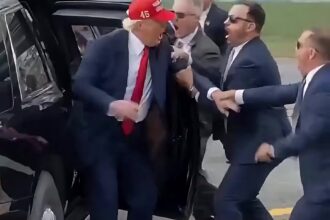
Washington was shaken by a single presidential order.
Trump federalized the city, flooding the streets with federal agents and the National Guard.
Crime dropped sharply, but immigration arrests surged tenfold. Some residents finally feel safe, while others see a city turning into a zone of constant surveillance, with unmarked cars and aggressive stops.
Now Washington is left facing a fundamental question: what does safety really mean—and who pays the price for it?
The order changed the visible rhythm of the capital. Federal personnel appeared at transit stations and busy intersections, while National Guard units supported patrols and logistics. Officials presented the deployment as a rapid response to violent crime and public disorder. Supporters pointed to reported reductions in several categories of crime and said residents deserved immediate protection rather than another round of promises.
The immigration consequences were just as significant. When federal agencies operate together, a routine stop or arrest can lead to an immigration check that would not have occurred during ordinary local policing. Families and advocacy groups described a new fear of approaching officers, reporting crimes, or appearing in public spaces. That concern can undermine cooperation even among people who are not accused of any offense.
Washington's unusual legal status made the dispute more complicated. The federal government has powers in the District of Columbia that it does not hold over a state or ordinary city. Local leaders still remain responsible to residents, creating tension when national officials direct operations that affect neighborhoods, schools, businesses, and public transportation.
Claims of success require more than a short comparison between two weeks. Crime statistics can move for many reasons, including seasonal patterns, changes in reporting, police deployment, and the definition of the period being measured. A lasting evaluation would examine violent crime, property crime, arrests, complaints, court outcomes, and community trust over time.
The political impact extends beyond Washington. Other cities are watching whether the federal approach becomes a model for future interventions. Mayors and governors may welcome resources during an emergency while resisting long-term control from agencies that do not answer to local voters.
For residents, the issue is experienced street by street. One person may feel safer seeing more officers near a station; another may fear an unmarked vehicle or an aggressive stop. Both reactions can exist in the same neighborhood. The central question is whether authorities can reduce violence while using transparent rules, respecting legal protections, and maintaining the public cooperation that effective policing requires.
Accountability will determine how the operation is remembered. Officials should publish clear data, explain the authority used for arrests, identify the agencies involved, and provide a way to investigate misconduct. Safety gains are strongest when residents understand who is enforcing the law and believe that the same law limits the government as well.
Residents will also judge the policy by what happens after the surge ends. If crime rises when federal units leave, temporary visibility will not have solved the underlying problem. Sustained improvement requires local investigators, courts, youth programs, treatment services, and neighborhood organizations to keep working after national attention moves elsewhere.