Colors can influence human emotions in subtle but powerful ways, affecting how people feel, think, and respond before they consciously realize it. Although color preferences may seem simple, they can sometimes reflect personal experiences, emotional states, or what someone currently needs psychologically.
Red is commonly associated with energy, passion, confidence, and intensity. Because it naturally attracts attention, it can create feelings of excitement or urgency. People who are drawn to red may be looking for motivation, strength, or a greater sense of confidence in their everyday lives.
Blue tends to create a very different emotional response. It is often connected with calmness, trust, stability, and peace. During stressful periods, people may naturally prefer blue because its familiar associations can create a feeling of relaxation and mental clarity.
Green is strongly connected with nature, balance, renewal, and recovery. Its association with the natural world can make it feel peaceful and refreshing. For some people, green may represent a desire for stability, emotional healing, or a fresh beginning.
Purple is often associated with creativity, imagination, individuality, and transformation. People attracted to purple may enjoy self-expression or be going through periods of personal reflection and change. Yellow, meanwhile, is connected with happiness, optimism, warmth, and energy, although very intense shades can sometimes feel overwhelming.
The intensity of a color also matters. Softer and lighter shades generally create gentler impressions, while darker or stronger shades can feel more serious, dramatic, powerful, or grounding. This means that even the same basic color can produce very different emotional reactions depending on its shade.
Culture and personal experience also play important roles. A color that represents happiness or celebration in one culture may carry completely different meanings somewhere else. Individual memories can have an equally strong influence, making certain colors comforting while others may trigger unpleasant associations.
Ultimately, color psychology should not be treated as a precise way to determine someone’s personality or emotional condition. However, the colors people repeatedly choose in clothing, home décor, art, or design can sometimes provide interesting clues about their preferences, experiences, and current emotional needs.
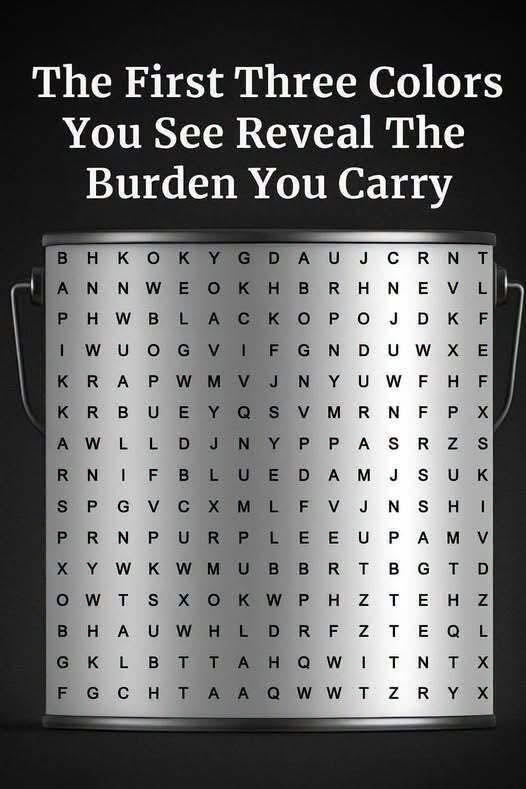
The first colors a viewer notices may be influenced by brightness, contrast, screen settings, surrounding colors, and where the eyes happen to land. That makes the image an engaging prompt for reflection, but not a clinical test. Two people carrying similar stress can notice different colors, while the same person may answer differently on another day.
Used lightly, the exercise can still open a useful conversation. Someone drawn immediately to red might ask whether life currently feels urgent or whether more energy is needed. A person who notices blue may consider whether rest and steadiness are missing. Green can prompt thoughts about balance or renewal, while purple and yellow may invite questions about creativity, change, warmth, or optimism.
The value comes from the questions, not from a rigid interpretation. Color meanings vary across families and cultures, and personal memories can outweigh general associations. A shade connected to a childhood home, a uniform, a celebration, or a painful event will carry a meaning no chart can predict.
If the image suggests a burden, the next step should be practical reflection. Is the pressure coming from work, caregiving, finances, health, or a difficult relationship? What part can be changed, shared, or discussed? Naming a source of stress is more useful than treating the first three colors as fate.
Color psychology is most responsible when it remains a creative tool rather than a diagnosis. The picture can help people pause, compare reactions, and talk about what they need. It cannot determine mental health, personality, or the future. Those limits do not spoil the puzzle; they make it safer and more honest.