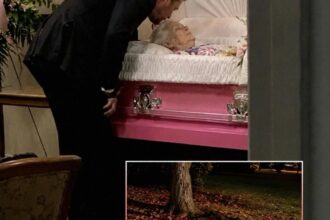
Kitty Wells, widely remembered as the first queen of country music, died at her home in Nashville at the age of 92. She was surrounded by family and friends, closing a life that helped change what women could achieve in a genre once dominated almost entirely by male performers.
Born Muriel Ellen Deason in Nashville on August 30, 1919, she grew up in a musical family. Her parents played and sang, and her mother was especially skilled in gospel music. Muriel learned guitar as a teenager and began performing with her sisters and a cousin on local radio.
During the Depression, she left school and worked in a factory ironing shirts for nine dollars a week. Music remained part of her life even while she worked to help support herself. After marrying Johnnie Wright, she performed with him and his sister Louise. The family group later included Jack Anglin and appeared under several names as they developed their country sound.
The name Kitty Wells came later. It was borrowed from an old folk song and became one of the most recognizable names in country music history. Her breakthrough arrived in 1952 with It Wasn’t God Who Made Honky Tonk Angels, an answer to Hank Thompson’s The Wild Side of Life.
Wells did not expect the recording to transform her career. She accepted the session partly because it paid the union rate of $125. The song, however, spoke from a woman’s point of view at a time when female singers were often given only brief guest appearances before male stars returned to the stage.
Its message challenged the idea that women alone were responsible for broken relationships. Listeners responded immediately. The song became a major hit and demonstrated that female country performers could sell records, headline shows, and address subjects that had previously been presented almost entirely through from a man’s perspective.
The achievement was larger than one successful single. Wells opened commercial doors for the generations of women who followed. Patsy Cline, Loretta Lynn, Tammy Wynette, Dolly Parton, Reba McEntire, and many later artists entered an industry that had been changed by her success.
Her style was controlled and direct. She did not need exaggerated gestures to communicate heartbreak, dignity, or resolve. The steadiness of her voice made the stories in her songs feel personal. Audiences heard a woman describing disappointment and strength without apologizing for either.
Wells continued recording songs that became country standards. Her career proved that the success of Honky Tonk Angels had not been an accident. She built a catalog that reflected domestic life, betrayal, resilience, and the emotional experiences of women whose stories were rarely centered on country radio.
In 1976, she was inducted into the Country Music Hall of Fame. The honor made her only the second female country singer inducted as a solo artist, following Patsy Cline. In 1991, Wells received a Grammy Lifetime Achievement Award, recognizing both her music and the path she created for other performers.
Her influence extended far beyond awards. Every female singer who later negotiated for stronger material, equal billing, or space on country radio benefited from the precedent she established. She showed promoters and record companies that listeners were eager to hear women tell their own stories.
Wells also remained connected to the family life that had shaped her early career. Her marriage to Johnnie Wright lasted for decades, and the two shared both a home and a long history in music. Their partnership belonged to an earlier era of touring shows, radio performances, and family groups that helped build the modern country industry.
When news of her death spread, fellow artists and fans remembered more than a collection of hits. They remembered a quiet pioneer whose success changed the balance of an entire genre. She did not present herself as a revolutionary, but the results of her career were revolutionary.
The title first queen of country music was earned through influence rather than image. Kitty Wells proved that a woman’s voice could lead the conversation, not simply answer from the background. Her songs remain part of country history, and the opportunities available to later generations form the most enduring part of her legacy.