Sarah had built a life for herself long before she met Rashid. Raised in London by a schoolteacher and a nurse, she worked through university, graduated with honors, and established a successful career in architecture. An earlier engagement had ended when her fiancé admitted he was not ready for marriage. After that disappointment, Sarah stopped dating and told friends she was content to concentrate on work.
Rashid changed her mind because he did not behave like anyone she had known before. He was confident without making every conversation about himself, ambitious without becoming cold, and attentive to small details. He listened closely, remembered what mattered to her, and made her feel genuinely seen. When he asked her to marry him, she accepted without hesitation.
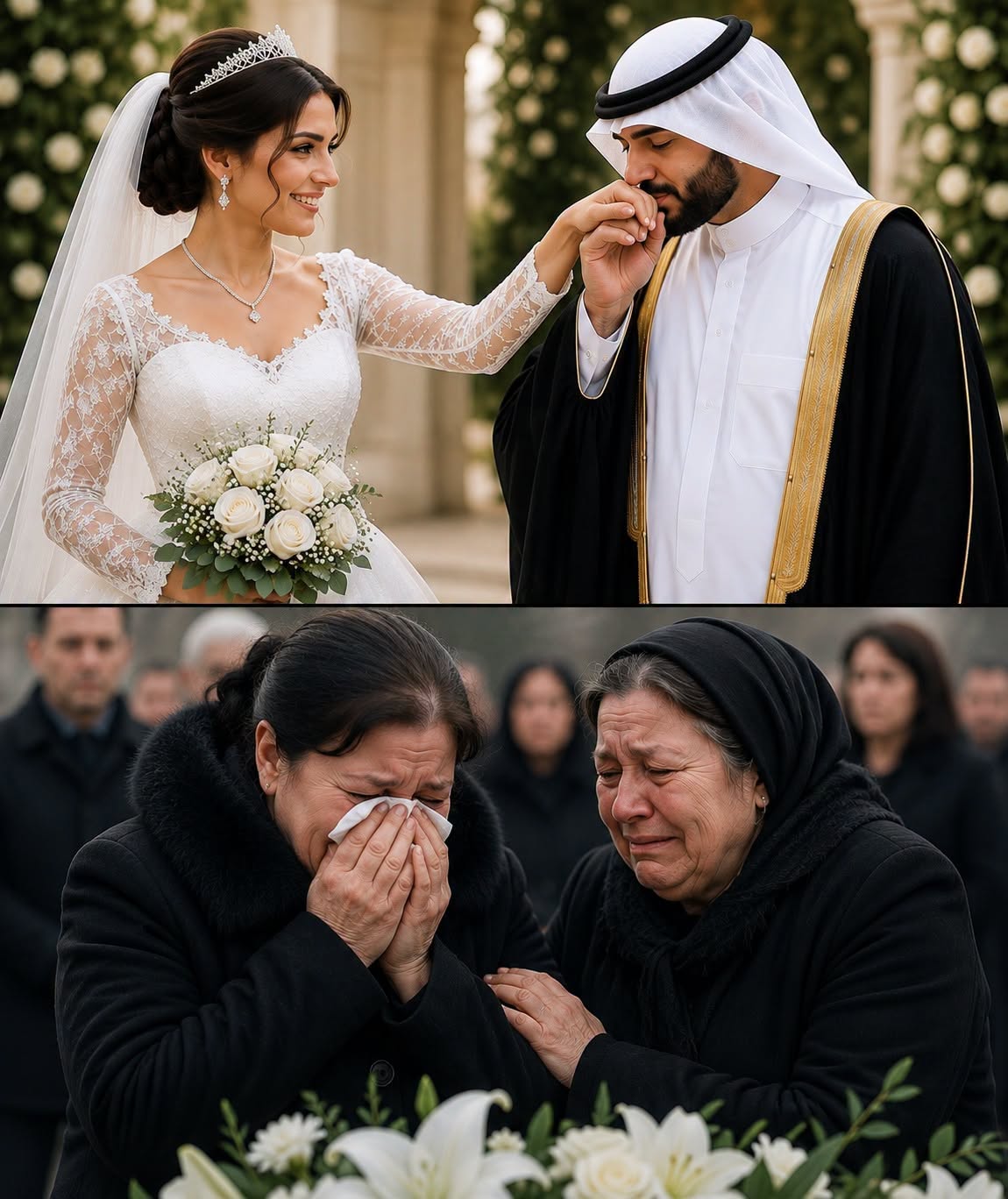
Their wedding took place in a historic Dubai hotel. White roses and orchids transformed the ballroom into a garden, and evening light entered through the windows as Sarah, in an ivory silk gown, exchanged vows with Rashid, who wore a traditional white kandura. Friends and relatives cried, laughed, and danced until midnight. The couple left in a vintage Rolls Royce and reached their honeymoon suite at about one in the morning.
They were exhausted and happy. Sarah later remembered Rashid kissing her forehead, telling her he was the luckiest man in the world, and falling asleep while holding her hand. At 7:30 the next morning, she woke and realized his hand was cold. She tried gently to wake him, then shook his shoulder. He did not respond.
Hotel employees called an ambulance, and paramedics arrived within minutes, but they could not revive him. Rashid had suffered a massive heart attack in his sleep. He was only 45, had no known history of heart disease, and had shown no warning that Sarah recognized. Still wearing her wedding dress, she sat beside the man she had married only hours earlier and waited for the impossible news to become understandable.
The celebration turned into mourning. Rashid’s mother collapsed when she learned what had happened, his brothers stood in shock, and wedding guests who had gathered for joy returned to support the family through grief. Sarah searched every memory for a symptom she might have missed. Doctors told her the attack had been sudden and fatal and that there was nothing she could have done, but guilt continued to ask questions that reason could not settle.
For the first month, she barely ate or slept. Plans that had seemed certain disappeared overnight. Two weeks after Rashid’s death, his will was read. He had left Sarah his primary home, a substantial trust, and shares in two companies. The inheritance meant little beside her loss. She did not want his money or property. She wanted the life they had expected to share.
As time passed, Sarah found a way to use part of what he left behind. She created a scholarship in Rashid’s name for young entrepreneurs and supported charities that had mattered to him. These choices did not remove her grief, but they allowed his ambitions and generosity to continue helping other people. She kept his photograph beside her bed and spoke to him at night.
Sarah never remarried. She told a friend that she had experienced her great love and would not accept something that felt smaller merely to avoid being alone. She continued marking their anniversary and wearing her wedding ring, not because she refused to live, but because the brief marriage remained real and important to her.
She had known Rashid for 18 months, including their courtship and engagement, and was his wife for only one night. Sarah did not regret saying yes or celebrating their commitment. Their time was painfully short, yet it contained the attention, affection, and trust she had once believed she might never find. Her life afterward became a testament to loving someone without measuring that love only by years.