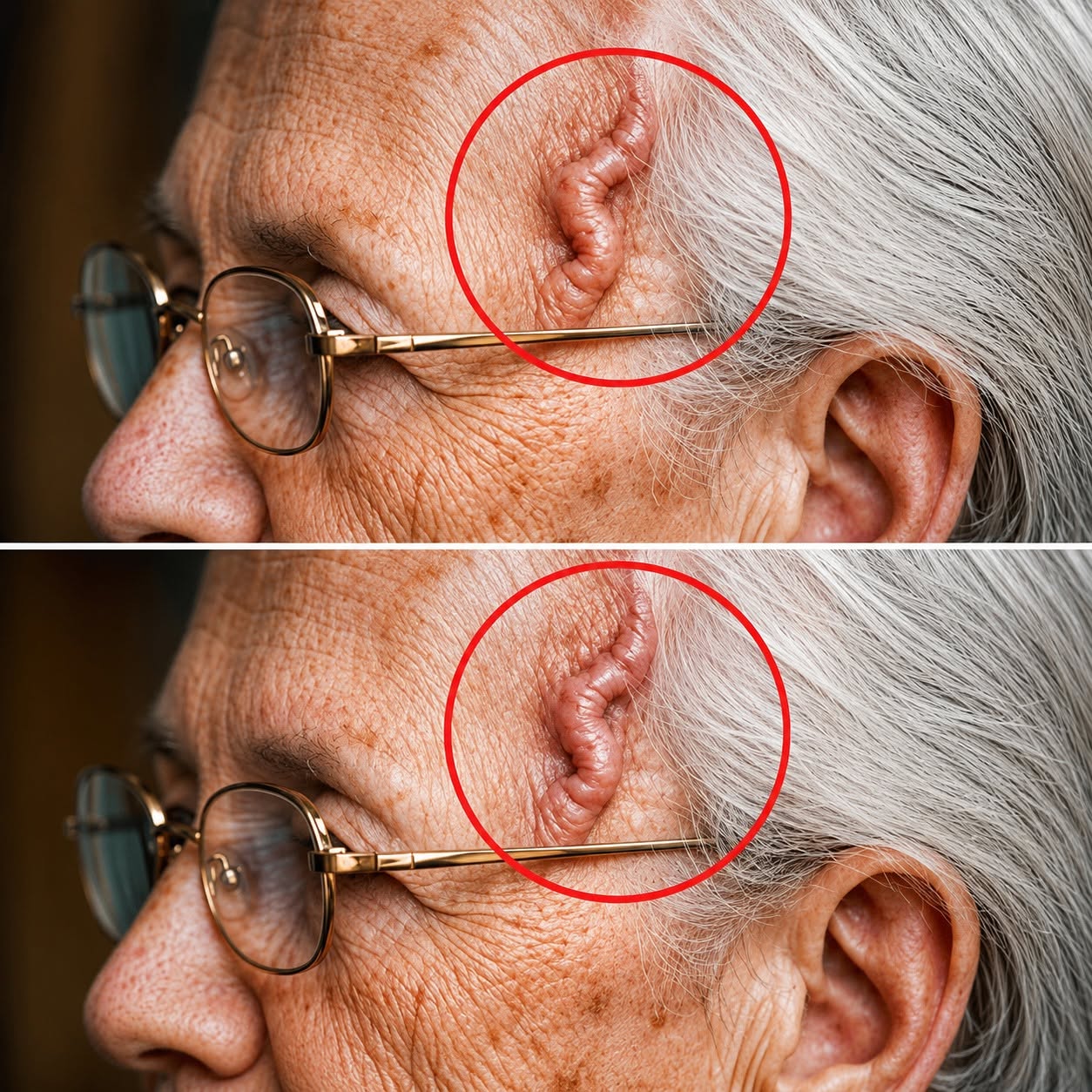
At 73, Clara believed the sharp pain in her temple was probably a severe migraine. The discomfort throbbed on one side of her head, and a new pain appeared in her jaw whenever she tried to chew. Those symptoms seemed separate at first, but together they formed an urgent warning that doctors did not want her to ignore.
Clara’s daughter Sarah noticed that the pain was not behaving like an ordinary headache. It had appeared suddenly, remained focused around the temple, and was accompanied by tenderness and difficulty eating. Rather than waiting for a routine appointment, Sarah pushed for immediate medical attention. That decision began a race against a condition capable of causing permanent damage in a very short time.
Doctors suspected giant cell arteritis, an inflammation of the arteries that commonly affects blood vessels around the temples in adults over 50. The condition can reduce blood flow to the eyes and lead to sudden, irreversible vision loss. Jaw pain that begins or worsens while chewing is a particularly important clue because working muscles may not be receiving enough blood.
Clara underwent urgent evaluation instead of being sent home with simple pain medicine. Her symptoms, age, and examination led the medical team to treat the situation as a vascular emergency. Blood tests and imaging helped them look beyond the headache itself and examine whether inflammation was affecting arteries elsewhere in her body.
The investigation revealed that the danger was not limited to her temple or eyesight. The same underlying vascular problem had placed her at risk of a far more extensive emergency involving the large vessels in her chest. What she had feared was an unusually painful headache became the alarm that exposed a threat she could not have seen or felt clearly until it became catastrophic.
Doctors began treatment quickly to control the inflammation and protect blood flow. In suspected giant cell arteritis, clinicians may start corticosteroid treatment before every test is complete because delaying care can cost a patient’s sight. Clara’s team continued testing and monitoring her while addressing the broader danger uncovered during her evaluation.
Sarah stayed beside her mother through the uncertainty. The hospital room that had initially felt like the beginning of a devastating loss gradually became a place of relief. Clara’s temple pain eased, the jaw discomfort no longer controlled every bite, and the hidden threat in her chest was addressed before it could produce the outcome the family feared.
The experience did not mean that every headache in an older adult signals giant cell arteritis. It did show why a new pattern deserves attention, especially when several symptoms occur together. A localized temporal headache, scalp tenderness, pain while chewing, visual changes, fever, unusual fatigue, or unexplained weight loss can help a clinician recognize a condition that requires prompt assessment.
Clara’s story also illustrates why symptoms in one part of the body may reveal a systemic problem. Arteries connect organs and tissues throughout the body, and inflammation does not always respect the boundaries people use to describe their pain. Treating the headache alone without considering her jaw symptoms, age, and vascular risks might have missed the larger emergency.
By the time morning light entered the room, Sarah could hold her mother’s hand and watch a steady heartbeat on the monitor. Clara took a calm breath, aware that the pain she had dreaded had ultimately brought her to help. Her body had sent a specific warning, her daughter had taken it seriously, and the medical team had acted while there was still time.
Anyone experiencing sudden severe pain, new visual symptoms, weakness, chest pain, trouble speaking, or other alarming changes should seek emergency care rather than relying on an online story for diagnosis. Clara’s recovery came from in person evaluation and timely treatment. The lasting lesson is simple and specific: an unfamiliar combination of symptoms should be described fully, because the detail that seems minor may be the clue that changes everything.