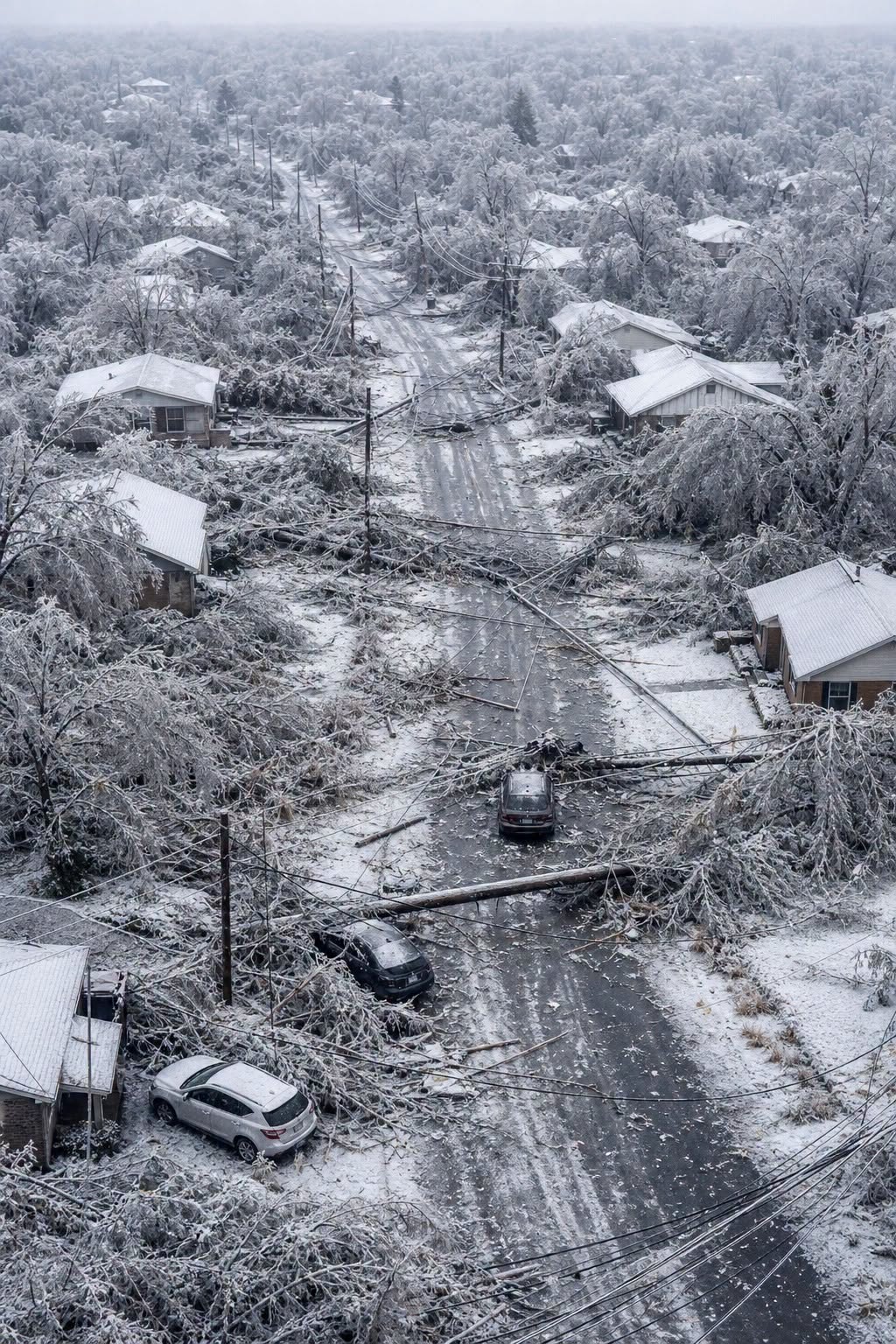
Freezing rain struck Tennessee with enough force to coat roads, trees, and power lines in ice, creating dangerous travel and widespread disruption. In Nashville and surrounding communities, the storm transformed familiar streets into slippery corridors and left residents listening for the crack of branches under accumulating weight.
Freezing rain differs from snow because the precipitation falls as liquid and freezes when it touches a surface at or below freezing. The resulting glaze can look thin and harmless while making pavement nearly impossible to grip. Bridges, overpasses, steps, and untreated side roads often become dangerous first.
Trees carry another risk. Ice builds on every branch and can multiply the weight the wood must support. Limbs may fall without warning, blocking streets, damaging homes, or bringing down electrical lines. Even after precipitation stops, branches can continue breaking as temperatures remain low.
Power outages spread as lines and equipment were affected. Utility crews worked in difficult conditions, but restoration could not always be immediate. Workers first had to identify damaged sections, clear hazards, and ensure that lines were safe before reconnecting service. Additional falling trees could undo repairs or create new outages.
Residents were urged to avoid unnecessary driving. Four-wheel drive can help a vehicle move, but it does not create traction for braking on solid ice. A short trip can become dangerous when a driver cannot stop at an intersection or control a slide on a hill.
For people who had to travel, low speed and generous following distance were essential. Sudden steering, acceleration, or braking increases the chance of losing control. Emergency officials also warn drivers never to approach a downed power line, even if it appears inactive. Electricity can travel through wet ground, metal fencing, and nearby objects.
Inside homes, the loss of heat created a different emergency. Families gathered in the warmest rooms, added layers of clothing, and checked on elderly neighbors or people with medical needs. Community members shared food, blankets, charging access, and information about warming locations.
Generators and alternative heat sources require special caution. A generator must operate outdoors and well away from windows because carbon monoxide cannot be seen or smelled. Grills and outdoor heaters should never be used inside. Candles can also create a fire risk when homes are crowded with blankets and improvised arrangements.
The storm showed how quickly modern routines depend on a stable electrical grid and passable roads. Grocery deliveries, medical appointments, school schedules, and work plans can all stop when a layer of ice covers a region. Preparation is not panic; it means having water, safe food, medications, flashlights, batteries, and a way to receive alerts.
Nashville neighborhoods also demonstrated the value of local cooperation. A utility crew may restore a line, but neighbors are often the first to notice who needs help. Sharing a warm meal or checking on a house with no lights can reduce the isolation created by a long winter night.
Conditions can vary sharply over short distances, so residents should follow current local weather and emergency guidance rather than relying on a single photograph or viral post. Roads that appear improved in one area may remain untreated in another.
As the ice began to melt, hazards did not vanish immediately. Falling chunks, weakened branches, refreezing after sunset, and damaged lines could remain. Recovery required patience from residents and safe access for crews. The storm’s clearest lesson was simple: freezing rain deserves the same respect as any major winter emergency.
After immediate danger passes, documenting damage can help with insurance claims and local recovery assessments, but residents should photograph only from safe locations. Branches resting on wires, leaning utility poles, and flooded electrical equipment belong to trained crews. Clearing a driveway is less important than avoiding electrocution or a falling limb. Tennessee’s response depended on both rapid work and people giving responders the space to do it safely.