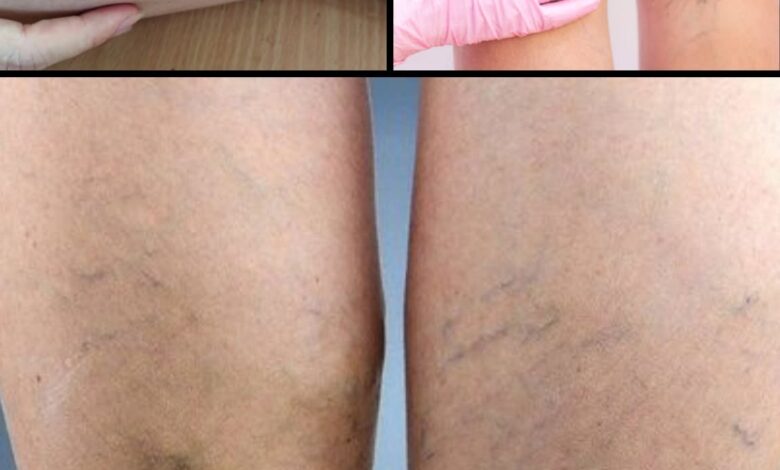
Noticing purple or bluish veins on your legs can be unsettling, especially when they seem new or more visible than before. Their appearance alone, however, does not identify a disease. Veins may show through the skin because of genetics, age, skin thickness, body composition, temperature, exercise, pregnancy, or the way blood is returning from the legs to the heart. The useful question is not simply what color the veins are, but whether they are flat or raised, whether they hurt, and whether swelling or skin changes are present.
Why veins can look blue or purple
Veins carry blood back to the heart. What we see through the skin is affected by the depth of the vessel, the way light passes through tissue, and a person’s skin tone. That is why a healthy superficial vein may look blue, green, or purple even though blood itself is red. Veins can also become temporarily more noticeable after exercise or in warm weather, when blood flow and vessel size change.
Small red, blue, or purple lines arranged like branches or webs are often spider veins. They sit close to the surface and are frequently a cosmetic concern rather than a health threat. Larger veins that twist, bulge, or feel rope-like are more consistent with varicose veins. These form when valves inside leg veins do not keep blood moving upward efficiently. Blood can pool, pressure rises, and the vein gradually enlarges.
Common factors that make leg veins more visible
Family history is important. Some people inherit vein walls or valves that are more likely to weaken. Age can contribute because valves may become less efficient and skin becomes thinner. Long periods of sitting or standing can increase pressure in the lower legs, while regular walking helps calf muscles push blood upward. Pregnancy raises blood volume, changes hormones, and adds pressure from the growing uterus, so spider or varicose veins may appear during pregnancy and sometimes improve after delivery.
Weight, activity level, and hormonal changes can also influence symptoms. None of these factors means that someone has done anything wrong, and two people with similar routines can have very different-looking veins. Visible superficial veins are common in healthy people, so appearance should never be used as a diagnosis by itself.
When symptoms deserve medical attention
Arrange a medical evaluation if the veins are accompanied by persistent aching, heaviness, burning, throbbing, swelling, itching, a rash, hardening of the skin, or sores near the ankle. A clinician may examine the legs and, when needed, use duplex ultrasound to see how blood is flowing and whether vein valves are working properly.
Sudden swelling, pain, warmth, or redness in one leg can have several causes, but it requires prompt assessment because those symptoms may occur with a deep vein thrombosis. A clot in a deep vein is not the same thing as ordinary spider veins. Call emergency services for sudden shortness of breath, chest pain that worsens with breathing, coughing up blood, fainting, or a rapid heartbeat, particularly when these occur with leg symptoms.
Practical ways to support vein health
Regular movement is one of the simplest helpful habits. Break up long periods of sitting, shift position when standing for hours, and walk often enough to activate the calf muscles. Elevating the legs can ease pressure for some people. Maintaining a weight that is healthy for you and avoiding smoking also support overall vascular health.
Compression stockings may reduce swelling or discomfort in some venous conditions, but the correct type and pressure matter. They are not appropriate for everyone, especially certain people with arterial circulation problems, so ask a healthcare professional before using strong compression. Cosmetic or symptomatic veins can sometimes be treated with sclerotherapy, laser procedures, or other minimally invasive methods after an examination.
The bottom line is reassuring: a few purple lines on the legs often represent normal visible vessels or common spider veins. Pay attention to how the legs feel, how quickly the change occurred, and whether other symptoms are present. A photograph online cannot distinguish a harmless vein from a condition needing treatment, but a healthcare professional can evaluate the full picture.