My biological father left when I was three, and for most of my childhood it was only Mom and me. Money shaped our choices even when we did not discuss it openly. I knew an overdue electric bill meant she stopped buying coffee, and new sneakers meant pizza would disappear from the budget for a while. By thirteen, I had learned to stop asking before she had to say no.
Mom met Ray when I was fifteen. He had two children, Danny and Cara, who stayed with us every other weekend. Our small house became noisier and our finances did not suddenly improve. Ray paid child support, Mom still worked overtime, and five people could produce an astonishing number of dishes. Yet he never treated me as the extra mouth making life harder.
Ray attended every football game, including the season I barely left the bench. When I asked why he had spent two hours watching me sit, he simply said it was because I was there. He stayed beside me through chemistry homework he did not understand and told me parents were not allowed to quit before their children did.
After he married Mom, they opened a college account for me. Some months they deposited eighty dollars, others twenty, and occasionally almost nothing. Ray had his own children to support, but whatever remained at the end of a month went toward my future.
On my seventeenth birthday, Ray gave me a wooden box he had built in the garage. My initials were burned into the lid, and inside were the account statements. On each one he had written what the deposit required: postponing new work boots, bringing lunch from home, delaying truck service, or catching up after Danny needed glasses. A short note at the bottom promised that the account was not enough yet, but they would keep going.
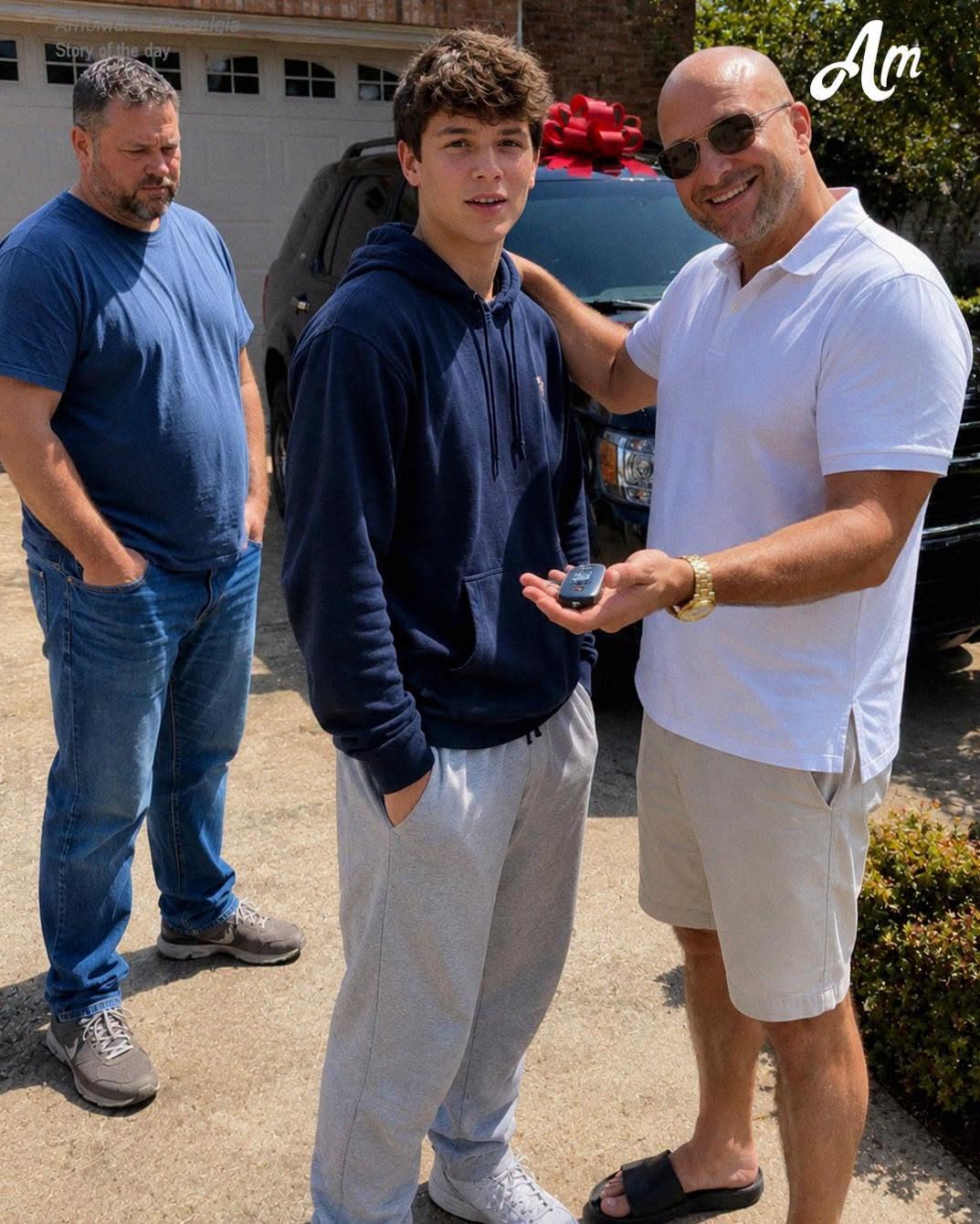
Three hours later, my biological father appeared for the first time in fourteen years. He wore an expensive watch, called me son, and led me outside to a brand-new black car with a giant red bow. He held out the keys as Mom and Ray watched from the porch.
The gift was impressive, but then he looked directly at Ray and announced that my stepfather could never compete with it. Ray lowered his eyes. In that moment, the car stopped feeling like an apology and became a performance designed to defeat the man who had actually raised me.
I asked my father what position I played in football, which college I hoped to attend, and what subject had nearly caused me to fail. He could not answer. He blamed Mom for keeping him away, but I reminded him that he knew our address and my birthday. If he could find me with a car that day, he could have found me with a card during the previous fourteen years.
I went inside and brought out Ray’s wooden box. My father laughed until I showed him the statements. He saw the small deposits and the sacrifices written on the back. The car cost far more than the account contained, but it had been purchased with money my father could spare. Ray had built my future using money he needed.
For a moment, I wanted the keys. I had imagined driving instead of waiting for the bus in the rain. Then I pictured Ray’s boots held together with duct tape and the packed lunches he ate to save a few dollars. I closed my father’s fingers around the keys and told him I had wanted a car for two years, but I had wanted a dad for fourteen.
My father asked whether I was choosing Ray over him. I told him Ray had chosen me. Mom confirmed that she had not kept him away; she had spent years making excuses for his absence until I was old enough to recognize them as lies. He removed the bow, got into the car, and drove away.
Ten minutes later, Ray was washing birthday dishes. He tried to avoid the conversation, but I thanked him for the box and account. When I asked why he had sacrificed for me, he answered with three ordinary words: You are my kid. There was no audience, speech, or expensive display, only the truth he had already demonstrated every day.
The account continued growing slowly. Ray eventually replaced his work boots, and his notes began celebrating my progress instead of listing what he gave up. My biological father contacted me again without another extravagant gift and never insulted Ray in front of me afterward. The car vanished before dinner, but the wooden box remained. It taught me that fatherhood is not established by biology or a red bow. It is built through repeated choices made when nobody is watching.