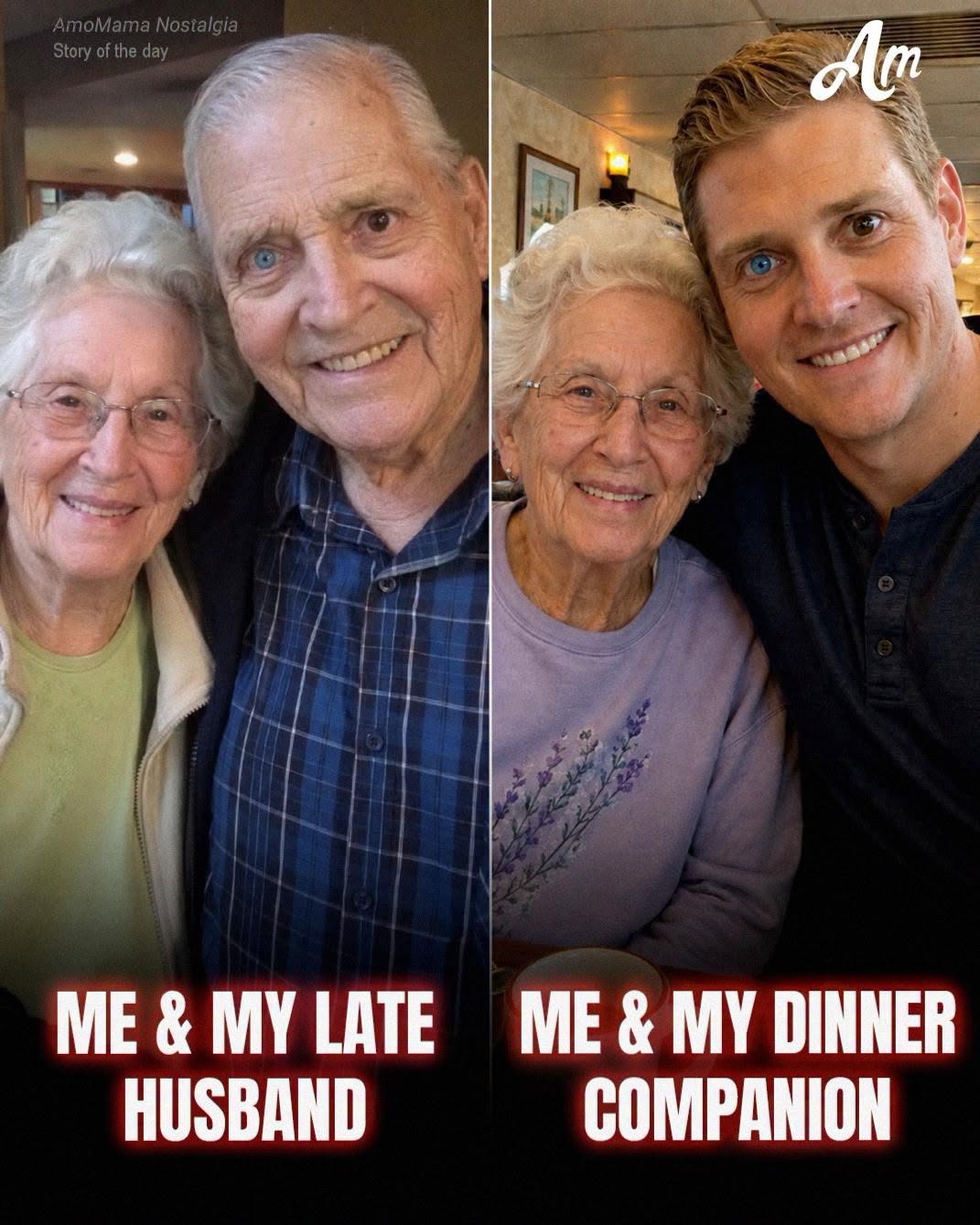
After 52 years of marriage, Dottie lost her husband John and returned from the funeral to an empty house. Their children and grandchildren lived far away, and the silence became unbearable. She began eating at a small neighborhood café simply to be around other people.
On her first visit, a man of about 30 asked to share her table. His name was Carl, and his resemblance to John as a young man immediately unsettled her. Soon they developed a routine, meeting each evening and talking until their soup grew cold.
A Comforting but Mysterious Companion
Dottie told Carl about her marriage, family, and grief. He listened patiently and occasionally became so emotional that he excused himself. Yet he disclosed almost nothing about his own life. He said he was an orphan who had recently moved to town and changed the subject whenever Dottie asked for details.
Four weeks after they met, Carl arrived pale and guarded a bag beside him. When Dottie pressed him, he said his friendship was not accidental. John had begged him to remain silent, but Carl could no longer hide the truth.
From the bag he removed a small wooden music box. Dottie recognized it instantly. John had carved it when they were teenagers. At 17, they had a baby they could not support and made the painful decision to give him up. They placed the music box beside their son as their only gift.
A Secret John Carried
Carl explained that John had searched for their child and eventually found the family connected to that box. Dottie was furious that her husband had kept such a discovery hidden. She left the café believing the memories of her marriage had been damaged beyond repair.
Carl followed her home but remained outside when she refused to let him in. He said he was not trying to destroy her memories; he wanted to give her the parts she had never known. Hours later, Dottie opened the door enough to demand the complete explanation.
Carl said his father had given him the music box before dying and explained that it belonged to his biological family. His father was the boy Dottie and John had surrendered. Carl was therefore their grandson.
The Rest of the Story
John had found their son only after he had already died in a car accident. Carl was the sole surviving connection and was living in a group home. John feared that telling Dottie about their son’s death would overwhelm her with renewed grief, so he postponed the conversation.
Instead, John quietly visited Carl every week, taught him to fish, and became part of his life. He repeatedly promised that he would tell Dottie and bring Carl into their family “next spring.” But John’s heart failed before he could keep that promise.
His final request to Carl was simple: watch over Dottie and do not let her remain alone. That instruction explained the month of dinners, Carl’s guarded behavior, and his visible emotion whenever Dottie spoke lovingly about John.
Dottie finally understood that Carl’s resemblance to her husband was not imagination. The young stranger sitting across from her carried the face and history of the family she thought she had lost.
An Empty House Becomes a Home
Dottie was still hurt that John had hidden the truth. His decision denied her time with her grandson and the chance to grieve their son together. Yet the secret was not born from rejection. John had tried, imperfectly, to protect her while building a relationship with the child of the son they surrendered.
When Dottie opened the door fully, she asked Carl to tell her everything. He admitted that he had not known how to reveal his identity without causing pain. She embraced him and held him as she wished she could have held his father decades earlier.
She told Carl he was home. For the first time since John’s death, the house no longer felt empty. Grief remained, along with difficult questions about years of silence, but it now shared space with a grandson, a recovered family story, and proof that John’s love had continued working toward her even after he was gone.