Travel is often painted as a dream of relaxation, a chance to shed the weight of daily responsibilities and immerse oneself in the comfort of a new destination. With the surge of short-term rental platforms, travelers have become remarkably trusting, often basing their entire itinerary on curated photos, polished reviews, and the promise of convenience. We operate under the assumption that a high rating is a stamp of approval that guarantees not only comfort but also safety. However, as smart home technology becomes standard in even the most modest rentals, the line between helpful innovation and invasive surveillance is blurring, leading to a growing wave of anxiety among those who just want a quiet place to sleep.
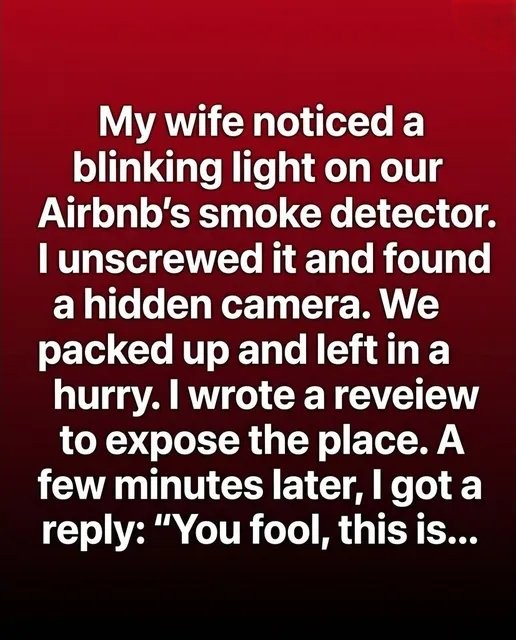
One couple recently learned this uncomfortable lesson during what was supposed to be a peaceful, restorative getaway. They had booked a highly rated property, expecting nothing more than a scenic view and a comfortable bed. Upon arriving and settling into their temporary home, they began to unpack, aiming to transform the space into a sanctuary for the next few days. It was while they were casually observing the layout of the living area that something caught their eye. A small, rhythmic blinking light was emanating from a smoke detector mounted in a corner of the ceiling.
While most modern smoke detectors have indicator lights, this one seemed to pulse with an unusual intensity. Curiosity got the better of them, and they decided to take a closer look. Using a step stool, they inspected the device, and their blood ran cold. Behind the casing, tucked away with deliberate precision, was the distinct glint of a hidden camera lens. The implications hit them instantly, turning the excitement of their vacation into a sickening realization of violation. They were being watched in a space where they expected total privacy.
The reaction was immediate. They didn’t linger to argue or wait for the host to arrive; they packed their belongings within minutes and fled the property, seeking the safety of a nearby hotel. What had been a relaxing trip dissolved into a frantic, unsettling scramble to regain their sense of security. The trauma of the discovery wasn’t just about the device itself, but about the profound breach of trust that had occurred.
Once they were safely behind a locked hotel door, the couple felt a responsibility to warn others. They documented their discovery through photographs and shared their experience on social media, hoping to alert future guests to the potential dangers lurking in their rentals. However, the situation grew even more disturbing as they reviewed the images they had taken of the rental. Upon closer inspection of the living room photos, they noticed odd reflections and subtle anomalies in the placement of other electronic accessories that suggested the presence of at least one other camera-like device hidden elsewhere in the room. They couldn’t be certain, but the suspicion was enough to keep them awake for the rest of the night.
The story highlights a massive, growing issue in the hospitality industry. While technology can undoubtedly enhance the travel experience through the use of smart locks, high-speed connected devices, and automated climate control, it carries the risk of being weaponized by bad actors who view guests as targets rather than customers. The couple’s experience serves as a stark reminder that while we pay for a service, we are also placing our personal safety in the hands of strangers who may not share our moral boundaries.
Their experience encourages all travelers to rethink their level of vigilance. It is no longer enough to just check the linens and the plumbing. Modern travelers must become amateur investigators, trusting their instincts when a space feels off. If a device seems out of place, if a light blinks with an unnatural rhythm, or if the layout of a room provides an unobstructed view of the bed or bathroom from an electronic accessory, it is time to leave. Personal comfort and security must always be the highest priority, and no rental—regardless of its five-star rating—is worth the sacrifice of one’s basic right to privacy.
This event has prompted a broader conversation about host accountability. When platforms allow property owners to install smart home technology, they must enforce strict policies regarding the disclosure and placement of these devices. Without rigorous oversight and transparent standards, travelers are left in a position of vulnerability. The ease of booking a vacation has far outpaced our ability to secure the privacy of those spaces, and until technology is held to a higher standard of transparency, the burden of vigilance remains with the guest.
Ultimately, the couple’s story is a chilling wake-up call for everyone who utilizes rental platforms. It reminds us that our privacy is the most valuable commodity we have, and it can be taken in an instant by a hidden lens in a smoke detector. In a world that is increasingly connected, we must remain ever-watchful. We should never trade our peace of mind for the convenience of an app, and we must always prioritize the ability to lock a door and know that no one is watching from the other side. This vacation may have ended in distress, but it provided a necessary lesson that will surely save others from a similar fate: when in doubt, trust your gut, document everything, and never be afraid to walk away from a space that feels like a trap.