The air in my mother’s kitchen always felt heavy in December, but this year the silence was suffocating. For as long as I could remember, the twenty-fourth of December was defined by the frantic dance of silver spoons against ceramic bowls and the thick, sweet scent of honey-glazed ham. My mother worked three jobs to keep our small apartment afloat, yet she always found the budget for a feast. She cooked with a reverence usually reserved for prayer, but the most important plate she prepared never touched our table.
The Mystery of the Paper Bag
When I was a child, I watched her wrap that plate in heavy foil with the precision of a jeweler. She would tuck it into a brown paper bag and tie the handles with a sturdy knot. The first time I asked who it was for, I was only eight years old. She simply told me it was for someone who needed it.
By the time I was fourteen, I had grown cynical. We lived in a town that prided itself on being a tight-knit community, but that community had a way of making the poor feel invisible. I didn’t understand why we were giving away our best food to a stranger when we barely had enough ourselves.
The Man in the Shadows
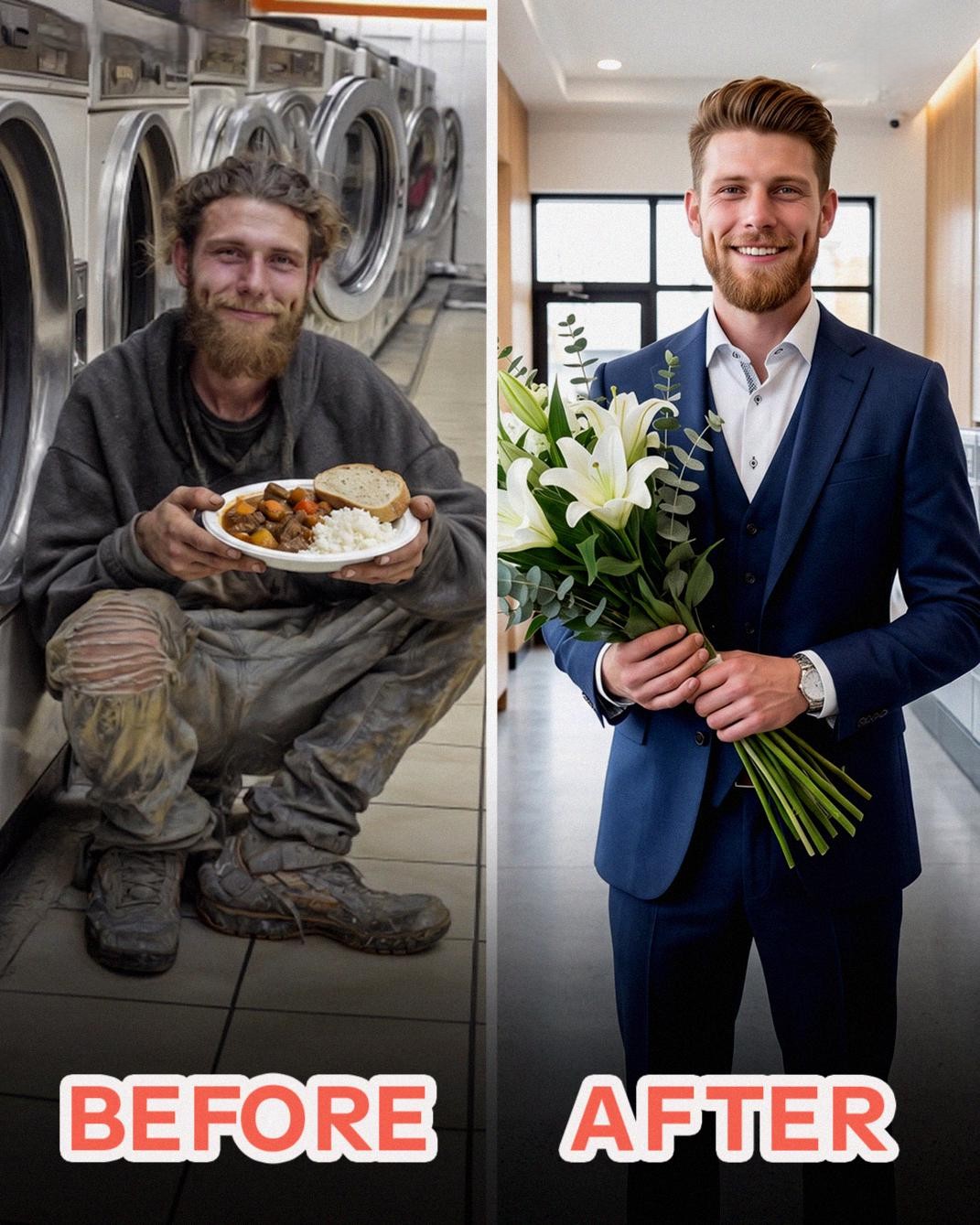
Our destination was always the same: a dilapidated, twenty-four-hour laundromat at the edge of the neighborhood. It was a place that smelled of chemical lavender and damp masonry. In the corner near the humming soda machine sat Eli. He was a fixture of the shadows—a young man who seemed to be trying to fold himself into the architecture to avoid being noticed. He wore a tattered hoodie that had seen better decades, and his entire life was contained within a single plastic bag.
My mother would walk straight to him. She didn’t stand over him like a benefactor looking down at a subject; she knelt. She would offer the bag with a steady hand and a soft greeting. Eli always reacted with the same startled humility, insisting she didn’t have to do this. My mother’s response was the heartbeat of my childhood: “I know, but I want to.”
“Danger comes from being forgotten by the world, not from the act of saying thank you.”
As a teenager, I was convinced he was dangerous. I remember whispering to her in the car, asking, “What if he hurts us?” My mother didn’t even turn her head. She gave me a lesson I wasn’t ready to learn until cancer took her from me.
The Empty Chair
The illness was a thief that moved in the night. It started with her losing her breath on the stairs and ended with a house full of hushed voices and sterile equipment. She was gone before the first frost of the year.
By Christmas Eve, I was a shell of a person. I stood in her kitchen staring at her old roasting pan, and the grief felt like a physical weight on my chest. I almost let the tradition die with her. But her voice echoed in the corners of the room, telling me that someone still needed that plate.
I cooked with tears blurring my vision. I made the chicken, the instant potatoes, and the canned beans. It wasn’t the gourmet spread she used to prepare, but it was warm. I drove to the laundromat with my knuckles white against the steering wheel, expecting to see the same broken man and feel the hollow satisfaction of a duty performed.A Promise Kept
When I pushed open the heavy glass door, the bells jangled just as they always had. But the man standing by the soda machine was unrecognizable. Eli was not huddled on the floor. He was standing tall, dressed in a charcoal suit that fit him perfectly. His hair was trimmed and his face was clean. In his hands, he clutched a bouquet of white lilies.
When he saw me, his expression shattered. He told me he knew she was gone. He told me he had been waiting for me. We sat on the hard plastic chairs of the laundromat, and he finally told me the truth my mother had kept hidden for nearly two decades.
- The Rescue: He asked if I remembered getting lost at the county fair when I was six. I remembered the terrifying sea of legs and the cold panic. I thought a police officer found me. Eli corrected me—he was the one who found me. He was a homeless teenager then, but he saw a child in distress and didn’t hesitate.
- The Bond: That was the day the tradition started. She didn’t just bring him food because he was hungry; she brought him food because they were bonded by a moment of grace.
- The Partnership: Over the years, my mother had been Eli’s silent partner. She pushed him, connected him with social services, and helped him find job training. He knew when I passed my driver’s test and when I graduated college because she shared those milestones with him like a proud aunt.
Eli reached into his pocket and produced an old, weathered envelope. Inside was a photograph from that day at the fair. I was holding cotton candy, and my mother was smiling. In the background, out of focus, you could see a young man in a hoodie watching us with profound relief.The Final Legacy
He told me his suit was a promise. He had promised my mother that if he ever made it, he would show up one day dressed like a man who belonged in the world just to prove her efforts weren’t in vain. He also revealed her final request: she had asked Eli to look out for me. She wanted to make sure I had someone who understood the weight of loss.
We drove to the cemetery together that night. Eli laid the lilies on her grave, and we shared the meal I had prepared right there in the cold moonlight.
My mother hadn’t just saved a man at a laundromat; she had built a safety net for me before she even knew I would need it. I realized that the extra plate she had been preparing all those years wasn’t for a stranger. It was for a brother I hadn’t met yet. Love doesn’t die with the person who gave it; it just changes shape and finds a new way to come home.