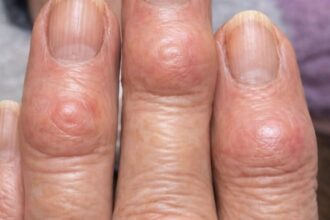
The birthday cake was a triumph of vanilla sponge and hand-crushed strawberry filling, resting on the granite counter like a monument to my own invisibility. I stood there, knife in hand, the sharp blade reflecting the glow of the designer pendant lights, while the party’s noise swirled around me. I was sixty-six years old, a retired educator with decades of life experience, yet in this home, I had been reduced to a high-functioning household fixture.
I arrived at eight in the morning, as was my daily routine. Before the sun had even cleared the Ohio fog, I was already scrubbing dried porridge off the table, searching for Mason’s lost left sneaker, and handling school forms. For seven years, my daughter Rachel’s house had been my true residence in every way that counted. I knew which floorboards groaned; I knew that the youngest, Eli, required his toast crusts cut into triangles to prevent a crisis; and I knew that my son-in-law, David, would never think to place his own coffee cup in the dishwasher.
When Rachel first sought my assistance after Mason was born, it was a plea rooted in desperation. They were young, struggling, and overwhelmed. I stepped in because that is a mother’s duty. I swapped my peaceful retirement for diaper changes and restless nights, certain that my effort was the bond holding their world together. But as the years moved on, the desperation disappeared, replaced by a comfortable, cold assumption. They advanced in their careers, moved into a massive suburban home, and purchased a luxury vehicle, yet the “provisional” setup never concluded. I was the silent motor under the hood, ignored until a warning light flickered.
The change was never more obvious than when Linda arrived. Linda was David’s mother, a woman who approached being a grandmother like a red-carpet event. She lived in Florida, carried the scent of pricey department store perfume, and saw the children as charming props for her social media pages. She didn’t know about Mason’s peanut allergy or Eli’s fear of the dark. She had never spent a Tuesday night dealing with a stomach bug or a Thursday morning debating with a principal. Yet, when she entered with a giant box from the electronics store, the room’s focus shifted entirely toward her.
Mason ripped into the present—a premium gaming console—with a shout of pure joy. Rachel and David smiled, praising Linda for her “incredible” kindness. I stood in the corner, my hands still white with flour from the cake I had spent two days preparing. In my other hand, I held the quilt I had been sewing since January. It was a heavy, comforting weight of navy and forest green, crafted specifically to soothe Mason’s anxiety-related sleeplessness.
“Mason,” I said, my voice feeling thin against the noise of the guests. “I made something for you, too.”
He barely glanced up from the bright screen. “Oh. Thanks, Grandma,” he mumbled, his eyes already fixed on the digital display. Eli added with the bluntness of a child: “It’s just a blanket.”
I looked at Rachel, waiting for her to intervene. I waited for her to tell her son how many hours I had dedicated to that fabric, how much my arthritic fingers had throbbed as I pushed the needle through the layers. I waited for her to acknowledge that while Linda had spent money, I had spent my life. Instead, Rachel leaned in and whispered the words that finally broke my resolve.
“Mom, don’t be sensitive today. Linda is the fun grandma. You’re the reliable one. They love you in a different way.”
Reliable. The word felt like a prison sentence. I wasn’t a guest of honor; I wasn’t even family in the way Linda was. I was the infrastructure. I was the water heater and the roof—vital but completely unappreciated until I stopped working.
“Mom? Can you start slicing the cake?” Rachel asked, her hand already reaching for a pile of plates.
I looked at the knife. I looked at the three layers of vanilla and strawberry. Then, I looked at my daughter. “No,” I said.
The room didn’t fall silent instantly; it happened in waves, beginning with Rachel’s frozen expression. “What do you mean, no?”
“I mean I am finished,” I said, my voice gaining a firm, clear strength. I untied the apron—the uniform I hadn’t realized I was wearing—and draped it over the chair. “I am finished being the free labor that makes this lifestyle possible. I am finished being called ‘reliable’ when what you really mean is ‘convenient.’”
David stepped forward, his face red with the frustration of a man whose domestic comfort was being challenged. “Evelyn, you’re overreacting. It’s just a birthday party.”
“Is it?” I asked, meeting his eyes. “Then tomorrow morning, you can be the one to find the sports gear and pack the lunches. You can be the one to stay home when Eli wakes up with a fever. Since I’m so practical, you’ll find it quite simple to manage without me.”
Linda suddenly found something very interesting at the bottom of her wine glass, avoiding my eyes. I walked to the door, ignoring my daughter’s panicked stammering. Rachel followed me onto the porch, her voice dropping to a sharp, desperate whisper.
“You can’t just walk out, Mom. I have a board meeting at nine. Who is going to take the boys to school?”
There it was. Not a concern for my feelings. Not a realization of the pain they had caused. Just the logistical crisis of losing a free worker.
“I am not abandoning my grandsons,” I told her as I got into my car. “I am resigning from the job you tried to label as love. If you want me in their lives, you’ll have to invite me as their grandmother, not as your housekeeper.”
I drove away with the image of her shocked face in my rearview mirror. My phone buzzed constantly on the seat—texts from David calling me selfish, messages from Rachel saying the kids were upset. I didn’t answer. For the first time in seven years, I wasn’t fixing a problem I didn’t start.
The next morning, I woke up at nine. The sun was pouring through my own bedroom windows, lighting up the dust on my shelves—dust I hadn’t had time to clear because I was too busy cleaning someone else’s house. I made a single cup of coffee, sat on my porch, and wrapped myself in the navy and green quilt. It was warm, heavy, and exactly what I required.
When my neighbor walked by and asked if I finally had time for that local walking group, I didn’t pause. I said yes. I spent the afternoon trekking through the woods, listening to the sound of my own breath instead of the requirements of a household that didn’t truly see me.
I love my daughter, and I cherish my grandsons, but I realized that by letting myself be used, I was teaching them that a woman’s time and heart are limitless, free assets. I was teaching them that “reliable” people don’t have emotions or needs of their own. That lesson concluded at the birthday party. From now on, the cake remains uncut until everyone learns how to say thank you.
7 YEARS AS A LIVE IN NANNY WITHOUT PAY ENDED THE MINUTE MY DAUGHTER TOLD ME I WAS JUST DEPENDABLE
Previous Article Next Article
DEATH IN THE BAG WHY YOUR FAVORITE HEALTHY SNACK IS SECRETLY POISONING YOUR ENTIRE FAMILY
The Heirloom From The Grave How My Future Daughter in Law Unlocked a 25 Year Old Family Secret

Related Posts
The Mirror Lied To You This Morning And The Truth Will Terrify Yo ...
August 27, 2026
Country music icon Dolly Partons cause of death is revealed
August 26, 2026