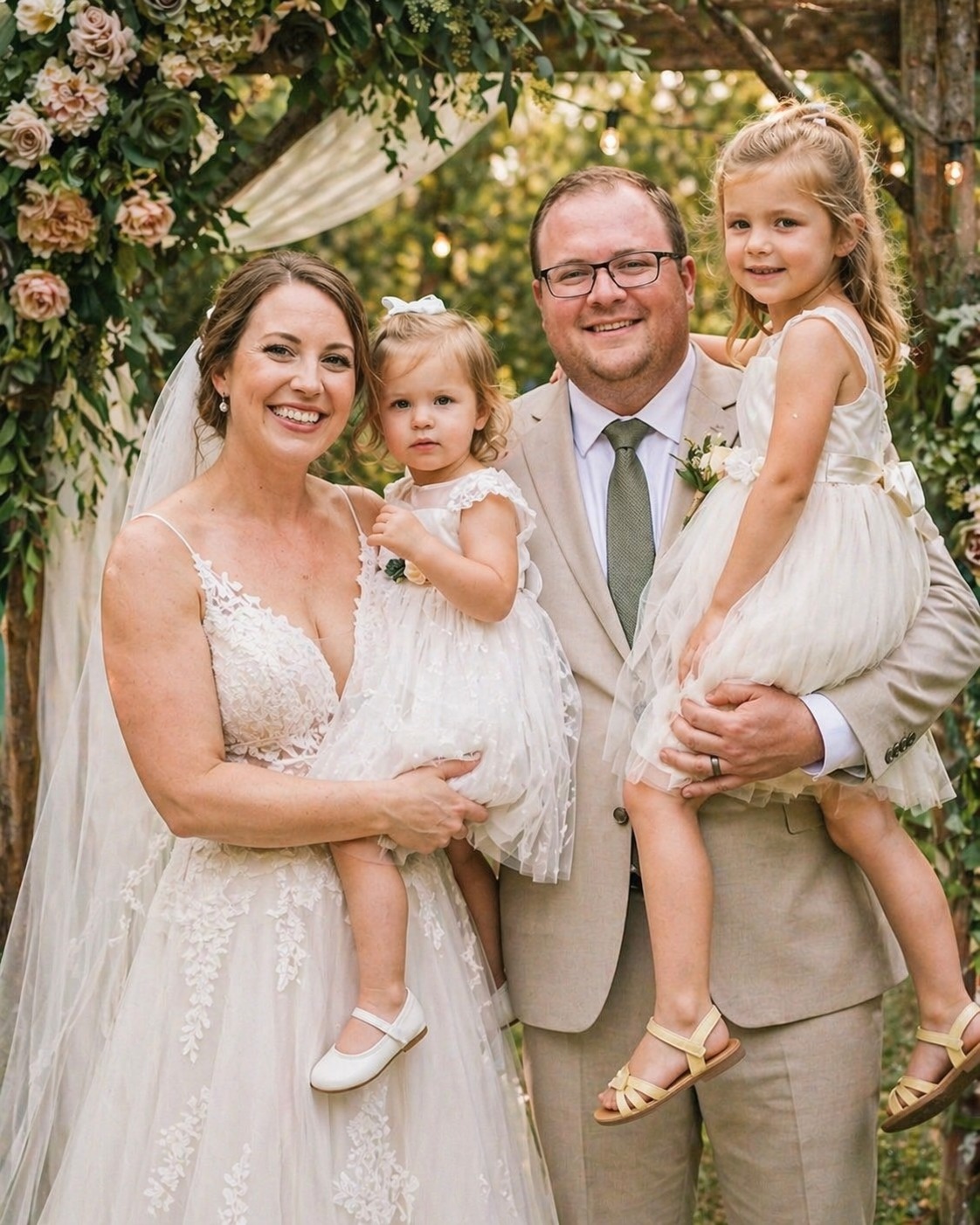
When I married Daniel, I believed I was the final piece of a fractured puzzle. He was gentle and steady, carrying the quiet strength of someone who had endured a tragedy. His daughters, six-year-old Grace and four-year-old Emily, captured my heart instantly. They were vibrant and impressively strong for children who had lost their mother three years earlier. I moved into their expansive, sun-lit home with a soul full of optimism, committed to building a future where the past was honored but no longer overwhelming.
The house was a beautiful structure of wrap-around porches and high ceilings, but it contained one disturbing flaw: a locked basement door. Daniel brushed it off as a storage area for old equipment and dangerous clutter—a logical safety measure for a father with curious toddlers. I trusted his word because I wanted to believe in him. However, as time passed, I sensed a strange pull drawing the girls toward that door. Grace would linger in the corridor, staring at the brass handle with deep longing. Emily would stand near the frame, quiet and expectant, only to flee when she realized I was observing her.
The tension finally broke on a Tuesday afternoon while the girls were home with minor colds. What started as a day of soup and cartoons took a dark turn when Grace walked up to me in the kitchen. Her face lacked its usual childish spark, replaced by a seriousness that seemed far too mature for a six-year-old. She asked if I wanted to meet her mother. My heart raced as she whispered that her mom lived downstairs; Emily followed behind, nodding gravely as she pulled her stuffed rabbit across the floor.
Fear is a physical sensation. It felt like a cold blade sliding between my ribs. Every thriller and true-crime story I’d ever heard rushed through my mind. I thought of the locked door, Daniel’s occasional late-night trips into the lower levels of the house, and the girls’ haunting claim that a deceased woman lived beneath us. Driven by a desperate need for clarity, I used a pair of hairpins to pick the lock. My hands trembled so much I nearly dropped them twice, but finally, the mechanism turned.
I anticipated a horror story. I expected to find something terrible or illegal. Instead, when the door opened, I was met with the thick, damp smell of earth and trapped air. As I walked down the stairs, the faint light revealed a sanctuary rather than a cell. It was a perfectly preserved memorial to a life cut short. There was a faded floral sofa, shelves crowded with family videos, and walls covered in framed photos of a woman with a brilliant smile. It was a museum of sorrow, frozen in time and hidden from view.
The girls ran past me, comfortable in the shadows. They showed me the tea set where they had “parties” with their mother’s memory and pointed to the screen where they watched her ghost move in fuzzy home recordings. Daniel had built a physical version of his inability to move forward. He hadn’t laid his wife to rest; he had simply moved her into the cellar. To the girls, she wasn’t a memory; she was a neighbor living behind a locked door, someone they could visit whenever life felt too difficult.
The sound of the front door heralded Daniel’s return. When he discovered us in the basement, his expression shifted through a range of emotions: shock, panic, and finally, a deep, hollow shame. The argument that followed was the rawest moment of our marriage. He confessed that the basement was the only place where he didn’t have to play the “strong widower” role. He kept it locked not to hide a crime, but to hide his own fragility. He admitted he let the girls believe their mother lived there because he lacked the courage to tell them she was truly gone.
I looked at the man I loved and realized that while he had shared his life and bed with me, he had kept the most vital part of his heart behind a lock. I had been competing with a ghost that was being sustained in the dark. I told him then that the basement was a tomb, not a residence. By letting Grace and Emily believe their mother was just a few steps away, he was trapping them in a cycle of endless waiting. They were living in a house of cards, and the base was built on a lie that would eventually collapse.
Recovery didn’t happen overnight. It started with the door remaining unlocked, letting the hallway light finally wash away the gloom. We spent the following months taking apart the shrine—not to forget her, but to bring her memory into the rest of the house where it belonged. We moved the photos to the living room and the videos to the den. We sat the girls down and explained, through tears and hard questions, that their mother lived in their hearts and stories, not behind a wooden door.
We hired a plumber to fix the leak that caused the smell of decay, and Daniel finally reached out to the therapist he had been avoiding. I stayed, though the future wasn’t certain. Our marriage had been constructed over a secret, and we had to strip it down to the foundation to see if it was worth rebuilding. Today, the basement is just a basement—a place for laundry and old toys. The “mom” who lived there is gone, replaced by a memory that no longer needs a key. We still have difficult days, but at least now, all the doors in our house are open.
I Married a Widower and Found His Late Wife Living in the Basement
Previous Article Next Article
The Heirloom From The Grave How My Future Daughter in Law Unlocked a 25 Year Old Family Secret
HIS HEAD SUDDENLY DROPPED AND HE COULD NOT LIFT IT BACK UP THE TERRIFYING TRUTH ABOUT THE SMARTPHONE SYNDROME RUINING YOUNG LIVES

Related Posts

The Mirror Lied To You This Morning And The Truth Will Terrify Yo ...
August 27, 2026
Country music icon Dolly Partons cause of death is revealed
August 26, 2026