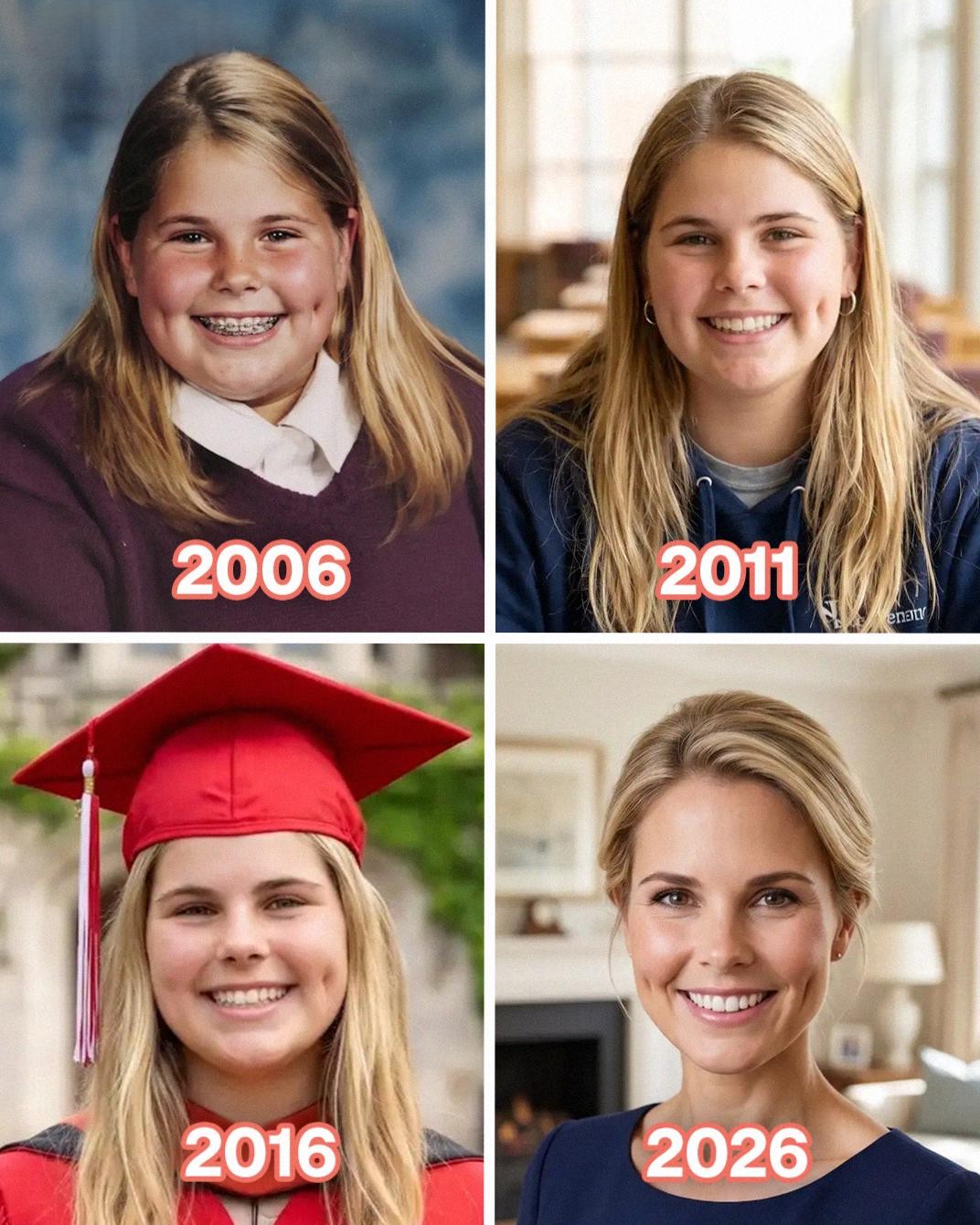
The aroma of industrial-grade bleach and old sandwiches is a sensory anchor I haven’t been able to escape for two decades. To most individuals, a restroom stall is a place of function or a brief window of solitude. For me, between the ages of fifteen and eighteen, it served as my dining area, my stronghold, and my prison. I would wait for the lunch bell to ring, glide past the packed cafeteria entrance where the clamor of social ranking was overwhelming, and lock myself in the last cubicle of the second-floor girls’ bathroom. I would sit on the toilet cover, tuck my feet up so no one could spot my sneakers from the hallway, and consume my ham and cheese sandwich in a quietness interrupted only by a dripping tap.
I was concealing myself from Rebecca.
Rebecca was the type of girl who didn’t merely walk through the corridors; she dominated the air everyone else inhaled. She was attractive in that sharp, jagged manner that made you feel inadequate just by being near her. My inadequacies, however, were simple marks. After my parents perished in a gruesome auto accident during my freshman year, my mourning didn’t show up in weeping or defiance. It surfaced as a metabolic collapse. I put on weight quickly, my body expanding as if attempting to build a physical shield between my heart and the world.
The first time Rebecca referred to me as “the whale,” she did it with a grin that resembled a gift. We were in the food line, and she leaned in, her scent heavy and sugary, and raised her voice to reach the very back of the hall. She instructed everyone to clear a path for the whale, and then, with a flick of her hand that appeared accidental to the faculty but felt calculated to me, she emptied a tray of pasta down my front. The red sauce marked my white blouse like an injury. The mockery that followed was louder than the impact of the tray. That was the final day I ever entered that cafeteria.
For three years, I existed in the darkness. I labored over my studies until my eyes ached because digits were the only things that didn’t ridicule me. I made it through on the subtle empathy of a custodian who kept my “dining room” tidy and a literature teacher who placed books on my desk like confidential notes from the outside world. When commencement finally arrived, I didn’t glance back. I relocated three states away, exchanged my sorrow for heavy training at the gym, and committed my spirit to computer science. I transformed into a data scientist, a woman who spoke the dialect of logic, and I gradually masked the girl who ate in the restroom.
Twenty years later, the spirit of Rebecca surfaced through a telephone call from a man named Mark.
When I answered the phone and heard him identify himself as Rebecca’s spouse, my initial impulse was to end the call. My heart throbbed against my chest, a ghost pain from a life I thought I’d moved past. But Mark’s tone wasn’t insulting; it was drained by desperation. He told me he was reaching out because of his daughter, Natalie. Rebecca was Natalie’s stepmother, and Mark had spotted a frightening change in his child. Natalie had stopped eating at the table. She was becoming a ghost in her own residence. She was concealing food wrappers in the bathroom.
The most terrifying part of the conversation occurred when Mark described how he tracked me down. He had questioned Rebecca about her behavior toward Natalie, but she had ignored him, labeling the girl oversensitive and unmotivated. Suspecting a falsehood, Mark had searched through the attic and discovered Rebecca’s old high school journals. He didn’t find the thoughts of a typical teen; he found a blueprint of cruelty.
He recited a line over the phone that made the room rotate. Rebecca had written about me, remarking that I was more intelligent than her and that if she didn’t keep everyone focused on my size, they might notice my intellect, and then she would be “finished.” She had kept a literal tally of how many days she could drive me into the restroom. Now, two decades later, she was employing the same mental warfare on a young girl who loved robotics and wore her heart on her sleeve.
Mark asked if I would talk to Natalie. He wanted her to realize that the person Rebecca was attempting to crush was actually resilient.
I consented. That evening, I received an electronic message from Natalie with a subject line inquiring about women in STEM. Reading her sentences was like reading a dispatch from my younger self. She described how Rebecca ridiculed her “robotics fixation” and told her she wasn’t built for engineering. She admitted that she ate in the bathroom because it was the only spot she felt protected from the judgment. I replied immediately, telling her that her brilliance was an intimidation to people who had nothing but their own ego to provide. We exchanged messages for days, spanning the gap between a scarred past and a bright future.
The turning point arrived a week later when Mark invited me to their residence for a planned intervention with a family counselor. I showed up with my shoulders back, projecting the assurance I had spent twenty years developing. When the door swung open, there she was. Rebecca appeared remarkably unchanged, though the sharpness of her look now seemed fragile rather than bold. She tried to act as if it were a “fun gathering,” grinning at me as though we had been old pals who simply lost contact.
But the mood in the space shifted when we sat with the advisor, Dr. Ellis. Rebecca tried to manipulate the room, asserting that high school was just “kids being kids” and that she was only trying to “assist” Natalie in fitting in.
I didn’t permit her to finish. I looked her in the eyes and informed the room about the bleach, the pasta, and the three years of seclusion. I told her that she hadn’t evolved; she had simply selected a smaller victim. Mark produced the journals, placing the proof of her deliberate spite on the coffee table. Natalie finally found her courage, too, telling her stepmother that she didn’t want to be “better,” she just wanted to be away from her.
The resolution was rapid. Mark declared he was seeking a legal separation that very afternoon. He understood that safeguarding his daughter meant extracting the venom from their lives. Rebecca’s mask finally broke, leaving her appearing tiny and weak in the center of the room she no longer dominated.
A few days later, Natalie came to my office. I showed her the server rooms, introduced her to my group of female engineers, and displayed a world where “robotics fixations” were honored as genius. We went to the firm’s break room for lunch. The sunlight was pouring through the floor-to-ceiling windows, gleaming off the glass surfaces. There were no stalls, no bolts, and no hiding. We sat in the middle of the room, speaking loudly about algorithms and aspirations, eating our meal in the light. The pattern was finally ended, not with a crash, but with the basic act of refusing to conceal ourselves anymore.
The Secret Diary of a High School Queen Bee Just Exposed a Decades Long Nightmare
Previous Article Next Article
The Heartbreaking Truth Behind The Screen As Beloved Actress Loses Her Thirteen Year Old Son
How to Master the Art of the Approach and Transform Your Social Life Forever!

Related Posts
The Mirror Lied To You This Morning And The Truth Will Terrify Yo ...
August 27, 2026
Country music icon Dolly Partons cause of death is revealed
August 26, 2026