In the golden age of television, a single leather jacket and a confident thumbs-up defined an entire generation’s concept of cool. The man behind that image, Henry Winkler, became a global sensation as Arthur “Fonzie” Fonzarelli on the legendary sitcom Happy Days. To the millions of fans watching from their living rooms, he was the personification of effortless confidence—a man who could repair a jukebox with a single tap and command any room he entered. However, behind the slicked-back hair and the roar of the motorcycle was a man whose real-life journey began in a place of deep insecurity, academic failure, and a heartbreaking lack of support from the very people who should have believed in him most.
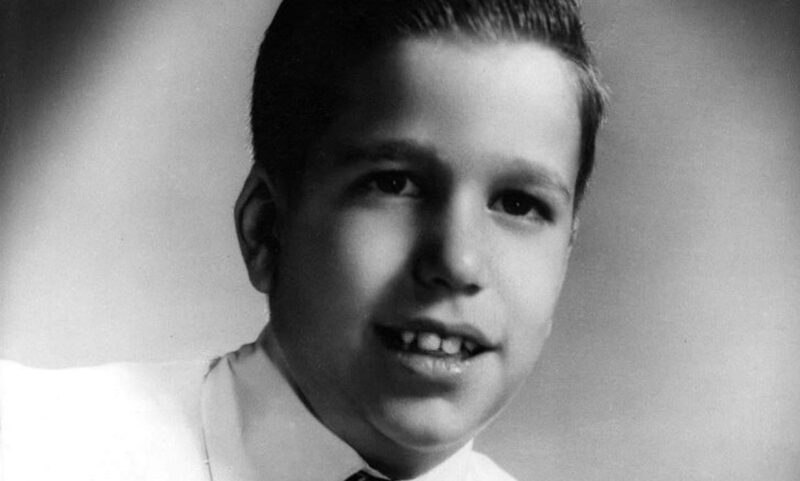
Born in New York City on October 30, 1945, Henry’s childhood was far from the idyllic scenes portrayed in 1950s television. His parents, who had escaped Nazi Germany, were strict and often unyielding. They valued traditional academic success above all else, but Henry struggled immensely in the classroom. He lived with undiagnosed dyslexia at a time when the condition was largely misunderstood or entirely ignored. To his teachers and his parents, his inability to read or process information at a standard pace wasn’t seen as a learning disability; it was viewed as laziness or a lack of intelligence. His parents frequently called him “dummer Hund,” or “dumb dog,” punishing him with grounding and verbal berating in a desperate, misguided attempt to force him to achieve better grades.
Despite being labeled an “idiot” by those closest to him, Henry possessed a vibrant, creative spirit that refused to be extinguished. He found his sanctuary in the world of performing. While he couldn’t easily parse a textbook, he understood the nuances of human emotion and the rhythm of storytelling. He knew from a very young age that he wanted to be an actor—a dream that his parents dismissed as foolish. Yet, he used their low expectations as fuel. He developed a resilient shell, masking his internal struggles with a quick wit and a natural warmth that drew people toward him. He wasn’t just a boy who couldn’t read; he was a boy who was learning how to survive a world that wasn’t built for his mind.
Against all odds, Winkler’s determination led him to the prestigious Yale School of Drama. Getting there was a feat of pure willpower. Because of his dyslexia, he had to work twice as hard as his peers just to get through the scripts. He developed intricate coping mechanisms, memorizing lines by listening to the rhythm of the words rather than just reading them on the page. He learned to adapt, a skill that would eventually make him one of the most versatile actors of his time. By the time he earned his Master of Fine Arts, he had proven to himself—if not yet to his parents—that he was far from the “dumb dog” they claimed him to be.
The 1970s brought the role that would change his life forever. When he walked into the audition for Happy Days, the producers were looking for a tough, silent type. Winkler, however, brought a layer of vulnerability and charm to the Fonz that made the character leap off the screen. He transformed a supporting role into a cultural icon. Suddenly, the boy who struggled to read was the most famous man in America. But fame didn’t cure his dyslexia. Even at the height of his stardom, Winkler lived in constant fear that people would find out he couldn’t read the cue cards. He continued to fight his private battle with words every single day, proving that “cool” wasn’t about a lack of struggle, but about the grace with which one carries their burdens.
When Happy Days finally came to an end, Winkler faced a new kind of crisis. He was so deeply typecast as Fonzie that the industry didn’t know what to do with him. He went from being the biggest star in the world to a man who couldn’t land a job. It was a terrifying echo of his childhood—a sense that he was being underestimated and cast aside once again. But Henry Winkler was no stranger to reinventing himself. Instead of fading into obscurity, he moved behind the camera. He became a successful producer and director, helping to launch hits like MacGyver. He showed the world that his talent wasn’t limited to a leather jacket; he had a brilliant mind for the mechanics of storytelling and the business of entertainment.
As the years passed, Winkler finally found the words he had struggled with for so long. He began writing, eventually becoming a prolific author of children’s books. His series, Hank Zipzer: The World’s Greatest Underachiever, was based on his own experiences growing up with dyslexia. Through these books, he reached out to millions of children who felt exactly like he did—lost, misunderstood, and told they weren’t good enough. He turned his greatest pain into his greatest gift, providing a voice for the “underachievers” and showing them that their minds weren’t broken, just different. At 80 years old, he has written nearly 30 books—a staggering achievement for a man once told he would never amount to anything.
His career saw a massive resurgence in recent years, most notably with his Emmy-winning turn in the dark comedy series Barry. Playing Gene Cousineau, a narcissistic yet deeply human acting coach, Winkler proved that his range was limitless. He transitioned from the “coolest guy in the room” to a master of complex, character-driven drama. He has become a “cool and funny” elder statesman of Hollywood, beloved by younger generations of actors who look to him as a beacon of kindness in a notoriously difficult industry.
In his personal life, Henry found the stability and unconditional love he had lacked in his youth. His marriage to Stacey Weitzman in 1978 became his bedrock. Together, they navigated the highs of fame and the lows of health scares, including Stacey’s brave battle with breast cancer. Their partnership is a testament to the power of support and the healing nature of a loving family. Winkler has spent his later years as a dedicated philanthropist, working tirelessly for cancer research and advocacy for those with learning disabilities.
Today, Henry Winkler stands as a living reminder that the labels people place on us in our youth do not have to be our destiny. He took the “idiot” label thrown at him by his parents and replaced it with titles like “Emmy Winner,” “Best-Selling Author,” and “Beloved Legend.” His legacy is not just one of television history, but of human resilience. He didn’t just survive his struggles; he used them to build a life of profound meaning and joy. Henry Winkler’s story is a beautiful, heart-wrenching lesson that even if the world calls you a “dumb dog,” you can still grow up to be the man who teaches the world how to be truly, authentically cool.
HIS PARENTS CALLED HIM STUPID BUT THE TRUTH ABOUT THIS HOLLYWOOD LEGEND WILL SHATTER YOUR HEART
Previous Article Next Article
TWELVE DEAD IN ISLAND PLANE CRASH AND THE FAMOUS SINGER REVEALED AMONG THE VICTIMS WILL LEAVE YOU IN TEARS
HER SECRET HAIRCUT BROUGHT SIX TOUGH WORKERS TO THE SCHOOL AND THE PRINCIPALS DISCOVERY LEFT THE ENTIRE TOWN IN TEARS

Related Posts

Republicans Mulling DC Grand Jury Outcomes For Clinton Prosecutio ...
August 25, 2026
Liver Cancer Early Warning Signs You Should Never Ignore
August 25, 2026