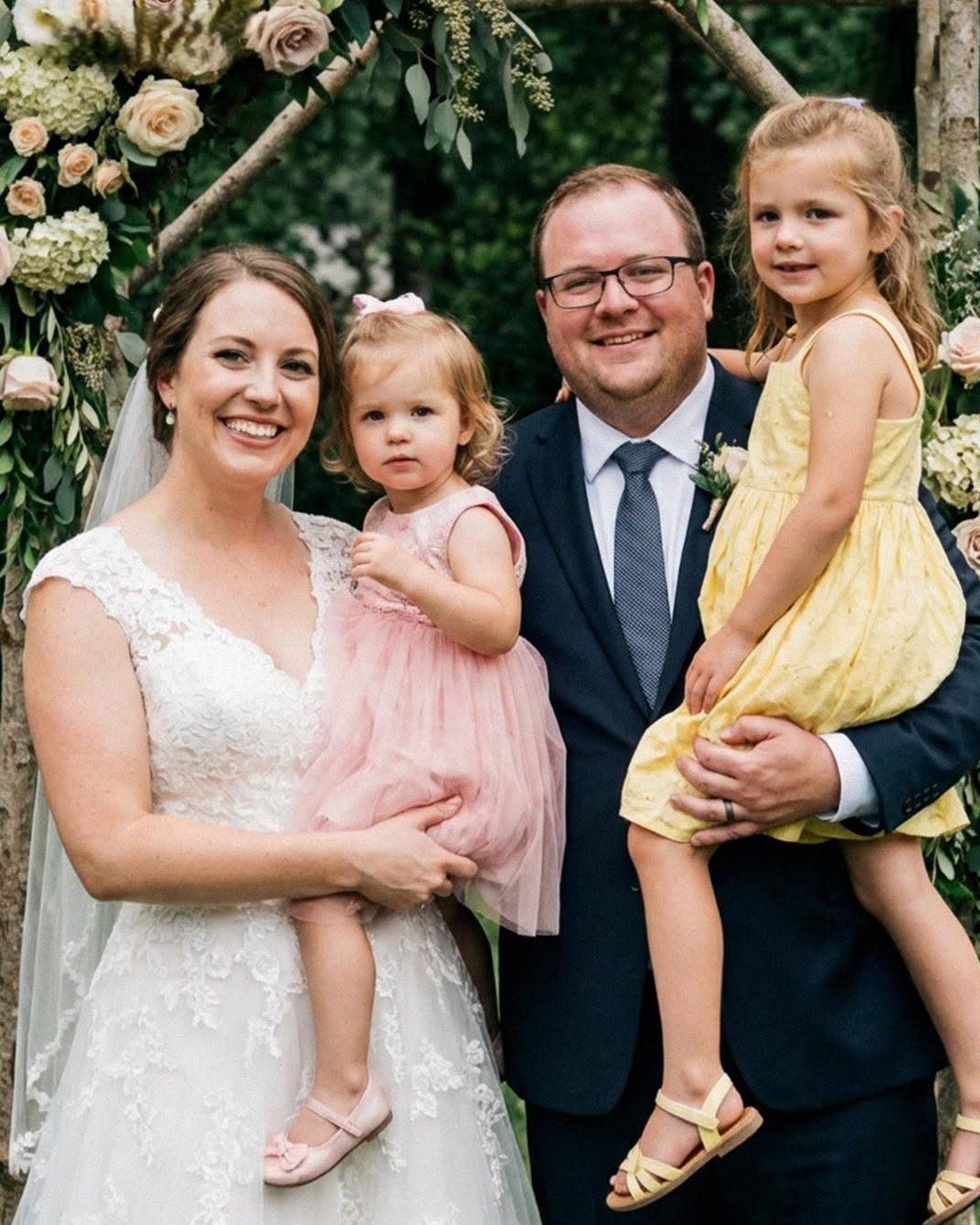
When I first encountered Daniel, I was convinced I was falling for a man who had mastered the impossible feat of enduring a catastrophe with his dignity intact. On our second date, he sat across from me and detailed the map of his sorrow with a steady hand. He was a widower, left to raise two girls on his own—Grace, who was three at the time, and Emily, a mere one-year-old toddler. There was a hollow quality in his voice, the kind of sound one makes after years of reinforcing the walls of the heart against a collapse. By the time we wed three years later, I hadn’t just committed to a spouse; I had committed to a family. I loved those girls as if they were my own, yet I was careful never to cross the invisible boundary of their mother’s legacy. I aimed to be their refuge, not a substitute. However, as I settled into the family residence, I gradually began to perceive that the house was not merely a home for the living, but a meticulously kept container for the departed.
The cellar door was the first fracture in the image. In a home that was otherwise a colorful, chaotic mix of bright tones, crayon sketches, and half-finished Lego projects, that single door stood out like a blemish. It was always secured. The brass handle was shiny but cold, and the wood was thick enough to muffle any noise from the other side. When I initially pressed Daniel about it, his answer was rehearsed and casual. He spoke of corroded tools, old lead paint containers, and the general dangers of a centuries-old foundation that wasn’t safe for inquisitive children. It was a sensible, fatherly excuse, so I pushed my curiosity aside. However, the mood of the house began to change as months passed. I started observing how the girls interacted with that door. Grace, now six and possessing a seriousness that made her seem like an old soul in a child’s body, would often linger in the hallway, her gaze fixed on the lock with an expression resembling worship. Little Emily, at four, would dash past it with a giggle and a finger to her lips, as if she were guarding the world’s greatest secret.
The turning point came on a rainy Tuesday afternoon. The girls were home from school with lingering colds, the sort of day that typically involves endless bowls of soup and stacks of blankets on the couch. I was in the kitchen, the steam from the stove fogging the glass, when I felt a small, chilly hand slide into mine. I looked down to find Grace staring up at me with a frighteningly clear gaze. She didn’t ask for food or a toy. She asked me, in a whisper that seemed to freeze my very core, if I wanted to go see where her mommy lived. My heart didn’t just skip; it seemed to halt entirely. Behind her stood Emily, gripping a worn stuffed rabbit, nodding in silent agreement. She murmured that mommy was just downstairs.
The air in the kitchen suddenly felt too thin to breathe. Grim images filled my mind—the dark tales of true crime documentaries and the twisted thrillers that caution us about the people we think we know. Logic told me to wait for Daniel to get home from work, but the desperate, expectant pull of Grace’s hand was a request I couldn’t refuse. I pulled two pins from my hair, my fingers shaking so much I nearly dropped them. I had never been someone to intrude, but the safety of those children was the priority. With a soft click that echoed like a thunderclap in the quiet house, the lock yielded.
The walk down to the basement was a trip into a different reality. The scent hit me first—not the metallic smell of equipment or the chemical odor of paint, but the heavy, suffocating fragrance of a life kept in amber. It was damp soil mixed with aged perfume and the stale scent of trapped air. As I reached the final step, my terror vanished, replaced by a sorrow so intense it felt like a physical strike. The basement had been turned into a living tomb. This wasn’t a storage room; it was a shrine. An old floral sofa sat in the middle of the room, a sweater still draped over the arm as if its owner had just gone into the next room for a drink of water. The walls were covered with shelves sagging under the weight of hundreds of framed photos, flickering electric candles, and piles of hand-drawn art from the girls. In the corner, a television was connected to an old VCR, surrounded by tapes with simple labels like First Steps and Park Day.
Grace walked over to the TV and touched the screen with a sad, gentle smile. She explained that this was where her mother lived because their father brought them down here to visit her whenever they missed her. Emily added that they would sit on the sofa and watch mommy talk on the screen while their father sat in the dark and sobbed. The revelation was crushing. Daniel hadn’t just kept a few keepsakes; he had built a physical version of his refusal to let go, and worse, he had brought his young daughters into his fixation. He had allowed them to think that their mother’s spirit was tied to a dark, musty room beneath the floorboards of their home.
I stood in the center of that tragic room, leafing through a journal I found on a side table. It was filled with Daniel’s script—thousands of notes addressed to a woman who had been gone for years, raw and hurting with a solitude he had never revealed to me. I was still clutching the notebook when the front door upstairs groaned open. Daniel’s steps were heavy as he walked toward the kitchen, then stopped. He saw the open door. By the time he reached the bottom of the stairs, his face was the color of ash. The initial spark of anger in his eyes was immediately drowned by a wave of shame.
The talk that followed was the most genuine and agonizing moment of our marriage. I sent the girls upstairs, needing to separate the children from the spirit of the woman they were being taught to chase. Daniel collapsed, his “strong father” mask falling into a heap on the basement floor. He admitted that the room began as a way to avoid the pain of packing her belongings away, but it had turned into a hideout where he could escape the pressure of moving forward. He confessed he knew Grace thought her mother literally lived in the basement, but he was too emotionally stuck to fix the misconception.
I told him that night that a house split between the living and the dead cannot stand. He had married me to help him bear the weight of his old life, but he hadn’t left enough space for us to create a new one. The weeks that followed were a difficult process of clearing the air. We didn’t discard her memory, but we pulled it out of the shadows. We moved the pictures upstairs into the light. We watched the videos in the living room as a family, honoring the person she was rather than grieving the ghost she had become. We removed the damp clothes and the old furniture, eventually painting the basement walls a bright, cheerful white and turning it into a playroom for the girls.
Sorrow is a permanent part of any life, a space you carry inside you, but Daniel finally understood that you cannot raise children in the cellar of the past. Today, the basement door remains open, the sound of the girls’ laughter rising up the stairs. They know now that their mother doesn’t reside behind a locked door in the dark; she lives in the tales we share and the lives we are finally brave enough to live in the light.
My Stepdaughter Asked to Meet Her Mom in the Locked Basement and the Truth Behind That Door Shattered Our Entire Marriage
Previous Article Next Article
Tragedy Strikes the Altar as Bride Collapses During First Dance Leaving Groom and Guests in Total Despair
Teenager Repairs Neighbors Broken Fence Only to Have Police Reveal a Decades Old Family Secret the Next Morning

Related Posts

The Mirror Lied To You This Morning And The Truth Will Terrify Yo ...
August 27, 2026
Country music icon Dolly Partons cause of death is revealed
August 26, 2026