I truly believed I had hit the jackpot with my mother-in-law. Amidst the endless horror stories of intrusive parents, Linda represented the gold standard of kindness. Marrying Arthur didn’t just provide me with a husband; it gave me a woman who embraced me like the daughter she’d never had. Arthur was my ideal partner—considerate, soft-hearted, and the type of person who remembered my specific preference for two lemon slices in my tea. We were an incredible team, and for five years, Linda served as our most loyal supporter. However, a sinister obsession was growing beneath her sweet, grandmotherly exterior—one that would eventually trigger a legal conflict and a betrayal that nearly tore our lives apart.
Our ordeal started with the oppressive quiet of an empty nursery. Arthur and I were eager to become parents, but nature wasn’t cooperating. We spent years pursuing that elusive second pink line on pregnancy tests, exhausting every supplement, tracking tool, and ounce of our emotional strength. When we eventually tried IVF, the failure felt even more crushing. After three cycles that depleted our bank accounts and left my spirit broken, I found myself crying on the bathroom floor, certain I would never be a mom. That was the moment Linda found me, pulled me into a hug, and whispered that families are formed in many different ways.
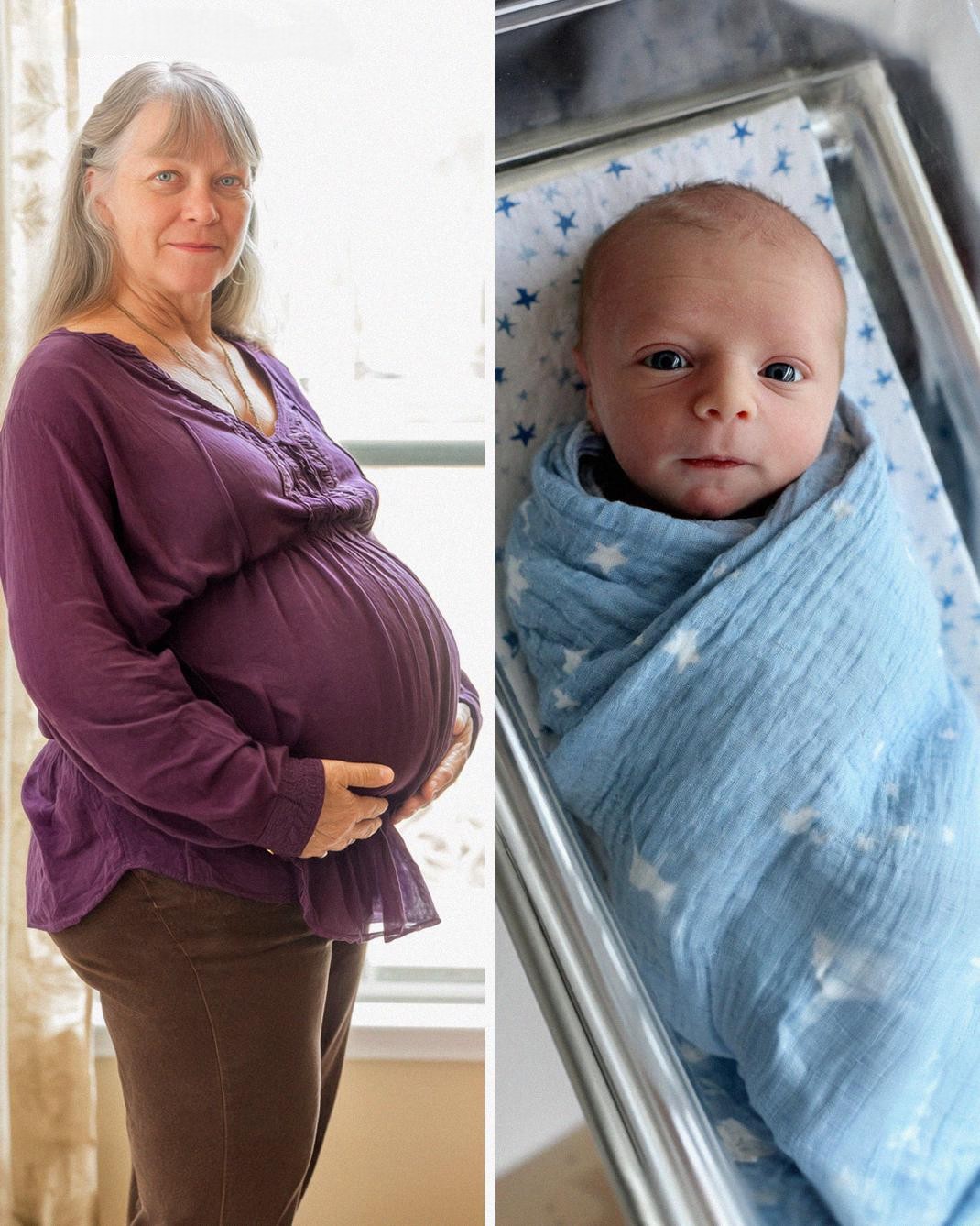
A week later, Linda came over with a folder packed with medical data. At fifty-two, she was a retired educator who enjoyed her garden, but she had a daring proposal: she wanted to serve as our gestational surrogate. She was in peak health, had experienced two smooth pregnancies when she was younger, and her physician had surprisingly given her the thumbs up. “Let me provide the family you deserve,” she urged. Arthur looked at me with eyes reflecting desperate hope. We followed every rule—lawyers, agreements, mental health checks, and medical tests. It felt like a miracle. Linda insisted she didn’t want a cent, calling it a gift of pure love. When the embryo successfully implanted on the first attempt, we believed our nightmare was finally over.
The pregnancy began as a lovely, collective experience. Linda wore “Baking for my daughter-in-law” shirts and sent us constant updates. But as her stomach grew, her mindset began to shift. Around the seven-month mark, warning signs started appearing. She stopped referring to him as “your baby” and began calling him “my son.” She made comments that he would be staying with her most of the time. When I brought up the nursery, she would respond with a chilling, dismissive laugh. Arthur claimed it was just hormones and that his mom was simply being emotional, but my intuition told me something was seriously wrong. During a checkup, she even attempted to register herself as the mother on the official paperwork. I corrected the form, and the icy silence she gave me in return was enough to freeze my blood.
The breaking point happened in the delivery room. Neil was born on a Saturday evening, and the second his first cry filled the air, I felt a wave of intense, maternal relief. This was it. I was finally a mother. The nurse turned to pass the crying infant to me, but Linda’s arm lunged from the hospital bed with terrifying speed. “Stay away from him!” she yelled, her voice cracking with raw, animalistic aggression. “He isn’t ready to go with you! He knows who his real mother is!”
The room went dead silent. The warmth we had felt from Linda for years had disappeared, replaced by a cold, calculating look. She held the baby tightly to her chest and refused to let go, insisting that because she delivered him, he belonged to her. She demanded we leave the room, and in the frantic confusion of the maternity ward, the staff guided us into the hall to avoid a physical fight. We stood in that sterile hallway, listening to our son cry behind a deadbolted door, wondering if we would ever get to hold him.
It took four hours of legal threats and hospital management intervention before a nurse finally brought Neil to us while Linda was asleep. We hurried away from the hospital with our son, but the ordeal was just beginning. At two in the morning, my phone started blowing up. It was Linda, sounding frantic and unstable. She accused us of kidnapping “her” infant and claimed we had treated her like a human container. She wasn’t just sad that the pregnancy was over; she was declaring war.
Within a week, the “gentle” grandmother had hit us with court documents. She had found an attorney willing to claim that the emotional intensity of the pregnancy gave her a superior right to the child. Her entire extended family turned against us, accusing us of “using her body” and then “tossing her aside.” They ignored the legal contracts, the biological DNA proof, and the fact that she had begged us to let her do this. I became a captive in my own home, locking every door and closing the blinds, terrified that my mother-in-law would show up at the window to take Neil.
The legal battle was a brutal display of psychological warfare. Linda sat across from us in a soft pink sweater, playing the victim role perfectly. She broke down on the witness stand, telling the judge that the baby recognized her voice and that her connection outweighed the law. Arthur looked at his mother and realized the woman who raised him was gone forever. Our attorney presented the DNA evidence—Neil was 100% our biological child—along with dozens of text messages where Linda had called herself “Grandma” during the pregnancy.
The judge’s decision was quick and conclusive: Arthur and I were the legal parents. Linda had no rights. But as we exited the courthouse, the win felt hollow. Linda stood in the hall and hissed that one day Neil would find out we “stole” him. The harassment persisted. Her sisters left hateful voicemails, demanding we compensate her for her “suffering.”
Eventually, we realized we could never find peace as long as she felt she had a claim. To stop the insanity, we agreed to pay her the equivalent of a professional surrogate’s fee—a massive amount that wiped out our life savings. She accepted the money without a single apology. It was essentially a ransom for our own child.
We didn’t wait for her to change her mind again. We updated our phone numbers, sold our property, and relocated to the other side of the state where she could never track us down. Now, when Neil smiles in his sleep, I feel a twinge of grief for the family we lost, but a fierce need to protect the one we saved. I’ve learned the most difficult lesson a parent can face: some boundaries should never be crossed, even in the name of love. If you’re thinking about surrogacy, take my advice—keep your relatives at a distance and leave the miracles to the experts. Family is for the holidays; everything else is a gamble you might not survive.
SHE OFFERED TO BE OUR SURROGATE BUT THEN TRIED TO KIDNAP OUR SON IN THE DELIVERY ROOM
Previous Article Next Article
THE UNTOLD TRUTH BEHIND STEVE HARVEYS FINAL WORDS THAT ARE LEAVING MILLIONS IN TEARS
MY TOXIC MOTHER IN LAW TRIED TO EVICT MY DAUGHTER BUT MY MOM REVEALED A SECRET THAT RUINED HER LIFE

Related Posts
The Mirror Lied To You This Morning And The Truth Will Terrify Yo ...
August 27, 2026
Country music icon Dolly Partons cause of death is revealed
August 26, 2026