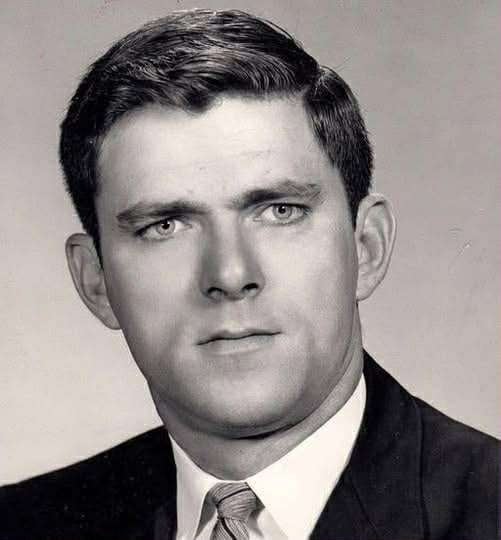
The current state of modern media is frequently slammed for its lack of unity and the isolated bubbles that characterize our online behavior, yet there was a period when one man with a metallic microphone and a shock of white hair managed to transform the TV screen into a collective national meeting place. The lack of Phil Donahue in today’s cultural dialogue feels like the disappearance of a crucial social organ, a venue that was cleverly disguised as a daytime program but served as the pulse of a growing social awareness. Long before the time of social media tags and viral arguments, Donahue pioneered a setup that compelled us to observe one another, to hear the unpleasant, and to embrace the genuine gamble of being fundamentally altered by a different viewpoint. His impact is not merely one of television greatness; it is a proof of the strength of human conversation in its most raw state.
Phil Donahue did not just lead a program; he created a category that redefined the link between the observer and the screen. Before he walked through the rows of his studio, daytime TV was mostly a desert of household hints, cooking demos, and light celebrity small talk. Donahue looked at the homemakers of middle America and perceived not just a target group for soap ads, but a refined audience capable of tackling the most complicated and forbidden topics of the era. He shifted the microphone away from the stage and into the audience, effectively giving the control of the story to the public. This was an extreme act of making things accessible to everyone. By permitting regular people to challenge power, query professionals, and reveal their own heartaches in real time, he broke the barrier between the actors and the audience and invited the whole country into a dialogue that had previously occurred only in private.
The brilliance of the Donahue style rested in its lack of constraints. In a time where everything is now carefully polished, organized, and managed for peak attention, Phil flourished on the erratic spirit of live interaction. There were no delays, no safety nets, and no prepared lines for the spectators who stood up to talk. This fostered a vibe of real risk—the risk of a fresh concept taking hold or a deep-seated bias being tested in front of millions. Donahue didn’t guarantee his audience a safe environment; he guaranteed them a truthful one. He maintained that the only path to moving forward as a culture was to voice our disagreements openly, to examine the wounds of our societal disputes, and to insist on responsibility from those in leadership roles. Whether he was exploring the complexities of the women’s rights movement, the nightmares of combat, or the rising crisis of the AIDS epidemic, he met every subject with an enduring, restless interest.
His approach was distinctive and energetic. Phil Donahue was a man always on the move, rushing up and down the studio aisles, bending in to hear a quiet remark, and running to reach a raised hand in the back. He was the ultimate leader, a bridge for the spirit of the room. He had a strange talent for turning high-level academic ideas into the language of the common person, and likewise, for lifting the personal battles of one individual into a wider talk about social fairness. He grasped that every individual account had a political origin and that every political choice had a personal result. By closing this gap, he made the news feel private and the private feel noteworthy. He was the creator of a fresh type of compassion, one that was constructed on the base of straight-on meeting rather than detached watching.
The result of his work reached much further than the viewership numbers and the trophies. Phil Donahue offered a stage for perspectives that had been consistently ignored by mainstream outlets. He handed a microphone to protestors, outsiders, and victims long before it was trendy or protected to do so. In doing this, he made the American public face the truths of life beyond their own immediate surroundings. He forced us to look at the individuals we were told to distrust or ignore. This was the genuine town square—not a spot for total agreement, but a spot for vital tension. He knew that a healthy self-governing society needs a public that is willing to feel uneasy, and he made that unease a daily habit for millions of Americans. He demonstrated to us that being noticed is the primary move toward being understood, and being heard is the primary move toward being cured.
As we observe the present state of the industry, controlled by loud commentators and computer codes that value anger over understanding, the Donahue style feels like a forgotten craft. He possessed a unique modesty, often acting as the curious learner rather than the expert who knows everything. He wasn’t scared to appear silly or to be corrected by a person in his audience. This modesty permitted a degree of genuine connection that is nearly impossible to discover in today’s heavily managed television world. He showed us that the most vital person in the room is frequently the one with the hardest inquiry, not the one with the loudest retort. His absence marks the end of a period where television aimed to broaden our world instead of shrinking it to match our existing prejudices.
In the end, Phil Donahue’s legacy to the world was the offering of an opportunity—an opportunity to be noticed, an opportunity to be heard, and most importantly, an opportunity to transform. He believed in the life-changing strength of the human voice. He understood that when we stop speaking to one another, we begin to fear one another, and when we begin to fear one another, the social structure starts to break down. The public forum he created in Studio 6A and later in New York was a spot where that breakdown could be repaired, one talk at a time. He left behind a history of inquisitiveness, bravery, and a metallic microphone that still rings with the voices of thousands of individuals who discovered their strength in the rows of his program. To recall Phil Donahue is to recall the value of the open debate, the pure gamble of truthfulness, and the lasting need to look our neighbors in the eye and pose the inquiries that matter. He didn’t just provide a talk show; he provided a mirror, and in that mirror, we discovered who we were and who we had the capability to become.