For decades, Robert Downey Jr. has dominated the entertainment landscape, instantly recognizable across every generation and continent. His name is synonymous with massive commercial hits, critical praise, and one of the most legendary characters in film history. However, this level of success was never a certainty. In fact, there was a period when his life story appeared destined for tragedy rather than triumph.
Long before the trophies and worldwide fame, his existence was chaotic, fragile, and on the brink of total destruction.
Born in New York City in 1965, he entered a family deeply immersed in the arts. His father, Robert Downey Sr., was an avant-garde filmmaker known for his radical work, while his mother, Elsie, was a performer. While creativity was his playground, so was instability. The same environment that sparked his genius also introduced him to realities far beyond his years.
Acting wasn’t a hobby he found; it was his atmosphere. By age five, he was already appearing in his father’s projects. Before most children understood the concept of a camera, he was already learning to live in front of one. As he aged, his natural charisma on screen became impossible to ignore. He trained and honed a skill set that signaled a massive future.
But behind that early brilliance, a darker struggle was taking root.
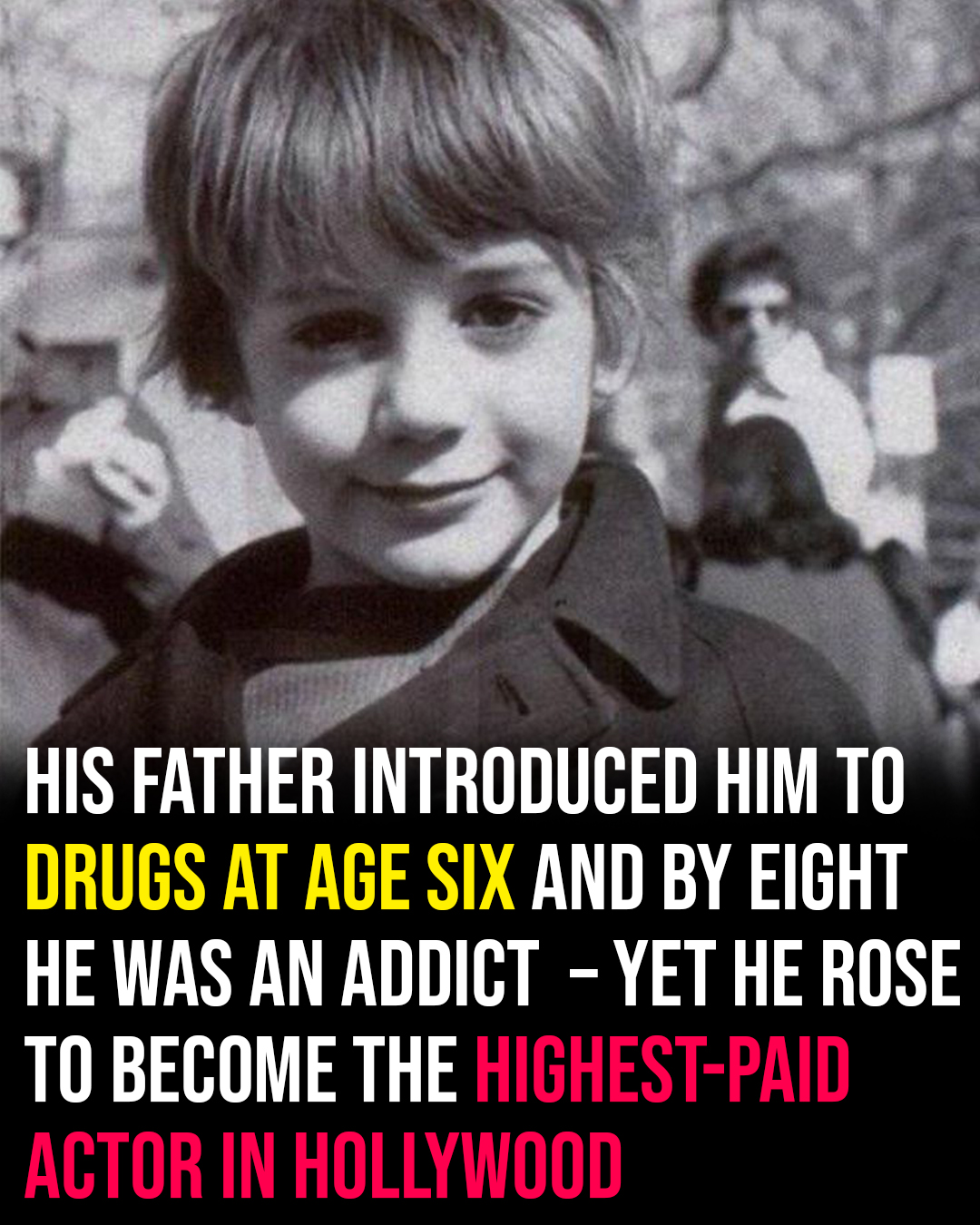
His father fought his own battles with addiction and, in a choice that would later cause deep regret, introduced his young son to drugs. What might have seemed like a reckless moment of bonding became the start of a cycle that would shadow Robert for decades. It blurred the lines between affection and self-destruction, altering his perception of connection and escape.
As he moved through his teens and into adulthood, his professional life gained significant speed. In the 1980s, he emerged as a key member of a talented group of young stars. Movies like Weird Science and Less Than Zero made him a household name, though the latter hauntingly mirrored the very addiction he was battling in private.
To the public, he was on a trajectory toward greatness.
In reality, he was falling apart.
His personal life became increasingly turbulent. Close ties were strained by his addiction, including his well-known relationship with Sarah Jessica Parker. She later spoke about the exhaustion of trying to save someone trapped in that downward spiral. She provided a safe harbor where possible, but addiction rarely yields to simple love or good intentions.
By the mid-1990s, the facade had completely shattered.
His name became a fixture in the news for all the wrong reasons—police reports, rehab attempts, and erratic behavior. One high-profile arrest involved him being stopped under the influence while in possession of illegal substances and a weapon. Another bizarre incident saw him wander into a neighbor’s house while disoriented and fall asleep in their bed.
The struggle was no longer hidden.
It was public, disorganized, and spinning out of control.
Eventually, the legal system intervened in a way he couldn’t bypass. His troubles resulted in prison time—an era he later described as one of the most terrifying and eye-opening chapters of his life. For many observers, this felt like the final act. Hollywood rarely offers a second chance, especially after so many high-profile failures.
At that point, most believed his career was over.
But that wasn’t the conclusion of his journey.
The true shift began in the early 2000s. It wasn’t a sudden, cinematic transformation. There was no single moment of clarity that erased the past. Instead, it was a slow, agonizing process of making better choices, one day at a time.
By 2003, he had finally reached sobriety.
That achievement was a monumental feat, but it was just the foundation. Fixing a broken life requires more than just stopping bad behavior; it demands consistency, hard work, and the courage to face the things you once ran from.
He returned to work cautiously. He took smaller parts and moved carefully, slowly earning back the trust of an industry that had every reason to be skeptical. Project by project, he demonstrated that he was once again reliable—that he could show up, perform at a high level, and stay grounded.
Simultaneously, his personal life found its footing. He married again, established a more solid home life, and prioritized something he had never truly known: stability.
Yet, life continued to present challenges.
When his oldest son later struggled with his own addiction issues, Robert found himself on the other side of a familiar battle. Instead of distancing himself, he approached the situation with a mindset forged by his own survival. He understood the intensity of that fight and, more importantly, the path to winning it.
He didn’t see it as a total failure.
He saw it as an opportunity for another recovery.
Then came the role that redefined everything.
Casting him as Tony Stark in Iron Man was viewed as a massive gamble. At the time, he wasn’t the obvious front-runner for a project that would eventually anchor the most successful franchise in movie history. But that risk changed the course of pop culture.
His performance was electric—witty, vulnerable, and completely captivating.
In an instant, the narrative changed.
The part didn’t just save his career; it propelled him into a different league of fame. Film after film, he became the face of a global phenomenon. His name alone became a guarantee of box office gold.
He transformed from a man the industry was afraid to hire…
Into one of the highest-earning actors on the planet.
Major awards and worldwide respect followed. But his story connects with people not because of the wealth, but because of the distance he traveled.
He had touched the bottom.
Addiction. Arrests. Incarceration.
And he had fought his way back, step by step, without pretending those dark chapters never happened.
That is why his journey matters. It isn’t a fairy tale of instant perfection. It’s a story of grit. It’s about deciding, every single day, to keep moving forward even when the past is right behind you.
Today, his life is living proof that the hardest chapters don’t have to dictate how the story ends.
Redemption isn’t a one-time event.
It’s a long string of choices—quiet, steady ones made when nobody is looking.
In his case, those choices didn’t just rebuild a career.
They completely rewrote a life.
He Was Introduced to Drugs as a Child and Nearly Lost Everything, Then Became the Highest-Paid Star in the World
Previous Article Next Article
The Tragic Final Act of a Royal Inner Circle Member! The Freak Accident That Left Prince Harry Heartbroken
SHE LEFT ME A KEY AFTER SHE DIED, WHAT I FOUND IN HER LOCKED SHED CHANGED MY ENTIRE LIFE