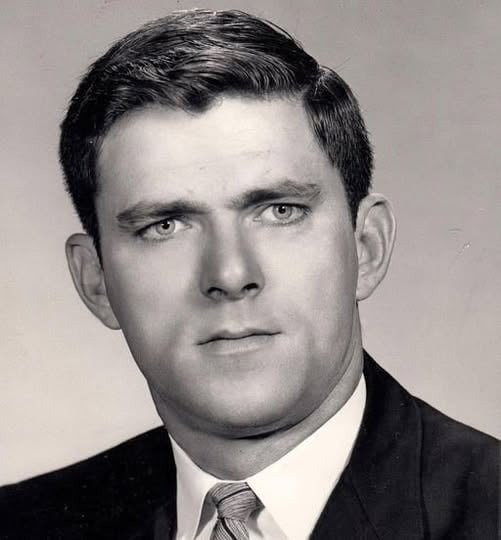
There are television hosts who simply entertain, and then there are those who reshape an entire medium. Phil Donahue clearly belonged to the latter. His death at the age of 88 marks not only the loss of a well-known personality but also the closing chapter of an era that permanently changed the direction of daytime television.
He passed away peacefully on August 18, surrounded by the people closest to him—his wife of more than forty years, Marlo Thomas, along with their family. It was a calm and respectful farewell for a man whose professional influence was anything but quiet.
To truly understand why Donahue mattered so much, it helps to look back to the period before his voice became a familiar part of daily life in millions of households.
When he first entered broadcasting in the late 1950s, television was a very different environment. Daytime programming tended to follow predictable patterns. Shows were often light, carefully scripted, and designed mainly to fill airtime rather than challenge viewers intellectually. Conversations were controlled, subject matter was limited, and the audience remained largely passive.
Donahue altered that structure.
In 1970, he introduced The Phil Donahue Show, a program that would eventually reshape the entire format of talk television. What made the show distinctive was not only the host himself, but the style, atmosphere, and willingness to explore topics others avoided.
For the first time, audiences were not merely spectators—they were participants.
Donahue walked through the audience holding a microphone, inviting ordinary people to ask questions directly. The exchange felt spontaneous rather than rehearsed. It was immediate, sometimes unpredictable, and deeply authentic. That simple adjustment transformed the talk show from a staged presentation into a genuine conversation.
With that shift came discussions that had long been ignored.
While many other programs remained safely within the boundaries of entertainment, Donahue chose to address more complex issues. His show explored topics such as women’s rights, the Vietnam War, social inequality, and personal struggles—subjects that were often uncomfortable but impossible to overlook.
He did not pursue confrontation purely for dramatic effect.
Instead, he approached these discussions with sincere curiosity.
That curiosity became the defining feature of his style. It was visible in how carefully he listened, how thoughtfully he asked questions, and how he allowed space for answers that were not always simple or predictable. Guests rarely felt attacked or cornered. Instead, they felt understood.
And that distinction mattered.
Audiences responded strongly to that authenticity. Viewers recognized elements of their own lives in the discussions. They saw their own doubts, concerns, and experiences being acknowledged openly in a setting that felt both public and personal at the same time.
The result was something entirely different from what daytime television had been.
Rather than serving as background noise in living rooms, talk shows began to function as public forums. They became spaces where ideas could be examined, challenged, and discussed. The boundary between viewer and participant slowly began to fade.
Donahue did more than present a program.
He introduced a model that many others would later follow.
One of the most notable figures influenced by his approach was Oprah Winfrey, who built her own groundbreaking career on a similar foundation of empathy, openness, and audience interaction. Even as later hosts expanded the format, the original blueprint remained unmistakably Donahue’s.
Throughout his long career, his contributions received broad recognition.
He earned twenty Emmy Awards, reflecting both his longevity and his influence on the industry. Even more significantly, he was awarded the Presidential Medal of Freedom—one of the highest civilian honors in the United States—acknowledging the role he played in shaping national conversations.
But awards alone do not fully capture his legacy.
What truly distinguished Donahue was the way he connected with people.
On screen, he projected a presence that balanced confidence with approachability. He possessed quick humor, natural warmth, and the ability to guide challenging conversations without losing empathy or perspective. Rather than dominating discussions, he facilitated them.
Away from the cameras, those same characteristics remained.
Colleagues and guests frequently described his genuine interest in people, his attentiveness, and his belief that every story deserved to be heard. He never treated individuals as subjects to be displayed—he treated them as human beings with experiences worth sharing.
That outlook extended into his private life as well.
His long marriage to Marlo Thomas reflected a partnership grounded in respect, shared ideals, and steady support. Together, they built a life that balanced public recognition with personal stability.
In many ways, that balance reflected the philosophy behind his work.
He believed deeply in connection.
Not shallow interaction, but meaningful engagement—the kind that requires patience, listening, and openness. In an era increasingly shaped by speed and surface-level communication, that principle feels more relevant than ever.
And it is precisely what allowed his work to endure.
Even long after his program ended, its influence continued to shape the industry. Modern talk shows, discussion panels, and even online content platforms still echo elements of what Donahue introduced decades earlier.
The belief that audiences should participate.
The belief that difficult subjects deserve attention.
The belief that genuine conversation can move people closer to understanding.
His passing leaves a space that cannot easily be replaced.
Not because others will not continue to host programs or produce content—but because the particular combination of qualities he embodied was rare. It was shaped by his generation, his worldview, and his dedication to something deeper than simple entertainment.
Phil Donahue did not merely change television.
He reshaped expectations.
He demonstrated that viewers were capable of engaging with meaningful discussion. That audiences desired more than distraction—they wanted connection. And he provided a platform where that connection could exist.
As people reflect on his life and achievements, one truth becomes evident.
His influence extends far beyond the years he spent on air.
It lives on in every program that invites real voices into public dialogue, in every host who chooses empathy over spectacle, and in every viewer who expects something more thoughtful from what they watch.
Because once people witness what television is capable of becoming, it becomes difficult to accept anything less.
And that is the true measure of influence.
Phil Donahue did not simply leave behind a career.
He left behind a standard.